
Witness says Education DepartmentOffice for Civil Rights operating at reduced capacity after staff cuts
Get AI-powered insights, summaries, and transcripts
Subscribe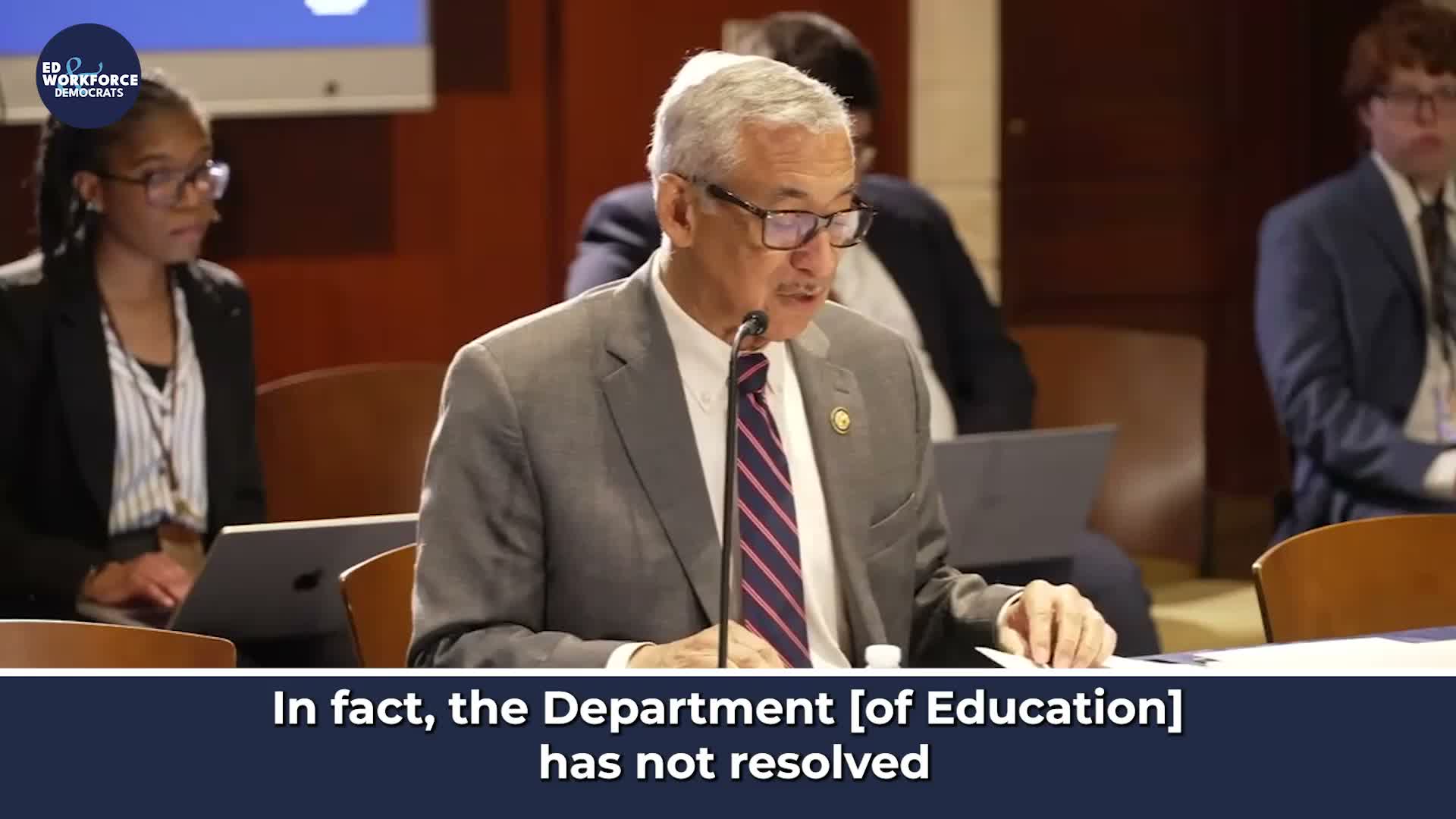
Summary
An unidentified speaker told the House Committee on Education and Workforce Democrats that nearly half of Office for Civil Rights staff were fired since January 2025, that seven of 12 regional offices have closed, and that harassment or discrimination cases have not been resolved since "Trump returned to office."
An unidentified speaker told the House Committee on Education and Workforce Democrats that the U.S. Department of Educations Office for Civil Rights (OCR) is operating at reduced capacity after staffing cuts and regional-office closures, and that the department has not resolved harassment or discrimination cases since "Trump returned to office."
The speaker said OCR is a core function of the Department of Education and described it as "basically, a civil rights organization" responsible for protecting students' civil rights. "Since January 2025, nearly half the staff at the Office of Civil Rights have been fired," the speaker said, adding that OCR is the office "where you make a complaint to, under title 6."
The speaker said "7 of the 12 regional offices around the country have been closed," and warned that without OCR functioning at full capacity, "students and families have had their cases that have already been filed abandoned and left without recourse to combat discrimination." The speaker repeated that "the department has not resolved a ****** harassment or discrimination case since Trump returned to office."
The remarks framed OCR staffing and regional closures as undermining the departments ability to enforce civil-rights protections in schools, citing historical precedents for federal oversight — including past segregation and failures to educate students with disabilities — as the reason a central federal role remains necessary.
The statement referenced filing under "title 6"; the speaker did not supply additional documentation, specific case names, or changes to policy or procedure. No vote or formal action was recorded in the transcript excerpt provided. The transcript did not identify the speaker by name or give next procedural steps.