Get Full Government Meeting Transcripts, Videos, & Alerts Forever!
Get email alerts on the Budget Reduction topic
No spam. Unsubscribe anytime.
Elyria City School Board approves five‑year forecast and reduction plan to close $9 million gap
Summary
Facing a projected multi‑million‑dollar shortfall driven largely by recent state tax changes, the Elyria City School Board approved a five‑year forecast and a reduction‑in‑force plan on Feb. 4 that administrators say will reduce roughly $9.0 million in expenditures; board members and community speakers urged exploring alternatives and highlighted concerns about transportation, special‑education protections and equity of cuts.
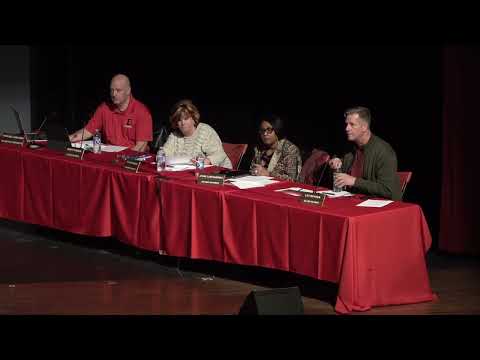
Elyria — The Elyria City School Board voted Feb. 4 to adopt a five‑year fiscal forecast and a reduction‑in‑force plan aimed at closing an immediate budget gap administrators said totals about $9,000,000. The measures passed after a public comment period in which teachers, staff, students and parents urged alternatives and raised concerns about who would be affected.
The forecast presented by Treasurer Colleen Napholt showed the district deficit‑spending $4.7 million in fiscal 2026 and projected a $9 million deficit in fiscal 2027 if no action is taken. Superintendent Anne Slosch told the board the reductions would restore cash reserves closer to policy levels over several years: "Because of these financial realities, we are facing a $9,000,000 budget deficit this year that we must take immediate steps to correct," she said.
Why it matters: Administrators attributed most of the projected revenue loss to recent Ohio property‑tax reforms, including provisions in House Bill 96 and House Bill 29 that altered local homestead and owner‑occupied tax credits, reducing funds available to school districts. Treasurer Napholt said the combination of those measures and the timing of levy processes left Elyria with sharply reduced revenues in the near term.
What the plan does: The superintendent and treasurer outlined a mix of personnel and non‑personnel reductions intended to reach roughly $9.0 million in savings. Proposed cuts include certified‑staff reductions based on a 25:1 classroom ratio, reductions in classified staff hours (including maintenance, custodial and paraprofessional positions), elimination or consolidation of some instructional software and contracted services, scaled‑back field trips and extracurricular transportation changes (K–8 busing to a 1.25‑mile standard). Officials said they would follow Ohio Revised Code and negotiated collective‑bargaining procedures when implementing personnel actions.
Community response: Linda Ayunaga, president of the Elyria Education Association, urged the board not to respond with position cuts and argued the shortfall stems from state funding: "These are not abstract numbers. They represent a system being pushed past the breaking point," she said, citing the treasurer's forecast that projected a multi‑year cash decline. Dozens of speakers at the special public‑comment session questioned how reductions would be prioritized and how changes would affect special‑education services, extracurriculars and students who rely on district transportation.
Alternatives discussed: Residents proposed revenue options such as introducing or studying a pay‑to‑participate model for extracurriculars and reviewing facility‑use charges for community groups. Board members and administrators said they have begun researching other districts' practices and that some changes would not produce immediate savings for the current fiscal year; athletics also operates from a separate fund, complicating direct offsets to the general fund.
Votes and next steps: The board first approved the five‑year forecast and assumptions and then voted to adopt the Board of Education Reduction Plan. Roll call for the reduction plan recorded Aye votes from Miss Carsarpin, Mister Hauser and Missus Seguin and a Nay from Mister Parker; the motion carried. Administrators said individual personnel decisions would follow the plan's approval and would be handled privately in accordance with contracts and legal requirements; specifics on affected positions and timelines were not finalized at the meeting.
What was not decided: Board members said they had not selected individual employees for reduction at the meeting and that those determinations would be made afterward in compliance with negotiated procedures. The treasurer indicated the district will refile forecast documents after implementing reductions so the filed forecast reflects actions taken.
The board did not set an immediate implementation date at the meeting; officials said affected employees would be notified in private before spring break and that the district would continue to post detailed line items to its website.