Downey council votes unanimously to oppose proposed LA County half‑cent sales tax measure
Loading...
Summary
Citing 'tax fatigue' and concerns about local control, the Downey City Council voted unanimously to oppose a Los Angeles County proposal to place a temporary half‑cent sales tax on the June primary ballot and authorized staff to communicate the city's opposition.
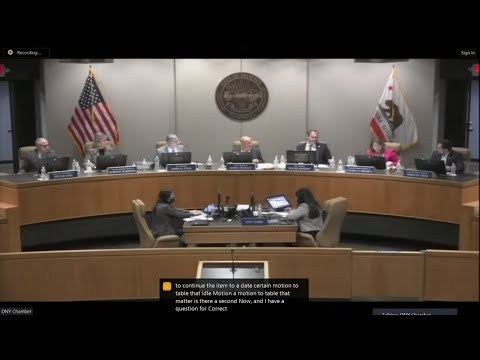
Downey — The City Council voted unanimously to take a formal position opposing a countywide temporary half‑cent sales tax measure that Los Angeles County placed on the June primary ballot.
City Manager Roger Bradley briefed the council on the mechanics and legal questions around the proposal: cities, counties and special districts are generally constrained to a combined 2% local sales-tax increment; Downey has used 1.75% leaving 0.25% in the local capacity. Bradley said the county is seeking state authorization to exceed the 2% cap so the full half cent would be collected in local jurisdictions; staff referenced pending state legislation (AB 1786) that would permit the county to go outside the 2% limit.
Council members from across the dais expressed concern about additional taxation and the loss of local control. Council Member Hector Sosa said the timing and approach were problematic and moved that the city oppose the measure; Councilwoman Dorothy Pemberton seconded the motion. “I did not support any additional taxation,” a councilmember said during the discussion, voicing skepticism that county-collected revenue would serve local priorities.
City Attorney and staff explained possible legal scenarios, including that if the county receives state relief to exceed the cap, Downey would effectively have 0.25 percentage points of capacity remaining for local initiatives. Staff also warned of legal uncertainty if competing measures appeared on the same ballot and said county legislation (AB 1786) was already introduced in Sacramento.
After discussion and requests for additional legal clarification, the council voted to oppose the county measure; the motion passed unanimously. Staff were directed to finalize the city's position and coordinate any required advocacy or letters based on that direction.
The vote formalizes Downey’s opposition to the county proposal but leaves open legal clarifications about ballot sequencing and whether cities could adopt countermeasures in the same election window.