Get Full Government Meeting Transcripts, Videos, & Alerts Forever!
Get email alerts on the Ethics Complaints topic
No spam. Unsubscribe anytime.
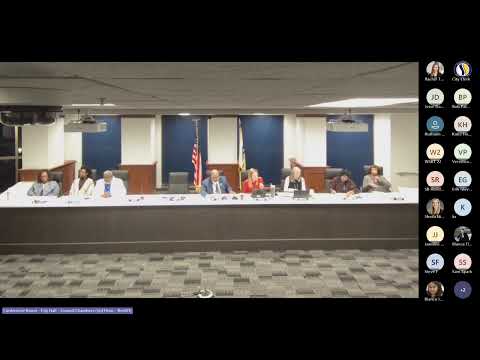
South Bend council adopts ordinance that removes formal complaint process for council members after tense discussion
Summary
On third reading the Common Council passed Bill 0126, an ordinance that redefines the Rules Committee's powers and removes the formal process for filing complaints against council members; the measure passed 6-1 after members debated due process, confidentiality and an earlier interpersonal incident.
The Common Council of the City of South Bend voted to pass Bill 0126 on third reading, an ordinance that the clerk read as repealing and replacing chapter 2, article 1, section 2-10.1 to "establish[] the powers and duties of the Common Council Rules Committee and eliminat[e] the process and procedures for filing complaints against council members." The ordinance passed by roll call with six ayes and one nay.
The debate leading up to the vote included emotional testimony from Dr. Davis, who recounted an earlier incident involving council staff and an attorney. Dr. Davis told colleagues that the episode "hurt me in a way that I have never been hurt" and said she would not support the ordinance, citing both the personal impact of that incident and concerns about accountability. President Lee said he had tried to bring the parties together and that "there was never a complaint filed by you addressing this situation," urging members not to carry the matter further.
Members who spoke during the discussion raised two central tensions: protecting confidentiality and due-process limits for both complainants and respondents, and the council's ability to address misconduct or prevent reputational harm. One member said, "everyone deserves due process," and warned that unproven allegations can ruin reputations. The record also shows interchange over remote participation and the propriety of speakers using avatars or false names during public comment.
Procedurally, the item had been in Committee of the Whole. President Lee moved that Bill 0126 be sent to the full council with a favorable recommendation; the committee motion was seconded and the clerk called the roll. On third reading the council proceeded to adopt the ordinance with six ayes and one nay; President Lee announced, "0126 is passed." The ordinance's text as read indicates it removes the process and procedures for filing complaints against council members and reallocates certain powers to the Rules Committee.
The council did not record a subsequent implementation timeline or specify administrative steps for replacing the complaints mechanism; the transcript does not show any immediate follow-up assignment to staff to draft replacement procedures. The ordinance text, as read into the record, is the authoritative description of the change.
What happens next: the ordinance was adopted on third reading at this meeting and has effect according to the municipal code and any codification steps required by the city; the record here does not specify an effective date or transitional provisions.