
State Shield warns of coordinated foreign influence; lawmakers discuss transparency and restrictions
Get AI-powered insights, summaries, and transcripts
Subscribe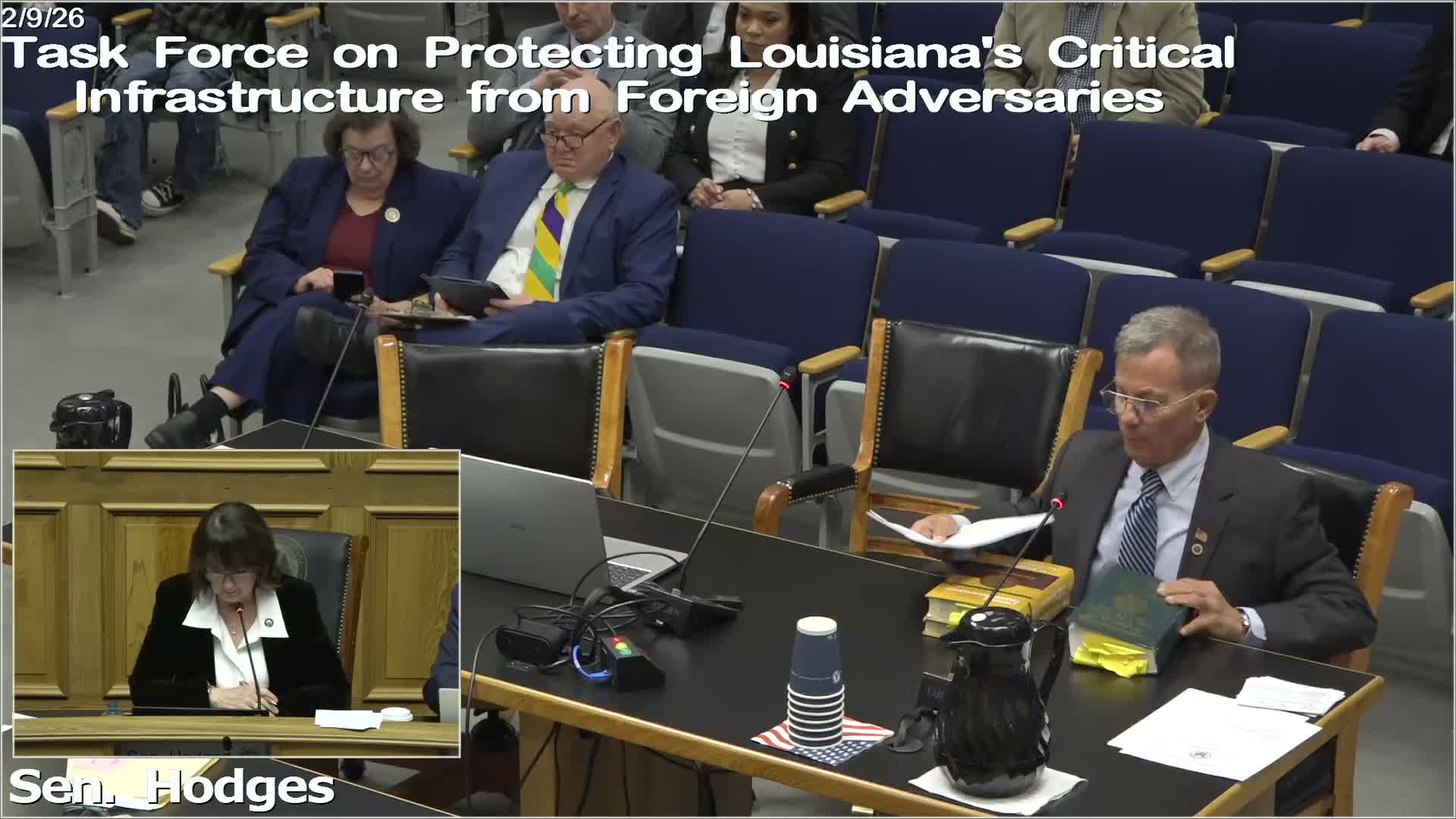
Summary
Tom Rawlings of State Shield told the task force about what he called a "red‑green" alliance of foreign‑funded groups, urged foreign‑funding disclosure and stronger state rules, and identified campus and protest organizations he said have received foreign support. Lawmakers asked about evidence, enforcement and FARA‑style measures.
Tom Rawlings, identified himself as the policy director for State Shield, described State Shield's work in 17 states and outlined what he called a "red‑green alliance"—the claim that some communist‑funded actors and Islamist political organizations share tactics and funding channels to influence U.S. politics and protests.
Rawlings cited historical cases (the Holy Land Foundation prosecution), listed organizations he said were implicated in past federal matters (he referenced NAIT and the Islamic Society of North America as appearing in prior testimony), and argued for state transparency measures, including registration for organizations receiving foreign support. "If you are getting money from a foreign source and you are a 501(c)(3) or a 501(c)(4)...you need to declare that," he said.
Lawmakers questioned the evidence and asked practical follow‑ups. Senator Bass asked about supply chains and rare earths; Rawlings discussed reshoring and federal tools but recommended state steps such as expanded definitions in recently passed campaign‑finance and foreign‑agents laws (he referenced HB693 from last year as a starting point). Representative Owen and others pressed on campus influence and whether model legislation exists; Rawlings said State Shield provides model bills and legislative teams in multiple states.
Rawlings also tied foreign technology risks—drones, telecom hardware and device white‑labeling—to national security concerns and urged state vigilance and expanded registration rules. He referenced federal designations and said some governors have taken unilateral steps to name groups as foreign‑supported threats.
The presentation generated extended discussion but no formal action; lawmakers said they will examine potential statutory changes and enforcement pathways.