
Task force hears panel on Sharia, presenters say Louisiana law already restricts foreign law in courts
Get AI-powered insights, summaries, and transcripts
Subscribe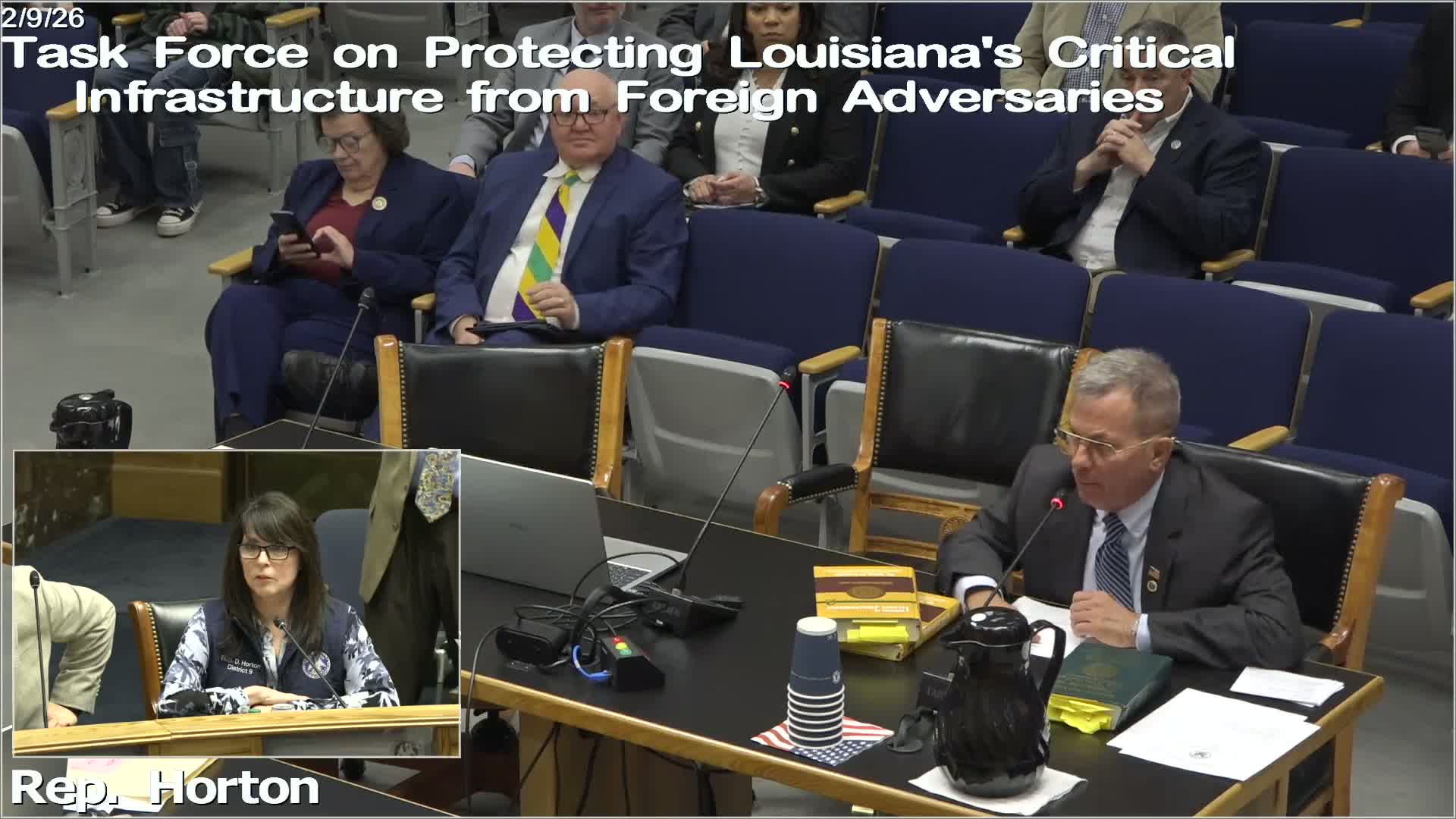
Summary
A presenter told a Louisiana task force that Sharia is a broad legal system with some ‘toxic’ elements and that the state's 2011 "American laws for American courts" statute and other state laws provide protections, while legislators asked about family‑law arbitration, female genital mutilation and land ownership near military bases.
Mr. Holden, invited to brief the task force, described Sharia as "an Arabic term for Islamic law" that touches family law, personal conduct and, in some strands, criminal punishments. He said some aspects "are toxic," named practices including "violent jihad," punishment for apostasy and hudud penalties, and warned about material‑support liabilities tied to zakat donations.
He cited Louisiana's 2011 American‑laws‑for‑American‑courts statute and said it prevents courts from applying a foreign law or doctrine when doing so would violate parties' constitutional rights. "We have laws on the books to deal with most of these issues," he told the panel, and added that the state has used RICO predicates to address some behaviors.
Members pressed Holden on specifics: Representative Edmonson and others asked how Sharia can enter U.S. family-law outcomes, through arbitration panels or foreign orders. Holden pointed to arbitration and a Maryland case in the 1990s he said illustrates the risk. "If an arbitration panel violates the fundamental constitutional rights of any of the parties involved, it's void as against public policy in the state of Louisiana," he said.
Legislators also asked about property purchased near military bases and whether states can act when owners are U.S. citizens. Representative Owen and others raised eminent domain as a possible tool; Holden said using eminent domain against a U.S. citizen is "much tougher" than against a foreign company and that authorities are "looking at ways" to address acquisitions adjacent to installations.
Several members suggested a continuing review of Louisiana law to identify "holes" and work proactively to prevent foreign influence in critical sectors such as military installations, agriculture and water resources. Senator Barrow urged a periodic assessment and asked Holden to work with the task force if legislators pursued revisions.
The session moved on after a series of follow‑ups; no formal bill or vote on statutory changes was taken during the hearing.