State budget aims for "standstill" as administration applies efficiency savings from DOGE exercise
Loading...
Summary
Commissioner Taylor Barra told a joint legislative budget committee the governor's FY'7 budget aims to hold state general fund spending near "standstill," using one'time funds and identified efficiencies (DOGE) to cover pressures such as medical inflation; agencies reported carryforwards and $123 million in savings applied so far toward that goal.
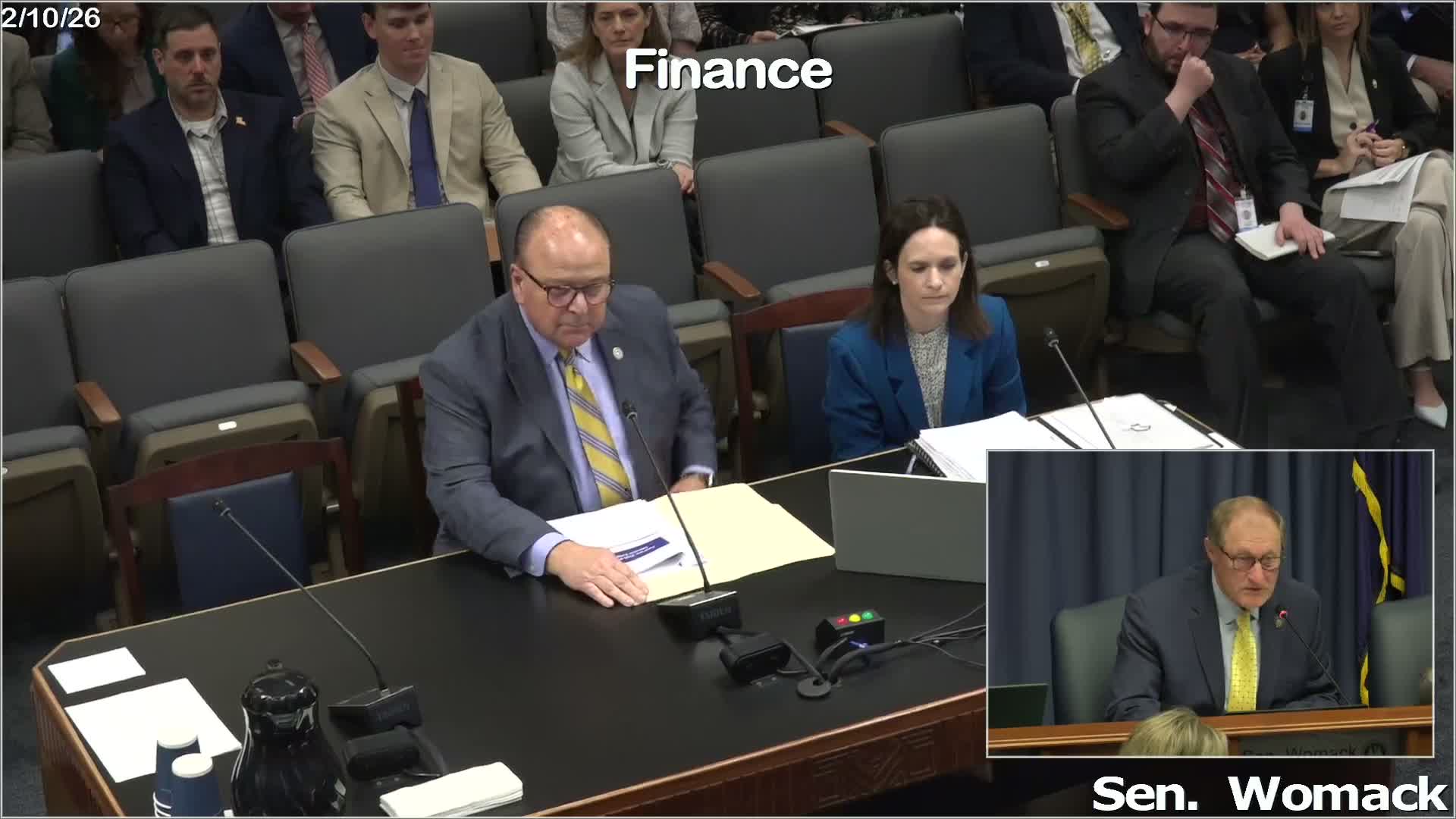
Commissioner Taylor Barra, the state's commissioner of administration, told the Joint Legislative Committee on the Budget that the governor's executive FY'7 proposal seeks to keep the state general fund at a near 'standstill while matching recurring requests to recurring revenue and removing one'time items. Barra said maintaining that posture is “not as easy as it sounds” because of inflationary pressures—especially medical inflation—affecting corrections, higher education and health services.
The administration presented a broad comparison showing a net decrease of $3.1 billion in recommended spending for FY'7 compared with FY'6 when double counts are excluded, and described $2.0 billion in carryforward dollars across financing sources. Colleen Gill of the Office of Planning and Budget told the committee the general fund portion of carryforwards was about $452 million and highlighted program-level changes such as increased MCO contract adjustments and nursing home rebase allocations.
A central tool for the administration—s approach is the DOGE efficiency and optimization exercise, ordered by the governor in 2024. Barra and IG office representatives said the initiative identified roughly $300 million in potential savings across agencies, but that the savings are being applied over multiple years rather than existing as a single pool. Gill and Barra detailed roughly $123 million applied to date: about $32.8 million from early 2024, $60 million in the FY'6 preparation and $30 million reserved in the FY'7 preparation.
Archelle (Angelle) Davis of the Inspector General's Office said the IG has used consulting contracts to help agencies apply efficiencies and cited returning results in areas such as Medicaid eligibility cleanups. The IG'office described use of approximately $3 million in professional services and noted large cumulative savings reported from department engagements; committee members asked for measures to track and verify recurring savings and to separate state'general'fund impacts from federal or other funds.
Barra said some fiscal pressures will still require one'time supplemental funding, notably in corrections where medical inflation and overtime staffing have required recurring supplemental bills in prior years. The administration proposed a $17.5 million adjustment tied to capacity for more than 600 additional offenders and proposed one'time funding to cover a $3 per day per'diem increase to local jails (roughly $17.3 million) pending legislation to make the change permanent.
The committee did not take votes during the session; members pressed for detail on how DOGE savings are measured and whether recurring savings will be realized before relying on them for long'term commitments. The administration said it will continue to provide agency'level documentation as departments next appear before the committee.