
Unidentified senator urges Congress and USTR to enforce USMCA as tariffs hit trade
Get AI-powered insights, summaries, and transcripts
Sign Up Free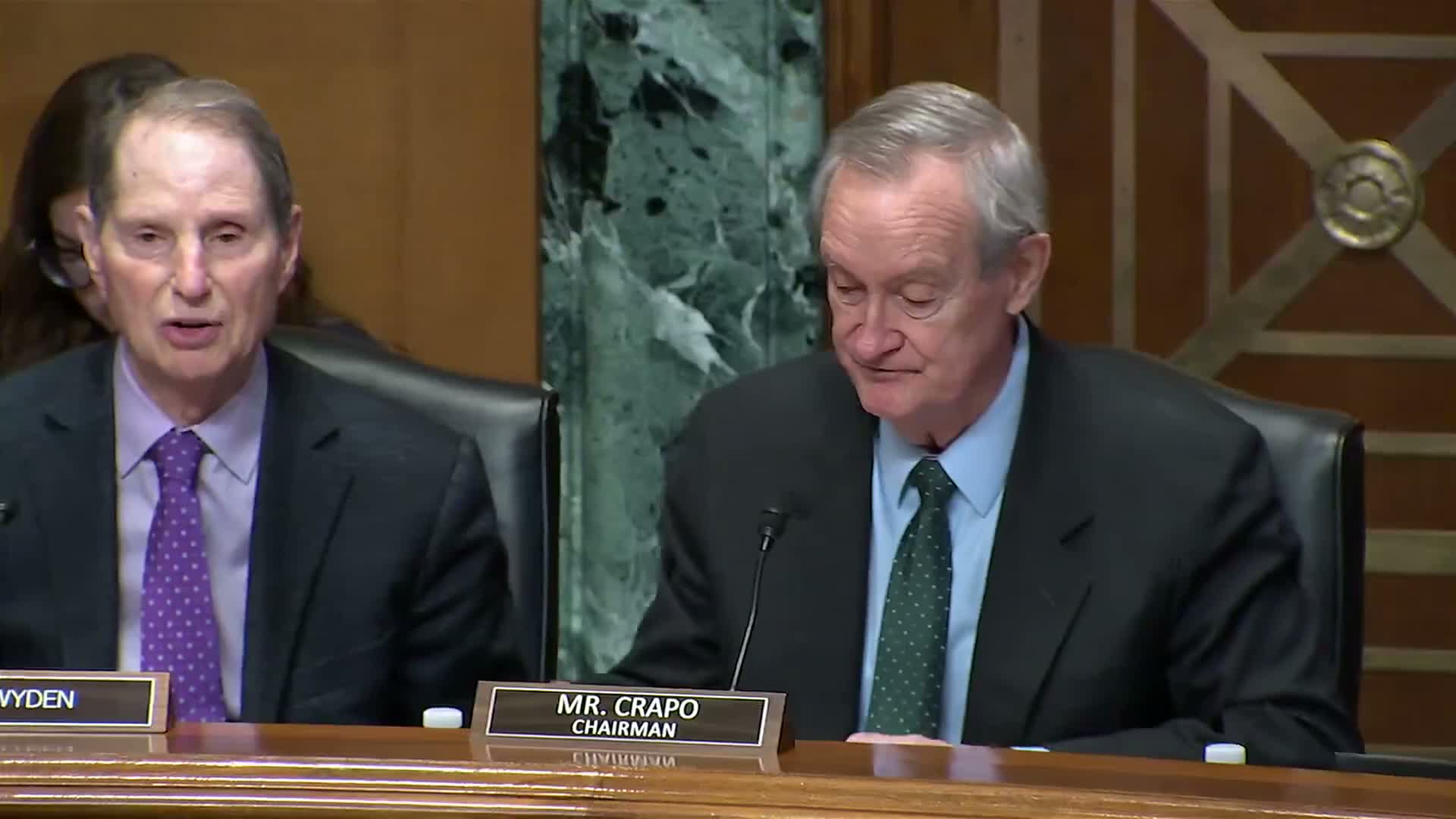
Summary
An unidentified senator speaking to the Senate Committee on Finance criticized recent tariffs on Canada, said the U.S. Trade Representative has not opened enforcement cases under USMCA, and urged Congress to reclaim oversight and press USTR to use the pact's six-year review to protect farmers and workers.
An unidentified senator addressing the Senate Committee on Finance urged stronger enforcement of the United States-Mexico-Canada Agreement (USMCA), criticized tariffs on Canada and warned that weak enforcement undermines the trade deal's benefits.
"The USMCA is a good agreement that passed with extraordinary bipartisan support," the speaker said, adding that "without strong trade enforcement, trade agreements are not worth the paper that they're written on." The speaker also said that, "Since Donald Trump took office last year, his US Trade Representative has not begun a single enforcement case under USMCA."
Why it matters: The senator tied enforcement to concrete economic figures. He cited 2024 totals for the North American trading relationship and U.S. manufacturing, saying trilateral trade reached $1.9 trillion and U.S. manufacturing approached $3 trillion in 2024. He said USMCA supported about $60 billion in agricultural exports and singled out an opening for American fresh potatoes in Mexico as a notable win for growers in the Pacific Northwest.
The speaker criticized recent tariff actions, noting the House voted the previous night to repeal President Donald Trump's tariffs on Canada. "Now the Senate needs to get that legislation to the president's desk and deliver some relief to American workers and to businesses as soon as possible," he said. He also stated that exports to Canada have fallen roughly 23 percent and that tariff disruptions have chilled investment and strained supply chains.
Enforcement and oversight: The senator argued that, if the executive branch will not enforce the agreement, Congress should reclaim its constitutional role over trade. He urged the Office of the U.S. Trade Representative (USTR) to use a six-year review to "deliver for farmers and workers and small businesses high-skill, high-wage jobs" and called for a partnership between Congress and the executive branch emphasizing enforcement and transparency.
The speaker credited Senator Sherrod Brown for work on a rapid response mechanism intended to enforce trade rules and noted USMCA's provisions for labor and environmental standards. He also cited the measure's bipartisan backing at passage, saying the agreement passed with 89 votes.
No formal committee vote or motion on enforcement was recorded in these remarks. The speaker closed by offering to work across the aisle on enforcement and yielded back to the committee chairman.