
Senate panel questions Burlington charter change that would let city alter wards between censuses
Get AI-powered insights, summaries, and transcripts
Subscribe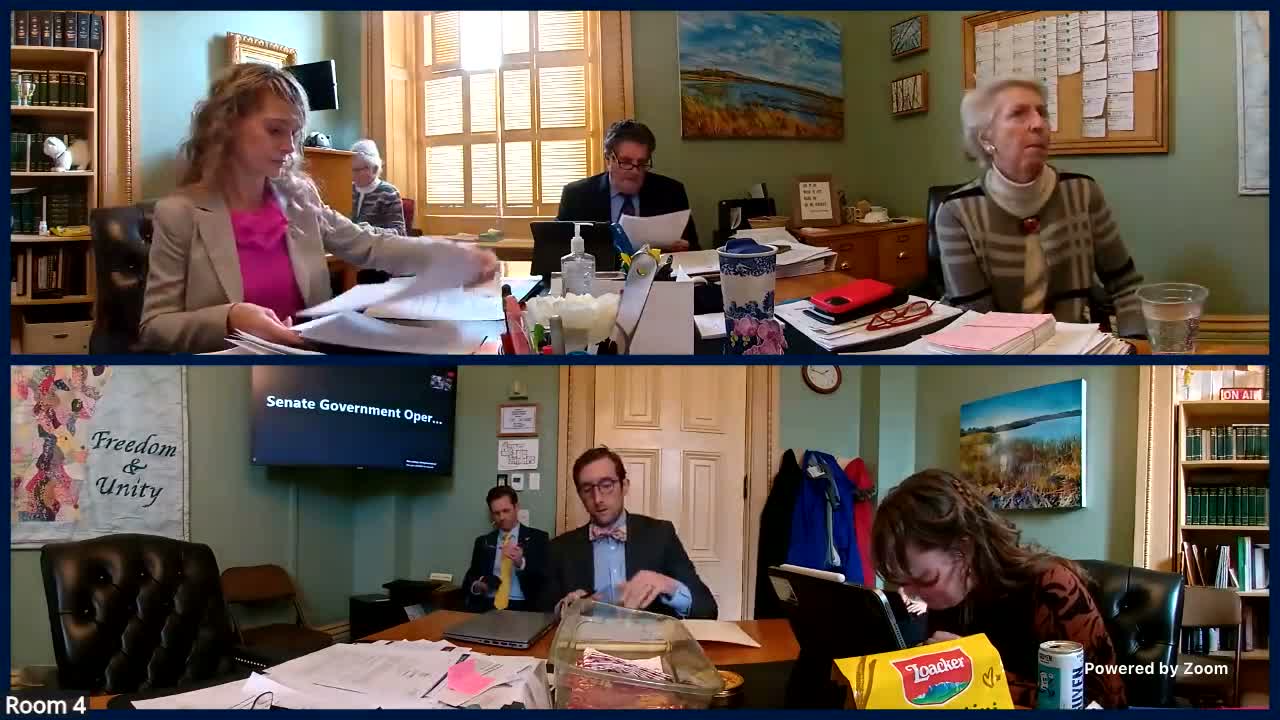
Summary
Senate Committee on Government Operations discussed H.508, a Burlington charter amendment that would allow city councils to update ward boundaries more frequently than the decennial census, and debated removing a proposed five‑year restriction or adding a population‑shift trigger to avoid constitutional proportionality problems.
Members of the Senate Committee on Government Operations spent a large portion of their Feb. 12 meeting examining H.508, a Burlington charter amendment that would give the city council authority to update ward boundary language without pursuing a General Assembly charter amendment.
Tucker Anderson, legislative council, told the committee that municipal boundary descriptions must be expressed in words to be legally enforceable and that the proposed change would allow the council to revise that language directly. "One solution could be to just strike that limitation and allow the city council to update the ward boundaries as necessary from time to time," Anderson said, flagging the bill's clause that would bar changes more frequently than once every five years.
Committee members voiced concerns that a rigid five‑year limitation could create constitutional risks. "Because if they make a change and within 5 years there's a drastic shift in the population ... now there's a constitutional issue with the proportionality of the populations between the wards," Anderson said. Members discussed alternatives including mirroring statutory intermediate reapportionment triggers or adopting a population‑shift threshold that would permit earlier adjustments.
Senators also debated public access to intercensal population data and the practicality of monitoring ward balance between decennial counts. Dunlend (legislative counsel) and other members noted that while intercensal data exist, it is less granular than the decennial census; mapping and technical capacity to use that data vary by municipality.
The committee agreed to invite Burlington's city attorney, Jessica Brown, to appear at the next meeting to explain why Burlington proposed the five‑year phrasing and to ask Essex and other municipal representatives to discuss local technical fixes. No formal amendment or vote was taken at the Feb. 12 meeting; members instructed staff to prepare possible amendment language and to gather examples of existing municipal charters that allow reapportionment "as necessary."