
Split testimony before Senate committee over bill to add state review of transmission “asset condition” projects
Get AI-powered insights, summaries, and transcripts
Subscribe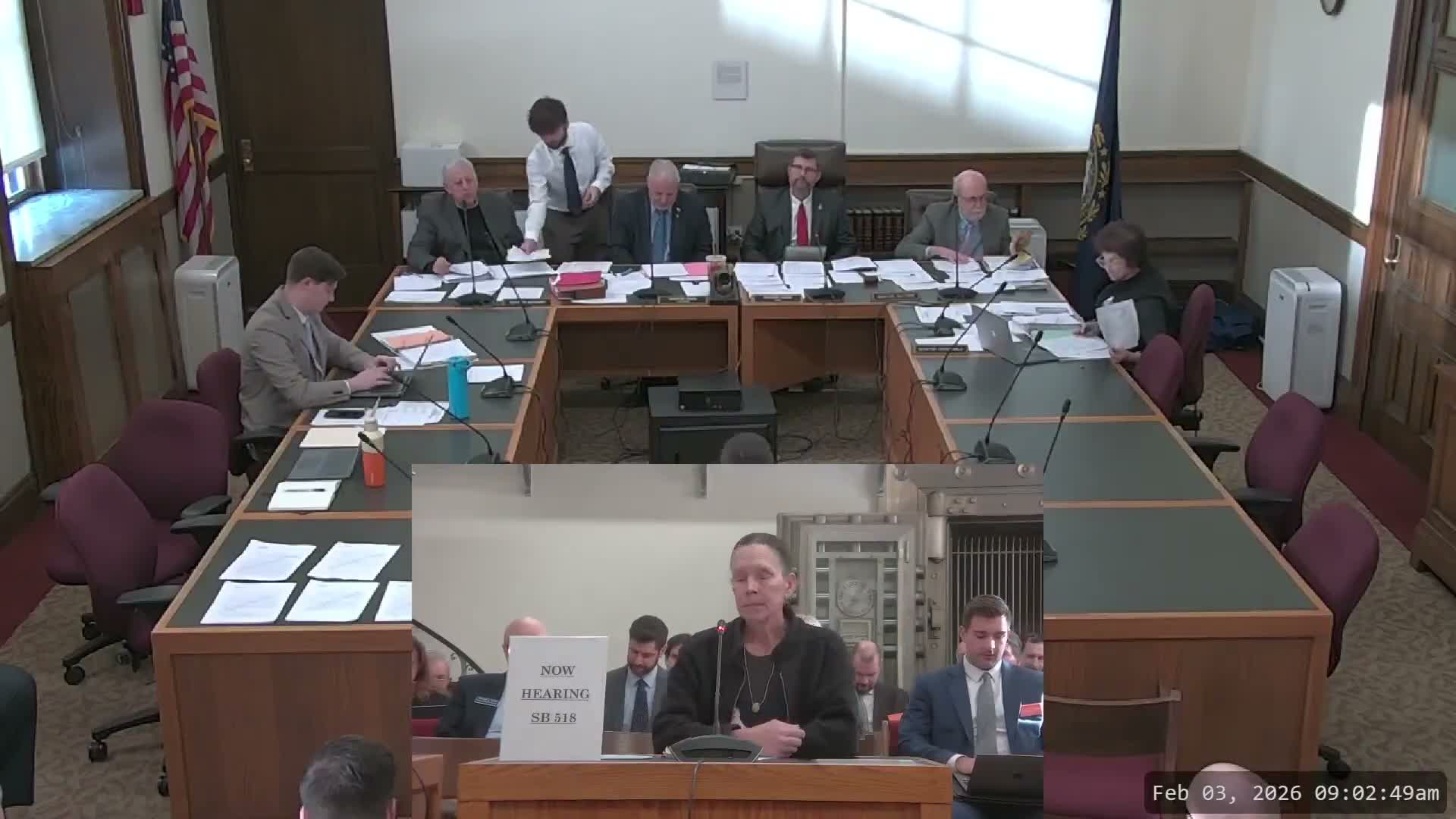
Summary
In hearings on SB 5 18, utilities, the Department of Energy, the consumer advocate and conservation attorneys debated whether New Hampshire should add state-level review of transmission "asset condition" projects—supporters say it protects ratepayers and local interests; opponents say it duplicates FERC/ISO review and risks delay and higher costs.
Concord — Witnesses at a Senate Energy & Natural Resources hearing on SB 5 18 sharply disagreed over whether the state should add a role for the Site Evaluation Committee and other state actors in reviewing so-called "asset condition" transmission projects.
Supporters, led by the state consumer advocate and local activists, described the projects as large, regionally coordinated investments that have proceeded with little scrutiny of need or cost. "It appears to be an attempt by DOE and others to provide the illusion of regulation of asset condition projects while allowing Eversource to continue building its asset condition projects and charging them to ratepayers," said Chris Pastoreza during public comment. Donald Creese, the state consumer advocate, said Eversource’s X178 replacement began after 40 of 400 poles suffered woodpecker damage and the company proposed replacing the entire line, at an estimated cost of "upwards of $400,000,000." Creese said formula-rate treatment means there is often no prudence review before customers ultimately pay those costs.
Eversource and industry representatives urged caution. Michael Licata, who testified for Eversource Energy, said asset-condition projects are repairs to existing lines — "not new lines" — and warned the bill would shift the SEC from a land-use siting body to a regulator of project need and cost. "If we have to have multiyear delays before we can go out and do this work, we will have a less safe, less reliable system," Licata said, arguing the bill would cause delay, add expense and heighten reliability risks. He also noted the SEC currently lacks staff resources to absorb a surge in dockets.
Department of Energy staff said some recent concerns have prompted regional reforms at ISO New England, including plans to add an independent reviewer for higher-cost projects; Josh Elliott, director of policy and programs at DOE, emphasized the current regional process allows stakeholders to build a record for a FERC challenge. "The burden of proof is on the challenger to prove that the project was imprudent under FERC law," Elliott said, adding that final ISO reforms are still more than a year away.
Legal and advocacy witnesses urged the committee to retain state oversight. Attorney Art Cunningham and others noted that many projects are jurisdictional to FERC and ISO New England but said no agency has consistently examined "need" or prudence at the project level. "Nobody has examined the prudency of the costs to ensure that the cost that hit ratepayers' bills are just reasonable," Cunningham said. The consumer advocate and other proponents urged giving the Office of the Consumer Advocate a formal vehicle to participate in SEC proceedings to ensure ratepayer interests are represented.
Committee members questioned witnesses about definitions in the bill (including a 5% replacement threshold over five years and a "qualified transmission asset replacement" category), whether routine maintenance or emergency repairs would be captured, and how state siting findings would interact with ISO and FERC processes. Licata said the bill’s 5% threshold and lack of an explicit emergency exemption could force projects into a multiyear SEC process even when urgent repairs are needed.
The hearing produced no committee vote on SB 5 18. The committee will likely weigh drafting changes to clarify definitions, emergency exemptions and how state review would interact with ISO and FERC oversight. The SEC and PUC officials also warned the committee to consider staffing and litigation risk if the state expands the SEC’s scope into rate-like determinations.