
Speaker at Utah Eagle Forum says federal transgender bill would prompt litigation; defends state ban
Get AI-powered insights, summaries, and transcripts
Subscribe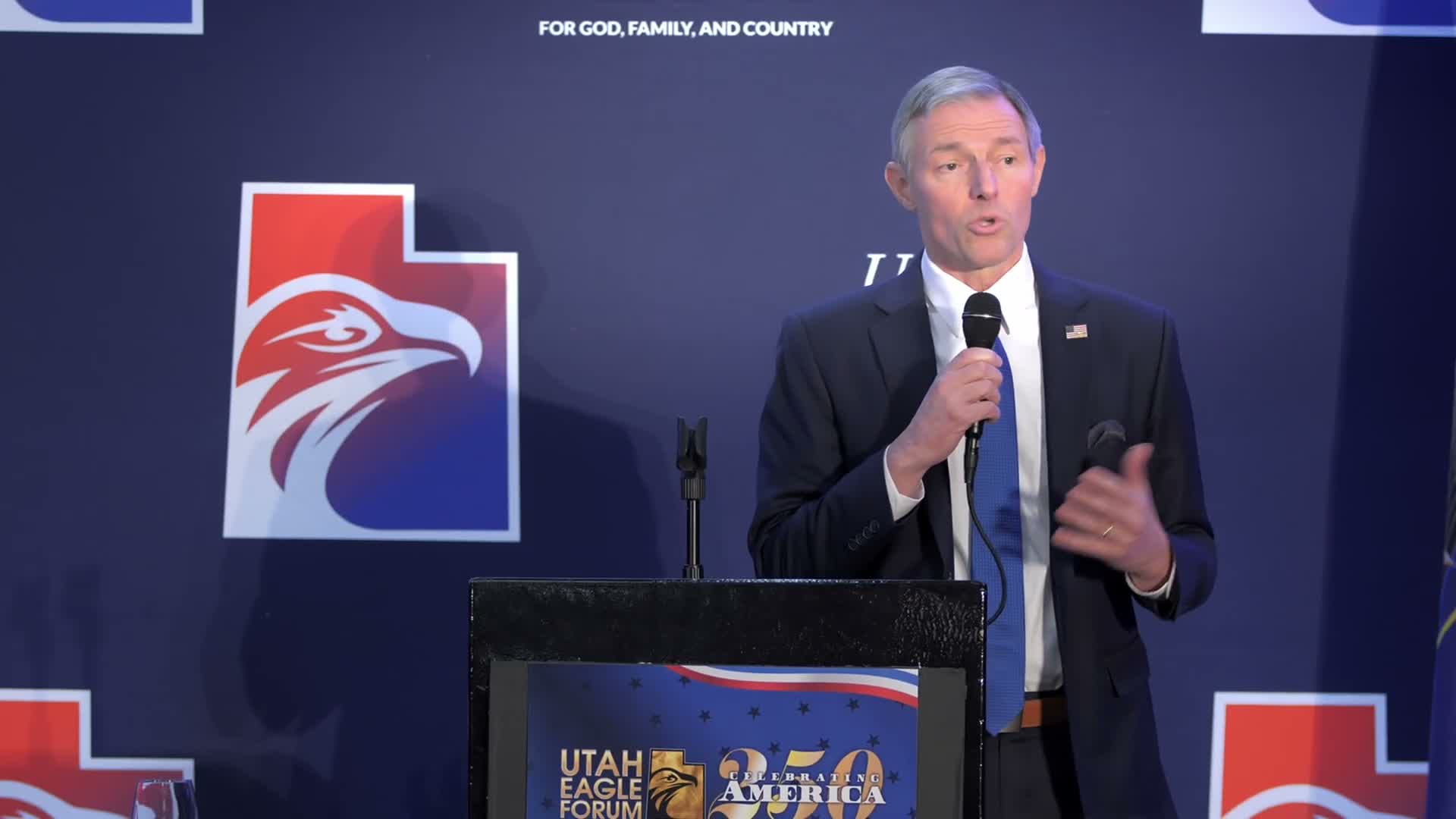
Summary
A U.S. representative told an Eagle Forum audience he opposed a federal bill by Rep. Marjorie Taylor Greene that he said would not protect children and would be rapidly litigated; he defended a three-year state ban he helped pass and warned courts could be asked to redefine 'men and women.'
A U.S. representative speaking at a Utah Eagle Forum event on [date not specified] said he opposed a federal bill by Rep. Marjorie Taylor Greene that would penalize doctors providing gender-transition procedures to minors, arguing the measure would prompt immediate legal challenges and not ultimately protect children. “That bill … is never gonna protect children,” he said.
The lawmaker said the Greene bill, as described to the audience, would allow fines of $10,000 or jail for doctors who perform surgeries, puberty blockers or cross-sex hormones on minors. He said he instead supported the approach he pursued in the Utah legislature: a three-year state ban on those procedures and medications that, he said, has not yet been litigated.
The representative warned that statutes defining sex in code would hand the issue to judges. “When we define men and women in code, then all of a sudden … judges can decide what men and women are,” he said, calling the prospect “very disturbing.” He invoked the Defense of Marriage Act as an example of a law that was litigated and eventually resulted in a judicial outcome the speaker did not intend.
The lawmaker framed his decisions as pragmatic: he said he focuses on policies that can pass both chambers and reach the president’s desk rather than on symbolic legislation. He told listeners that broad support would be required in the Senate to change federal law, noting the 60-vote threshold to advance measures, and said he reads bills carefully before voting.
The speech did not include onstage debate or a formal vote; no litigation over the Utah ban was reported during the event. The lawmaker invited audience questions and continued with other topics after his remarks.