David Barton tells Utah Eagle Forum the Bible shaped the founders and urges religion in 250th education materials
Loading...
Summary
At a Utah Eagle Forum conference, historian and speaker David Barton argued the Bible and Christian faith were central to the American founding, criticized modern academic narratives, and said he is working with education officials to insert founding-era religious content into school materials and 250th-anniversary programming.
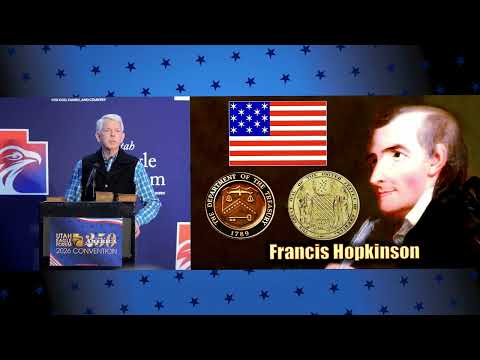
David Barton, identified in the session as the event's keynote speaker, told attendees at a Utah Eagle Forum conference that the Bible and Christian faith were central to the American founding and urged organizers and educators to restore religious material to school history curricula.
Barton framed his talk around the nation's 250th anniversary, saying revivalist preaching such as George Whitefield's and public prayers in early national bodies helped create the unity necessary for independence. He cited what he described as research tracing founding-era quotations back to their sources and told the audience the Bible was the single most-cited source for the framers' ideas.
"John Adams said, the general principles on which the fathers achieved independence were the general principles of Christianity," Barton said, quoting Adams as he argued those principles were central to the founding. Barton also said many lesser-known signers had ministry training and that figures such as John Hancock and Charles Carroll publicly invoked prayer and religion in official proclamations.
Barton discussed his work on history standards in Texas, saying he is "one of nine" people appointed to write history courses for the state's roughly 5.5 million schoolchildren and expressed frustration that, in his view, some interpretations of church/state rules limit teachers from using founding-era religious writings. He told the audience he and his group are producing materials connected to the 250th celebration and that videos are planned in coordination with education departments.
Barton criticized academic treatments that he described as portraying the Constitution as "godless," naming the book The Godless Constitution as an example of a textbook he said is taught widely. He recommended primary-source reading and museum collections as corrective context.
An audience member, identified in the transcript as Joe, asked whether Barton planned to make a DVD or other distributable material. Barton replied, "There'll be a lot of videos come coming out with it," and said his group is coordinating "37 events with Department of Education" and other partners to promote their materials.
The talk combined historical claims, contemporary education advocacy, and a call to action for advocates concerned about how the founding era is taught. Barton's presentation relied heavily on selected primary-source quotations and on his interpretation of scholarly studies; assertions about the prevalence of particular sources and numerical claims about sermon counts and audiences are reported here as Barton presented them.