Tempe Community Council lays out 2025–26 priorities, expands direct services and outlines funding plan
Loading...
Summary
Tempe Community Council presented a 2025–26 strategic direction to the City Council, highlighting program growth (Threads, Open Horizons, Triple P, VITA), a tested three-year renewal funding process, and stable audited finances despite a $68,000 net-asset decline.
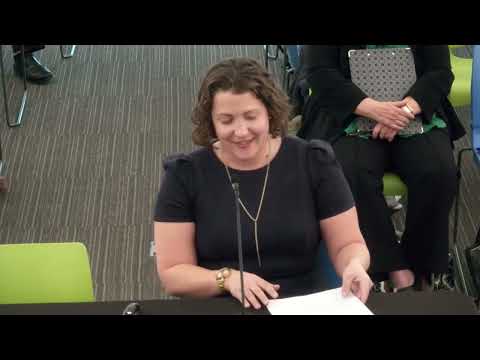
Tempe Community Council on Feb. 2 presented its 2025–26 vision to the Tempe City Council, outlining program expansions, a new agency-funding renewal process and the nonprofit’s audited financial position.
Board Chair Rabani for Khan said TCC’s mission is to “connect those in need with those who care,” and announced a forthcoming strategic-planning process and an intentional executive leadership transition to strengthen governance and long-term stability.
Interim executive director Tim Burch told the joint meeting that TCC completed a community needs assessment aligned with a social-determinants-of-health framework that will guide grant priorities and outcomes measurement. “This year, that needs assessment has been aligned with that,” Burch said, explaining the assessment will help direct funding decisions to address community-identified needs.
Program growth and direct services
TCC described several direct-service expansions. Threads, which provides hygiene items and clean clothing to school students, expanded to four schools and added lunchtime distribution that produced a reported 40% increase in service use; organizers said community clothing donations to the program topped $300,000 this year.
Open Horizons, a dropout-prevention program for parenting teens, celebrated its 50th year and reported flexible supports including 20 weeks of preschool, bus passes and more than $3,700 in direct support for individual young parents. The Triple P positive-parenting program also increased the number of scheduled sessions and registered participants year over year.
TCC also previewed its VITA tax-assistance work: staff said they expect to serve more than 1,000 residents in the coming season. Last year volunteers filed 872 returns, returning roughly $1.2 million in tax credits and refunds to the community and saving residents about $174,000 in tax-preparation fees.
Youth-prevention coalition and grants
Bernadette Coggins, who leads the Tempe Coalition to Reduce Underage Drinking and Drug Use, outlined survey-based priorities for youth prevention and listed five active grants totaling more than $480,000. She highlighted naloxone distribution (more than 1,000 boxes distributed) and said the coalition is now the authorized regional distributor for Narcan outreach.
When Vice Mayor Garland raised concerns about a brief federal funding scare — “You guys received a letter that’s saying that all that funding was going away immediately. The next day, the federal government said, ‘oh, just kidding. You can keep your funding,’” — Coggins said TCC is working to diversify funding streams including private partnerships and continued grant applications.
Agency review changes and funding process
TCC described a pilot of a three-year funding and renewal process for trusted grantees. Kim (TCC staff) said agency-review volunteers — 61 last year contributing about 1,400 hours — evaluated applications and that reviewers will score renewal applicants in years two and three of a three-year cycle. New agencies are capped at $30,000 in first-year requests to allow capacity-building before larger investments. TCC reported 71 applicants for the 2026–27 cycle; reviewers began reading and scoring applications the week of the meeting.
Financial position and city partnership
Board treasurer Magda Johnson reported the FY24–25 audit was completed. TCC’s revenue was about $2.0 million and expenses about $2.1 million; net assets declined from approximately $1.9 million to $1.8 million (a $68,000 decrease) and total liabilities were reported at about $101,000. Johnson described the position as manageable and the organization as financially stable.
TCC said the largest portion of recognized revenue is city in-kind support (reported as 41% or roughly $1.3 million) reflecting office space, staff time and administrative support; agency-review pass-through funds (about $1.1 million) are recorded separately and the city’s in-kind contribution covers administrative costs for grant administration.
Next steps and asks
TCC asked council members to help broaden corporate and volunteer engagement, to promote the Together Tempe donation channel available through utility-bill additions, and to support outreach for strategic-planning recruitment. The board said it plans to increase visibility around its new office space and to expand individual and corporate giving.
The meeting concluded with mayoral thanks and adjournment at 5:04 p.m.