After debate on racial history, commission amends Willard nomination report and approves sending it to City Council
Loading...
Summary
The Preservation Commission heard public testimony about Willard Elementary’s ties to neighborhood displacement, amended the draft nomination to fold spatial/open‑space language into its architectural justification, and approved sending the edited report and resolution to City Council; commissioners agreed to remain open to adding new historical documentation later.
The Preservation Commission voted to send the Willard Elementary landmark nomination report to City Council after amending the draft to remove criterion 9 as a standalone justification and instead incorporate spatial and open‑space relationships into the architectural criterion (criterion 3).
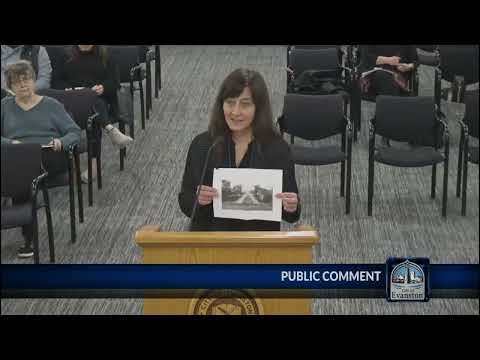
Thomas Weber, the Willard nominator, urged the commission to move forward and said District 65 does not oppose the nomination. Community member Malia Gartzma responded that emphasizing site/landscape criteria without clear contextualization risks obscuring episodes of displacement during the neighborhood’s development: "To sit in a room and discuss the character of an area that was established during the pivotal decades of Evanston segregation and to only acknowledge the physical beauty...is not doing that history justice," she said (public comment, SEG 2220–2279).
Commissioners debated whether the nominated parcel has direct documentary evidence tying its construction to displacement. Staff and one commissioner noted they had not found documentation that Willard’s parcel itself was the site of displacement, and that some aspects of African‑American heritage recognition are pursued through the Shorefront/heritage program set by City Council policy.
After discussion, a motion to remove criterion 9 from the report and incorporate relevant spatial language into criterion 3 passed in roll call (passed 7–2). The commission then approved the report with edits and instructed staff to incorporate the testimony and the invitation to add further documentation if new evidence emerges; staff noted the commission may amend the statement of significance later if substantive evidence is found. The chair said the commission will transmit the report and resolution to City Council and will seek the chance to present the nomination there.
Next steps: The edited nomination and resolution will be transmitted to City Council per the ordinance timeline; the commission retained the ability to amend the statement of significance if new documentary evidence about displacement or site history is discovered.