Get Full Government Meeting Transcripts, Videos, & Alerts Forever!
Get email alerts on the Budget Priority Sea1 topic
No spam. Unsubscribe anytime.
Mayor: SEA1 reductions force "do less with less" as city begins priorities‑based budget
Summary
Mayor Thompson told the council Bloomington is beginning priorities‑based budgeting and must prioritize maintenance and existing commitments after the state's SEA1 changes reduce local income tax revenue and restrict bonding. He said the city expects about $1.4 million loss in the first year and larger multi‑year effects.
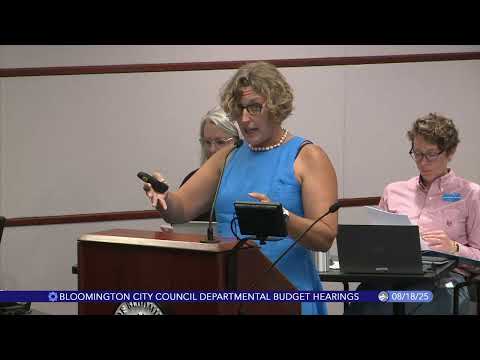
Mayor Jane Thompson opened the Aug. 18 budget hearing by framing the city's 2026 budget as a transition to priorities‑based budgeting and warning of near‑term fiscal constraints tied to recent state action referred to in the meeting as "SEA1." Thompson said SEA1 will reduce local income tax and bonding flexibility, telling the council: "This year alone will experience a loss of about $1.4 million" and that the city will "need to do less with less."
Thompson said the administration's top budget responsibilities are to maintain existing commitments, fund partly completed building projects and preserve critical maintenance for parks, sidewalks, sewers, water services and public safety. She described the 2026 budget as a learning year in the move toward an outcomes‑based system and said the administration and council would continue refining program inventories and cost assignments.
The mayor urged collaboration with other local governments to reduce duplication of services and offered examples of shared social‑service funding and fire protection collaboration with Monroe Fire Protection District. Thompson also previewed a proposed year‑round council staff team to support the transition to priorities‑based budgeting and asked council members to participate in ongoing feedback and oversight of program clustering and outcome definition.
The administration emphasized that SEA1 also places new constraints on general obligation bonds and borrowing timelines, requiring deeper review with bond consultants before committing to large capital projects. The mayor concluded by urging the council to prioritize core city services and maintenance in this constrained fiscal climate.