Senate committee approves resolution asking Congress to let Wyoming administer federal mineral leases
Get AI-powered insights, summaries, and transcripts
SubscribeSummary
The Senate Minerals Committee voted 5-0 to approve an amended joint resolution urging Congress to authorize cooperative agreements allowing Wyoming to assume administrative primacy for mineral leasing on specified federal lands and to retain the 2% administrative deduction for those lands.
The Wyoming Senate Minerals Committee on an unspecified date voted unanimously to send an amended joint resolution to the next stage of consideration that asks the state's congressional delegation to pursue authority for Wyoming to administer mineral leasing on specified federal lands.
Representative Wharf, who introduced Senate Joint Resolution 1, told the committee the measure "basically goes through asking our congressional delegation to introduce a bill that enacts a law that amends the Federal Mineral Leasing Act to authorize the State of Wyoming to administer and manage the mineral leasing on federal lands." He said the change would allow Wyoming to "flip the script" and retain the 2% administrative deduction currently kept by the federal government.
The resolution as amended asks Congress to authorize the Secretary of the Interior to enter cooperative agreements under which "the state may, at its election and subject to federal approval, assume administrative primacy for mineral leasing on specified federal lands located in Wyoming." A committee amendment also specifies that revenue distribution "consistent with existing federal statutory formulas" would allocate the 2% administrative cost deduction under 30 USC 191(b) to the state for lands designated under such agreements.
Supporters at the committee hearing included the Petroleum Association of Wyoming. Ryan McConaughey of the association said the group "do[es] support the effort to bring the management of the federal leasing program to the state of Wyoming" and emphasized that the state would still be required to follow applicable federal laws and rules.
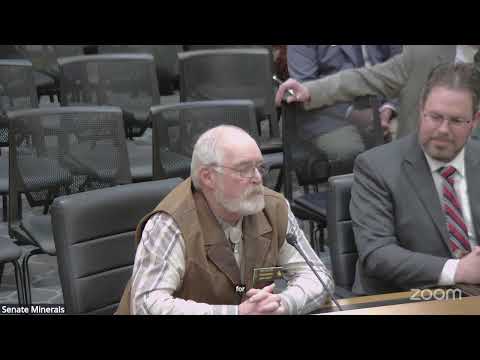
Conservation groups urged caution. Aaron Bannon, executive director of the Wyoming Wilderness Association, told the committee he was "concerned about this bill, primarily because ... it would increase the burden of the state to manage federal lands without increasing any revenue that the state receives to manage them." Bannon noted other proposals aiming to restore the 2% to the state and suggested the committee weigh trade-offs carefully.
Committee members pressed for specificity. Senators asked when an earlier letter to Congress was sent and whether appropriations and minerals committees had been consulted; Representative Wharf said the letter originated with the chairs of the Appropriations committees and that the minerals side had not been fully consulted. Several members also said the resolution's original broad language raised questions about scope — for example, whether it would apply to all federal lands in Wyoming — and proposed narrowing the request so authority would apply only on specified federal lands by mutual agreement.
After discussion, the committee approved amendments to shorten the supporting "whereas" language and to clarify that any transfer of administrative primacy would preserve federal ownership, be consistent with applicable federal law unless Congress explicitly provides otherwise, and allow state and federal partners to modify or terminate agreements by mutual consent. A roll-call vote recorded five aye votes (Senators Cooper, Jones, Rothfuss, Nethercott by absentee, and Chairman Anderson), carrying the amended resolution out of committee.
The resolution moves forward with the committee record; any actual transfer of authority would require federal legislation and cooperative agreements between the state and the Department of the Interior. The committee did not provide a fiscal note at the hearing, and several senators said projected revenue and administrative costs are "not specified" and would depend on how any federal authorization is structured.