Senate committee advances bill to raise Medicaid ambulance payments to Medicare rates
Loading...
Summary
A Senate committee voted to advance a bill that would benchmark Medicaid reimbursement for ground emergency medical services to 100% of current Medicare rates, adding an estimated $1.3 million in state general funds and $1.3 million in federal matching funds for the biennium. Supporters said it helps providers but is not a full solution for rural EMS sustainability.
A Senate Labor and Health committee voted to advance Senate File 4, a bill that would raise Medicaid reimbursement for ground emergency medical services to 100% of current Medicare rates, the committee heard. Franz Fuchs, deputy director of the Wyoming Department of Health, told members the change would require $1,300,000 in state general funds and an equal amount in federal matching funds for the biennium.
Supporters said the increase would provide modest but meaningful relief for ambulance providers while cautioning it would not fix deeper structural problems in rural EMS. "It directs the department to raise our ground emergency medical service rates to 100% of the current Medicare rate," Fuchs said. Department witnesses and senators discussed how Medicaid, Medicare and private payers differ and how supplemental payment programs affect overall reimbursement.
The bill’s backers cited the gap in current payments: the department gave average benchmarks of $349.60 for a Medicaid basic life-support 911 trip, $576.24 for Medicare and roughly $950.80 for private payers. Fuchs said a recent statewide study estimated roughly $30 million in annual subsidy shortfalls across EMS, and that the bill would add about $1.3 million a year on the Medicaid side, with most of the increase flowing to higher-volume providers in larger towns.
Public testimony supported the measure. Tom Laycock of AARP Wyoming told the committee the state has lost 16 EMS agencies over the past 11 years and currently operates about 44 services, calling the bill “one bite at the elephant.” Micah Richardson of the Wyoming Women’s Foundation and Marguerite Herman of Healthy Wyoming also endorsed the proposal, and Kevin Reddy, president of the Federated Firefighters of Wyoming, said any increase would help cover shortfalls that shift costs to fire departments.
Committee members debated whether the bill would supplant other support such as the Rural Health Transformation program, which aims to incentivize regionalization and business-model changes for small providers. Department officials said the two approaches are complementary: the Medicaid rate change targets per-trip fee-for-service payments while rural transformation focuses on fixed-cost and organizational changes.
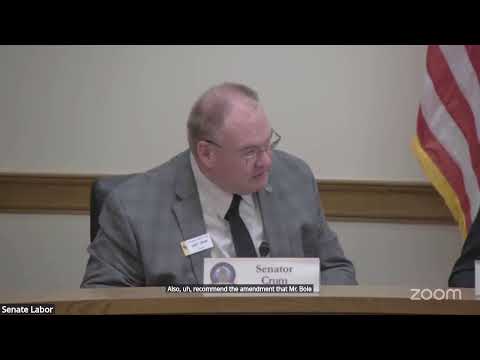
After discussion the committee voted to advance the bill. The roll call recorded five ayes: Senator Crum, Senator Hutchings, Senator Scott, Senator Steinmetz and Chairman Brennan. Senator Scott volunteered to carry the bill on the floor.