Get Full Government Meeting Transcripts, Videos, & Alerts Forever!
Get email alerts on the Public Safety topic
No spam. Unsubscribe anytime.
Mount Vernon council approves K‑9 program after heated debate over opioid settlement funds
Summary
After more than two hours of public comment and council debate, the Mount Vernon City Council voted 4–3 to approve Resolution 10‑90 to reestablish a Mount Vernon Police Department K‑9 program. Opponents argued opioid settlement funds should instead support treatment and prevention; supporters said funding can be found without reducing those services and that the K‑9 aids public safety.
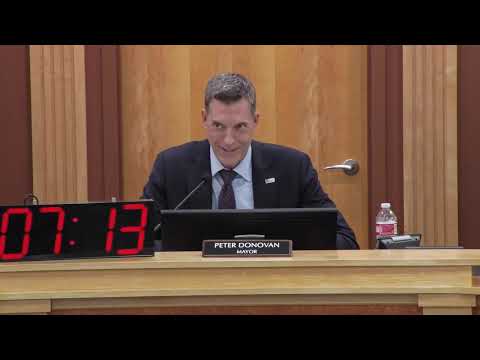
Mount Vernon — The City Council on Feb. 11 approved Resolution 10‑90, reestablishing a police K‑9 program, after a packed public‑comment period and extensive council discussion about whether opioid settlement money should be used to pay for it.
The 4–3 roll‑call vote followed more than an hour of testimony from residents and local service providers who were sharply divided. Tara Gehring, a Mount Vernon Ward 2 resident and ICU nurse, urged the council to reject the resolution, saying the proposed funding swap amounted to a "shell game" that would supplant existing programs and urged members to “vote no on resolution 10 90 and facilitate a transparent process for allocation of these settlement funds". Several other speakers urged the money be directed to prevention, treatment, and recovery programs outlined in the settlement guidance.
Supporters of the K‑9 program said the unit is a force multiplier for a small department and a community engagement tool. Chuck Royal, a local resident, told council that the department had presented "a very detailed plan for the use of the funds being requested" and argued a canine is more efficient than additional officers in certain operations. Chief Dan Christman said the K‑9 program is an allowable strategy under the opioid settlement agreement but stressed the council could direct opioid funds to social services while using general‑fund vacancy savings and other budgeted money to stand up the K‑9 unit.
The finance discussion centered on a $100,000 figure repeatedly referenced during the meeting: staff reported roughly $115,000 of vacancy savings in the integrated outreach services (iOS) line this year and described a way to designate $100,000 of opioid settlement money to iOS (so it remains available to services) while using general‑fund vacancy savings to fund one‑time K‑9 startup costs. The city’s finance staff summarized this as a plan that would not increase the city’s total appropriation for 2026 but would reassign funding sources.
Council members raised policy and legal questions about when a canine would be deployed. Council member West pressed the chief for a bright‑line restriction, arguing the dog should not be used for nonviolent property felonies; Chief Christman said deployment policy follows state law and training and that some misdemeanor incidents with immediate threats (for example, an aggravated domestic assault) might justify deployment. City Attorney Kevin reminded council that use‑of‑force policies rely on an "objective reasonableness" standard and that overly rigid bright‑line rules can be legally impractical; he recommended drafting a formal ordinance or policy text if council wants to set specific operational limits.
Council also agreed to additional follow‑up: staff will provide the cited RCW references, the chief’s model K‑9 policy materials, and finance detail in advance of a public DS (discussion/study) committee meeting to further examine deployment policy and the public process for allocating opioid settlement funds.
The resolution passed 4–3. Council members recorded in the roll call included Damon and Hudson voting yes, and Beaton, Oliver and VanderStoop recorded as voting no; the meeting transcript records the final tally as 4 yes, 3 no. The council scheduled follow‑up public meetings and asked staff to circulate the legal citations and model policies beforehand.
What happens next: Councilors asked staff to circulate RCWs and sample policies and to place the item on a future DS agenda so members can review deployment rules, budget details and a public application process for any future opioid‑fund allocations.