
Vermont committee reviews reinsurance, state subsidies and Basic Health Program to address post-subsidy affordability gap
Get AI-powered insights, summaries, and transcripts
Subscribe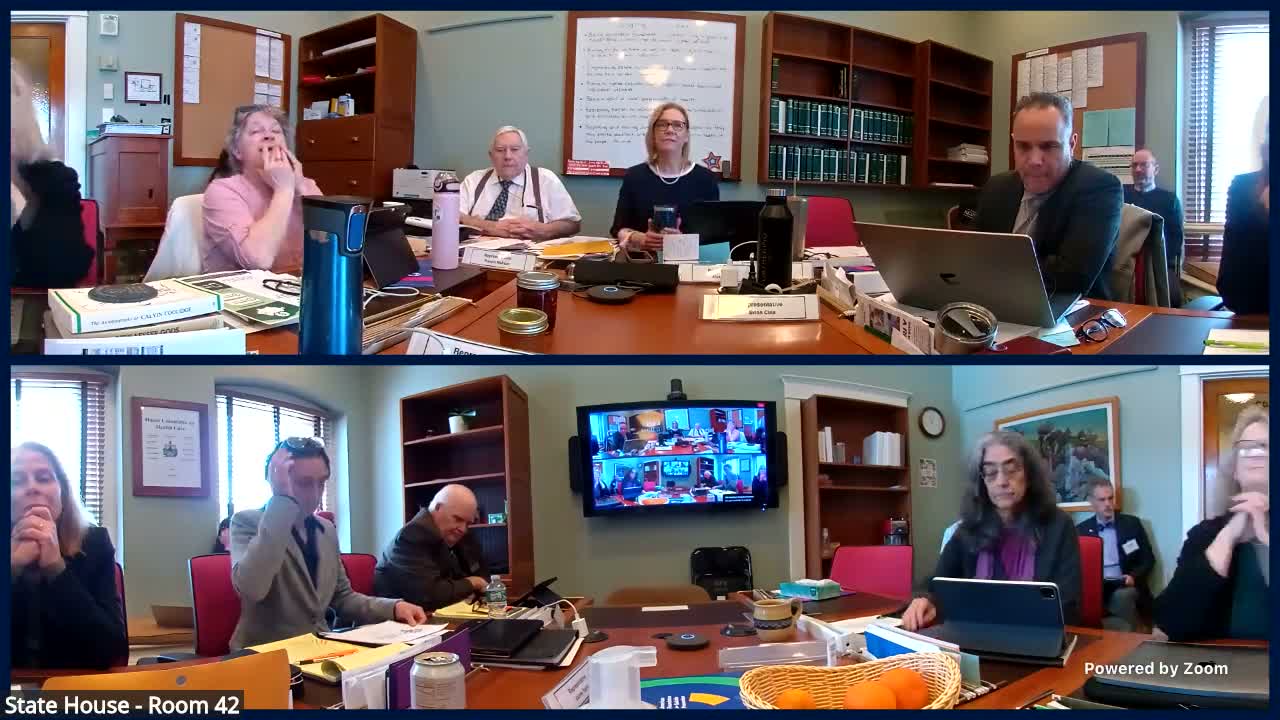
Summary
The Joint Fiscal Committee heard Department of Vermont Health Access deputy commissioner Addie Strumlow outline three options — expanded Vermont Premium Assistance, a reinsurance program via a 1332-style waiver, and a Basic Health Program — to blunt the loss of federal exchange subsidies that shrank coverage and raised premiums for about 30,000 people in the individual market.
The Joint Fiscal Committee on Feb. 12 reviewed technical analysis from the Department of Vermont Health Access (DVHA) on options to improve affordability in Vermont’s individual health insurance market after enhanced federal subsidies expired in 2025.
Addie Strumlow, deputy commissioner at DVHA, told members the affected market covers about 30,000 people and that the expiration of enhanced subsidies reduced federal assistance by roughly $65 million to $70 million, producing an enrollment decline near 7 to 8 percent. "This part of the market that we're talking about is very small. It's about 30,000 people," Strumlow said, noting the impact falls most heavily on people with incomes above 400 percent of the federal poverty level, who largely lost all subsidy.
Strumlow presented three affordability strategies studied by DVHA: expanding Vermont Premium Assistance (the state subsidy program), creating a reinsurance fund supported by a federal pass-through under a 1332-style waiver, and pursuing a Basic Health Program (BHP) for people up to about 200 percent of FPL. She said each option carries trade-offs, budget needs and federal negotiation requirements.
On Vermont Premium Assistance, Strumlow said the program, established under state statute, currently supplements federal subsidies for people up to 300 percent of FPL and "essentially just reduces by 1.5% the amount of someone's income that they have to spend for health care." She warned that scaling the program further would require legislative appropriation and would factor into upcoming Medicaid waiver negotiations.
Explaining reinsurance, Strumlow said the mechanism reimburses issuers for exceptionally high claims, enabling insurers to lower gross premiums for the whole individual market. "By reducing the premiums, we're saving the federal government money in subsidies," she said, describing a waiver pathway that would allow the state to receive a lump sum federal pass-through to finance a reinsurance pool. Strumlow added that legislative authority and an appropriation would be required and that it would be difficult to implement for the 2027 plan year.
On the Basic Health Program, Strumlow said the model — an ACA option used by a few jurisdictions — would provide alternative, Medicaid-like coverage for people up to roughly 200 percent of FPL. In the department's modeling, a Vermont BHP could be financially viable and might generate a net surplus, but federal rules and interactions with current "silver loading" policies complicate timing and design.
Committee members pressed for more detail on who bears the subsidy loss, plan-design levers that might lower premiums and how grant funding could support the next analysis. "We did something called silver loading ... and that was really effective, in terms of softening the blow," Strumlow said, while warning that recent federal proposals could affect states' use of silver loading.
Members repeatedly requested follow-up testimony and more detailed breakdowns — including how much of the estimated $65M–$70M is concentrated among relatively few people and the specific attachment points and design details for a reinsurance program. Several members said the committee should try to identify concrete actions that could be taken rather than conducting testimony for its own sake.
Strumlow said DVHA plans to continue pre-implementation analysis under a rural health transformation grant (technical assistance and actuarial support) and that the department may return with more detailed designs and cost estimates. She confirmed the department requested authority on the waiver pathway in a DFR bill and that any program would need a state appropriation. "Before doing anything, we would need an appropriation," Strumlow said.
The committee did not take formal votes during the session. Members agreed to schedule follow-up testimony and to request additional actuarial breakdowns and program-design options to inform any future legislative or budget decisions.