
Tax Department outlines pilot fund shifts and warns of near-term drawdown as municipal payments rise
Get AI-powered insights, summaries, and transcripts
Subscribe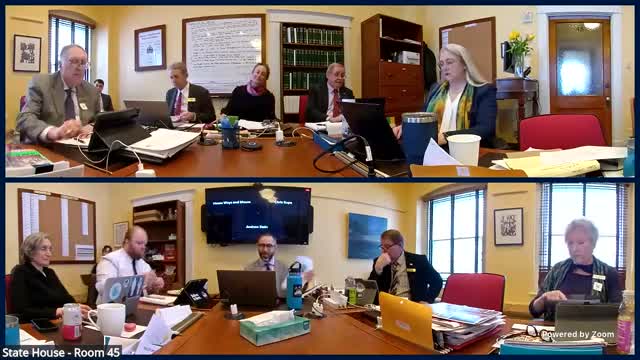
Summary
Department of Taxes officials told the House Ways & Means Committee that several municipal payments and one-time appropriations are pushing pilot special fund expenditures higher in FY26, though conservative revenue forecasts and new municipalities adopting local-option taxes likely keep the fund solvent through FY27.
The Vermont Department of Taxes told the House Ways & Means Committee on Feb. 12 that a string of appropriations moved into the pilot special fund will draw down the fund balance in the near term but are likely sustainable if projected municipal local-option tax revenues materialize.
Chief Operating Officer Andrew Stein and policy staff reviewed performance metrics, recent vendor and processing issues, and a portfolio of pilot fund expenditures including correctional facility payments, reappraisal/listing payments, a municipal grand-list stabilization program and AOT town-highway non-federal disaster payments. Stein said the department had moved some payments to the pilot fund to "make municipalities whole" and that certain items proposed in the governor's recommended budget were shifted into the pilot construct with House Appropriations' concurrence.
Why it matters: The pilot special fund is financed in part by municipal local-option taxes and a per-return administrative fee; changing what is paid from that fund rather than the general fund affects municipal cash flows and the state's budget tradeoffs. Committee members pressed officials on whether the pilot fund could sustain recurring obligations and on the forecast assumptions that underlie revenue projections.
Stein said the department had prepared a line-by-line list of grant appropriations classified as "grants out," noting a proposed reappraisal/listing payment shift that the House earlier moved forward a year. He described several discrete parcel payments included in the pilot morphology: an $8.50 per-grand-list-parcel payment intended for municipal reappraisal support, a $1 per-parcel payment to assist equalization studies, $100,000 for lister education, and a $70,000 appropriation for grand-list litigation and utility valuations.
Chris Root, staff who led an updated FY26'FY27 outlook for the pilot fund, said the fund ended FY25 with a roughly $15 million surplus. With the governor's recommended changes and recent BAA actions, Root's model projects an FY27 ending surplus of about $11.6 million under conservative revenue assumptions. He cautioned that one-time appropriations and shifts in statutory allocations could reduce the balance and that future legislative decisions could reallocate funding sources.
Committee members asked for greater clarity on revenue assumptions and whether the pilot fund's revenue mix could support ongoing disbursements. Root acknowledged uncertainty tied to upcoming municipal votes on local-option taxes; he also described how a recent House action moved some transportation-related non-federal disaster payments into the pilot fund for FY26, increasing near-term outflows.
Administration proposals to amend statutes were also discussed. Root walked the committee through technical changes to 32 VSA ' 3709 (the pilot fund statute) and related sections to add allowable uses and align statutory language with the funding construct. He flagged a package of related items including a proposal to redirect certain estate-tax "windfalls" (excess receipts beyond forecast thresholds) from the Higher Education Trust Fund to the School Construction Aid Special Fund as part of a broader funding reshuffle.
On program delivery and operations, Stein highlighted the department's performance work: erroneous refunds/credits prevented (which the department estimated saved approximately $11.8 million last year), timely-refund goals, and a 17% rate of returns requiring manual review. He also described operational improvements in current use processing linked to a new head of current use and the December migration to the VTax system.
What comes next: The committee asked staff to provide updated pilot fund figures and to follow up on revenue and sales assumptions that underpin future projections. No formal action or vote occurred during the Feb. 12 session; staff indicated additional budget and language work will continue in committee and with the Appropriations Committee.