
Maine DOT presents $4.5 billion multiyear work plan, warns of growing funding gap
Get AI-powered insights, summaries, and transcripts
Subscribe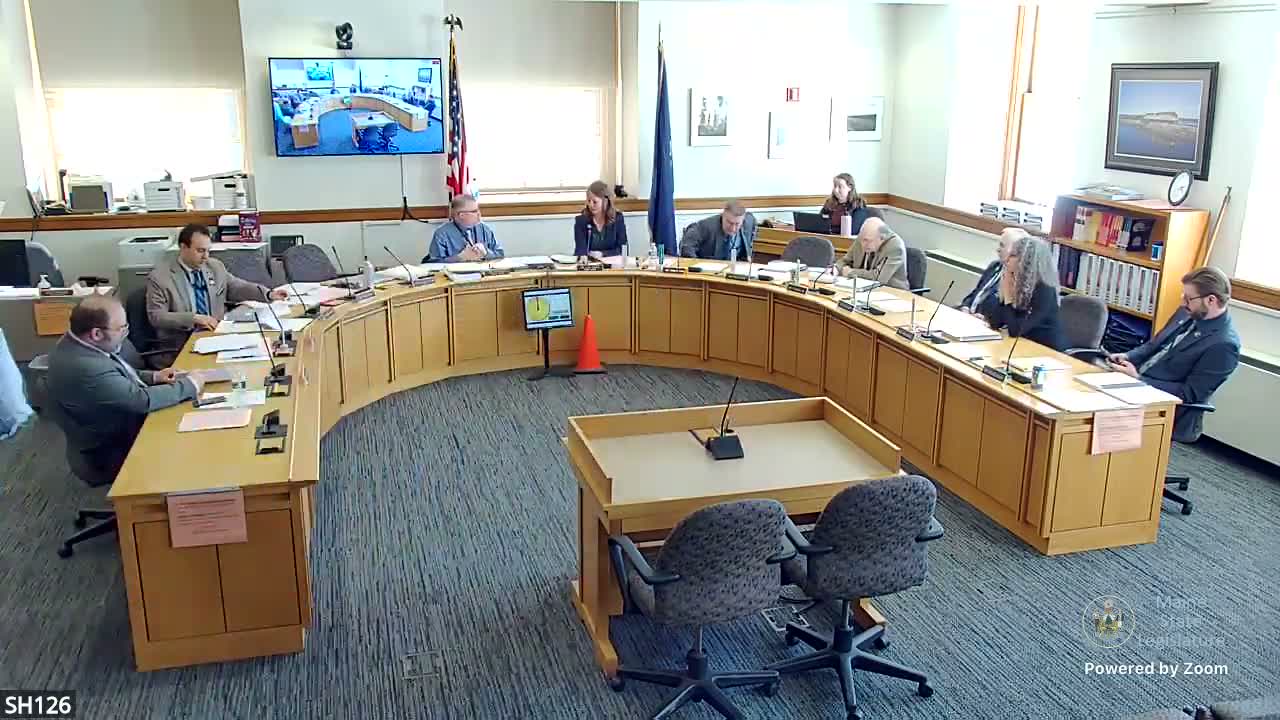
Summary
Maine Department of Transportation outlined a multiyear $4.5 billion work plan that emphasizes asset preservation, complete-streets changes and a projected structural shortfall near $160 million by 2028; the plan relies in part on Transcap bonding and uncertain federal reauthorization.
The Maine Department of Transportation on Friday presented its multiyear work plan to the Joint Standing Committee on Transportation, saying the 2026 plan is large in scope, emphasizes preserving existing assets and leaves the state facing a projected structural funding gap by the end of the five-year horizon.
Commissioner Dowdy told the committee the work plan "contains 2,798 items" and "invests about 4,500,000,000.0 across the state," a package that includes highway and bridge capital, ferry and transit investments and new pilot services. She said the plan is meant to be a transparent accounting of DOT activities and how public funds are directed.
Dowdy highlighted a new complete-streets policy that will require planners to build bicycle and pedestrian facilities into projects where appropriate and said DOT has classified the state's highways along a rural–urban context to guide speed-limit and scope decisions. The plan includes targeted new projects (for example, 10 miles of the Mountain Division Trail and pilot micro-transit service in Scarborough) while the bulk of spending is aimed at maintaining the existing system.
On revenue, Dowdy walked members through the plan's funding mix and a pie-chart of sources: state highway fund revenue (she cited a largest state source figure of roughly $875 million), Transcap bond proceeds, federal formula and grant funding, multimodal revenues and one-time general fund infusions. She warned that federal reauthorization and one-time transfers are uncertain and that operational costs (snow plowing, salt, labor) continue to put stress on the portion of revenue available for capital projects.
The commissioner said the plan assumes proceeds from twin Transcap bonds (a $250 million series) to help bridge near-term needs, but that by 2028 the state could face a roughly $160 million annual gap to maintain a static program. "This plan represents 130 of the 160," she said, describing the plan's conservative assumption about how much of the anticipated gap the state could fill with identified actions.
Committee members pressed DOT on bridge lifespan estimates and contingency planning for aging structures that could require large, concentrated investments. Dowdy said new large bridges are being designed for 100+ years and many existing bridges can reach 80 years with appropriate maintenance; she flagged ongoing studies of critical crossings and said DOT is considering scenarios for major-deck or replacement needs.
Members also asked about the split between DOT staff and contracted work. Dowdy said generating the plan is primarily DOT staff work while most capital projects are delivered by private contractors; she agreed to provide requested percentages on design, oversight and construction contracting.
Other business during the hearing included language clarifications for a vehicle-security-barrier definition, a tightened definition of "large heavy-duty bus" (gross vehicle weight of 26,001 pounds or greater and length of 30 feet or greater), and committee staff presenting a minority report on LD 1804 that would codify highway-fund oversight, establish baseline capital-expenditure minimums starting 07/01/2027 and require biannual procurement reporting from DOT and the Turnpike Authority.
Commissioner Dowdy said DOT staff will return to present more detailed budget implications and encouraged members to consult county tabs and online tools that list projects affecting specific municipalities.
The committee did not adopt final budget legislation at the hearing; members asked for follow-up materials, including town- and project-level clarifications, the full fiscal impact of Transcap assumptions and the requested contracting percentages for delivery of capital work.