Lifetime Citizen Portal Access — AI Briefings, Alerts & Unlimited Follows
Commissioner Clark outlines $324.7M in proposed Budget Stabilization Fund transfers for affordability agenda
Loading...
Summary
Commissioner Elaine Clark presented the governor's supplemental budget, proposing $324.7 million from the Budget Stabilization Fund for affordability measures including $218.5M in $300 relief payments and $70M for housing, plus net appropriations and tax conformity measures.
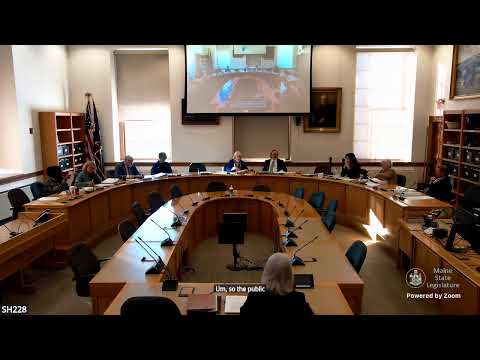
Commissioner Elaine Clark of the Department of Administrative and Financial Services delivered an overview of the governor’s supplemental budget to the Appropriations Committee, framing the package as part of a three‑part affordability agenda and the final budget of the current administration.
Clark said the administration proposes to change the use of the state's record‑high Budget Stabilization Fund (BSF) to finance certain affordability and emergency initiatives. "The proposal transfers a total of $324,700,000," she said, listing two major items: $218.5 million for $300 affordability relief payments intended for roughly 725,000 eligible Maine tax filers, and $70 million for housing initiatives that Clark said would support the construction of about 825 new homes across the state.
Her testimony summarized a wide set of supplemental components: $275 million in net appropriations across five major categories, including roughly $157 million for MaineCare‑related items, $50.5 million for education (including $46 million to maintain the state's statutory obligation to fund 55% of K–12 costs), nearly $32 million for other DHHS items to comply with federal changes, and $14 million for judicial and public defense needs. Clark described additional one‑time projects for workforce housing, PFAS remediation, climate resiliency, drinking and wastewater infrastructure, and public higher education supports.
Clark also reviewed revenue side changes and tax conformity proposals tied to federal changes, including phasing in a higher standard deduction (partial in tax year 2026, fully by 2027) and advancing a pass‑through entity tax effective Jan. 1, 2026. She said cumulative direct tax relief enacted since 2019 is estimated at about $1.1 billion in the 2026–27 biennium and described several permanent or phased tax relief measures under consideration.
The supplemental would establish 178 new positions across state agencies (97 tied to MaineCare OB3 implementation changes, among others), fund retrofits for roughly 2,300 school buses with crossing arms and anti‑pinch door sensors, and provide one‑time funds for projects ranging from new voter tabulation machines to a youth psychiatric residential treatment facility.
Clark closed by noting the administration's fiscal context: the BSF stood at about $1.03 billion at its statutory maximum and, as proposed, would remain at more than $700 million after the transfers. Committee chairs said written materials would be circulated and reminded members that public hearings on the supplemental begin next week.