Lifetime Citizen Portal Access — AI Briefings, Alerts & Unlimited Follows
Appropriations staff explain how year‑end surpluses are allocated
Loading...
Summary
Director Chris Nolan briefed the Appropriations Committee on the mechanics of year‑end closing transactions, statutory first uses of unbudgeted balances and the cascade that directs remaining funds to the Budget Stabilization Fund and highway bridging capital.
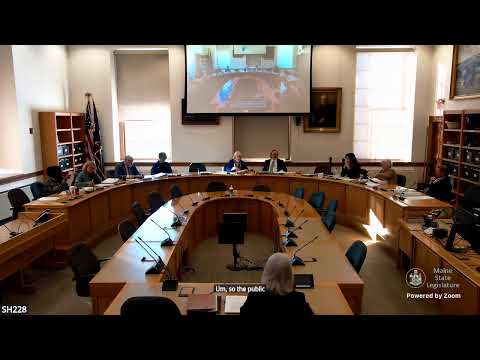
Director Chris Nolan briefed the Joint Standing Committee on Appropriations and Financial Affairs on how Maine closes its fiscal year books and allocates unbudgeted surpluses.
At the end of fiscal 2025, Nolan said, the closing transactions produced about $308.4 million in total, of which roughly $156.3 million was budgeted and about $152.2 million was unbudgeted. "Most of it was a positive revenue variance," he said, adding that approximately $117 million of the unbudgeted portion came from revenue and the remainder from lapsed program balances.
Nolan outlined the controller's prescribed sequence for distributing unbudgeted balances. First, statutory uses are applied: $2.5 million to the reserve for operating capital, restoration of the governor's contingent account up to a $350,000 cap, a $1 million transfer to the FAME loan insurance reserve when funds are available, and $2 million to reduce the retiree health insurance (OPEB) liability. After those items, he said, remaining funds follow the so‑called cascade: conventionally 80% to the Budget Stabilization Fund and 20% to highway bridging capital, unless the stabilization fund is at its statutory cap.
Committee members asked for clarifications about whether those statutory transfers are absolute priorities and about how lapsed balances work. Nolan said programs cannot legally spend beyond their appropriations; unspent balances from non‑carrying accounts lapse back to the general fund and become part of the closing pool. He acknowledged that some transfers and one‑time allocations occur outside the cascade because the Legislature directs them by language in budget acts.
Lawmakers pressed Nolan for statute citations and caps; he confirmed the operating capital reserve maximum is $50 million and the governor's contingency account cap is $350,000, and offered to follow up on whether FAME’s accumulated reserve is itself capped.
Nolan also reviewed cash‑pool accounting and how hitting the stabilization fund’s 18% cap changes where monthly interest is directed. When the stabilization fund is at the cap, monthly interest is diverted to other post‑employment benefits (retiree health liabilities) rather than to the general fund. He said staff track these flows on a monthly basis and can provide historical transaction detail on request.
The committee thanked Nolan for the orientation and asked that the briefing materials and detailed lists of lapsed balances be circulated ahead of scheduled supplemental hearings next week.