Get Full Government Meeting Transcripts, Videos, & Alerts Forever!
Get email alerts on the Emergency Funding topic
No spam. Unsubscribe anytime.
Lake County supervisors approve $1.75 million in emergency funding after Robin Lane sewage release
Summary
The Board of Supervisors voted to increase reserve cancellations and make $1.75 million available in the disaster budget for response to the Robin Lane sewage release; board members and residents urged clearer public reporting and raised conflicting estimates of the spill volume.
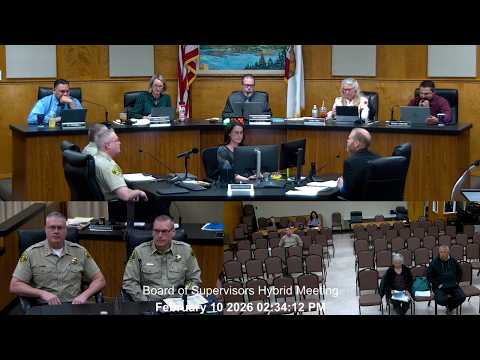
Lake County supervisors on Wednesday approved a resolution to increase emergency funding for the Robin Lane sewage release, moving up to $1.75 million into the county’s disaster budget and removing a planned transfer to the Lake O'Shan Southeast Regional System.
Assistant CIO Stephen Carter told the board that invoices and known expenses tied to the incident already exceed about $1.2 million and that the county had initially provided $1,143,000; the action approved Wednesday increases available funding to $1.75 million in budget unit "19 20" to cover filtration systems, testing, water deliveries, laundry and other response costs. Carter said staff are working with Cal OES (California Governor’s Office of Emergency Services) on reimbursement but cautioned there is no guarantee that state claims or special-district repayments will cover the expense.
Why it matters: County staff and the sheriff’s office said the response has shifted from short-term water deliveries to longer-term filtration installations, which the county plans to supply to households that request them. Public speakers and at least one supervisor pressed for more transparency about how funds are spent and about the volume of the spill into the waterways and aquifer.
Board discussion and public comment: Under Sheriff Palich described two weeks of continuous incident-command operations and said filtration units have been ordered, though officials do not yet know installation costs. When asked whether an additional $1,000,000 beyond existing allocations would be sufficient, a staff member said he was about 75% confident it would cover known needs but acknowledged there could be unforeseen costs.
During public comment, Tom Lasik thanked the sheriff’s office and urged the county to budget for long-term filter maintenance rather than leaving that responsibility to residents. Sterling Wellman asked the board to hold special districts accountable and sought public documentation of pump-truck activity and pump-station timing; he also questioned whether a 3,900-gallon figure reported for waterway contamination aligns with the scale of response. Cassandra Halbert urged prioritizing direct resident impacts — water access, mitigation, testing — and noted it had been 31 days since the spill.
Supervisor Sabatier (as transcribed) reiterated figures discussed in the meeting, saying 3,900 gallons entered waterways while stating that "2,900,000 gallons" spilled out of the pipeline; he emphasized that helping affected residents should remain the first priority and suggested packaging spending information on the city of Clear Lake’s website for public review.
Vote and outcome: Supervisor Sabatier offered the resolution. The clerk recorded a roll-call vote with Supervisors Allen, Sabatier, Crandall, Pyska and Rasmussen voting "aye." The motion passed and the changes to reserve cancellations and budget handling for the Robin Lane response were adopted.
What remains unresolved: County staff said they are pursuing state reimbursement but cannot guarantee repayment; exact installation costs for filtration systems and long-term maintenance expenses remain unspecified. Board members and public commenters asked the county to provide regular, public accounting of how the newly authorized funds are deployed.
Next steps: The resolution takes effect immediately with the additional funds available in the disaster budget; staff said they will continue coordination with Cal OES and with local partners while proceeding with ordered filtration systems and resident outreach.