Get Full Government Meeting Transcripts, Videos, & Alerts Forever!
Get email alerts on the Community Development Budget topic
No spam. Unsubscribe anytime.
Lake County supervisors continue Community Development budget review, direct staff to produce options
Summary
The Lake County Board of Supervisors agreed by consensus to continue a Community Development Department financial review to March 3 and directed staff to prepare clear options — including staffing, service and fee scenarios — after public commenters raised transparency and reserve-use concerns.
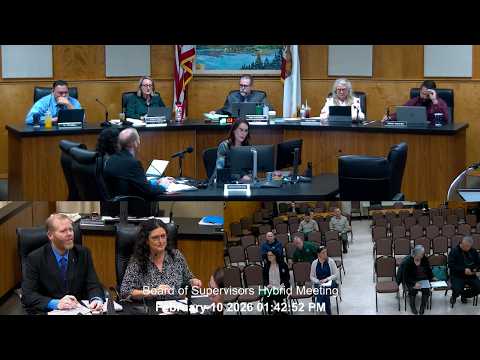
The Lake County Board of Supervisors on an apparent consensus continued a scheduled Community Development Department (CDD) financial review and directed staff to return with clearly laid-out options on staffing, services and potential fee adjustments. The board set the item for March 3 unless the chair and staff can arrange an earlier special meeting.
Mireya Turner, Community Development Director, asked the board for a continuance while staff finish options and supporting slides, saying the materials now posted include compiled data but that scenarios showing staff reductions, service cuts and fee alternatives remained in development. "We have dedicated significant staff time ... to get all the data that has been compiled for you and is finally available to the public on our PowerPoint slides," Turner said, adding she would coordinate with Human Resources on correct processes for any personnel actions.
The item drew repeated criticism from supervisors and members of the public about timing and transparency. Supervisor Sabatier said the board had "been kicking this can down the road since late December" and urged a substantive discussion rather than further delay. Several supervisors said they want multiple, clearly calculated scenarios showing the fiscal consequences of staff cuts, fee increases and service reductions so the board can weigh trade-offs.
Public commenters amplified those concerns. Tom Lasik flagged errors in the presentation and urged clearer expectations from the board on what the final product should include; he also said portions of the department's funding appeared to have been supported from reserves that had not been transparently reported. "If you're gonna go into a reserve, it should be reported and be in front of you when you make your budgetary decisions," Lasik said.
Staff and finance personnel warned that the financial numbers were still in flux. County administrative staff said some budget lines do not yet balance and that newly available midyear data could change the estimated general fund support needed. County Counsel advised that if the board wanted to provide substantive direction beyond agreeing to a continuance, the board should take public comment on that additional scope.
The meeting also included a data clarification on permitting. The packet reported "residential" permits totaling roughly 135–145; Jack Smiley, chief billing official, explained that the OpenGov permitting software groups multiple permit types under a residential heading (including roofs, solar, modular units and accessory dwelling units), and that the figure therefore does not equate to new single-family homes. Supervisor Cervantes noted Director Turner had provided a count of 35 single-family dwelling or ADU permits issued in 2025; many other permits remain under construction and are not finaled.
On the question of solar incentives, a public commenter said PG&E would stop buying back rooftop generation on April 1; county staff later clarified the change is a new CPUC rate structure that reduces compensation levels rather than a complete cessation of buyback. Staff said such market changes are among the factors that could reduce permit volume in the near term and should be reflected in fiscal scenarios.
The board directed staff to prepare multiple options showing the fiscal effects of staff and service reductions and fee adjustments, to make documents publicly available prior to any follow-up meeting, and to consult with HR on personnel-process steps. The chair and staff said they would explore scheduling a special meeting next week if feasible; absent that, the item will be returned on March 3 for fuller consideration and public comment.
The board closed the item after confirming the continuance and follow-up steps.