Get Full Government Meeting Transcripts, Videos, & Alerts Forever!
Get email alerts on the Sheriff Programs topic
No spam. Unsubscribe anytime.
Sheriff's office outlines jail education, treatment and reentry programs and warns budget cuts threaten services
Summary
Director of Programs Allie Ryker described in-custody and reentry programs — culinary training, RSVP restorative justice, 5 Keys and City College education, discharge planning, CalAIM enrollment, therapy dogs and vocational pathways — and told the board that program capacity and milestone credits depend on staffing and funding that have been reduced in recent budget cycles.
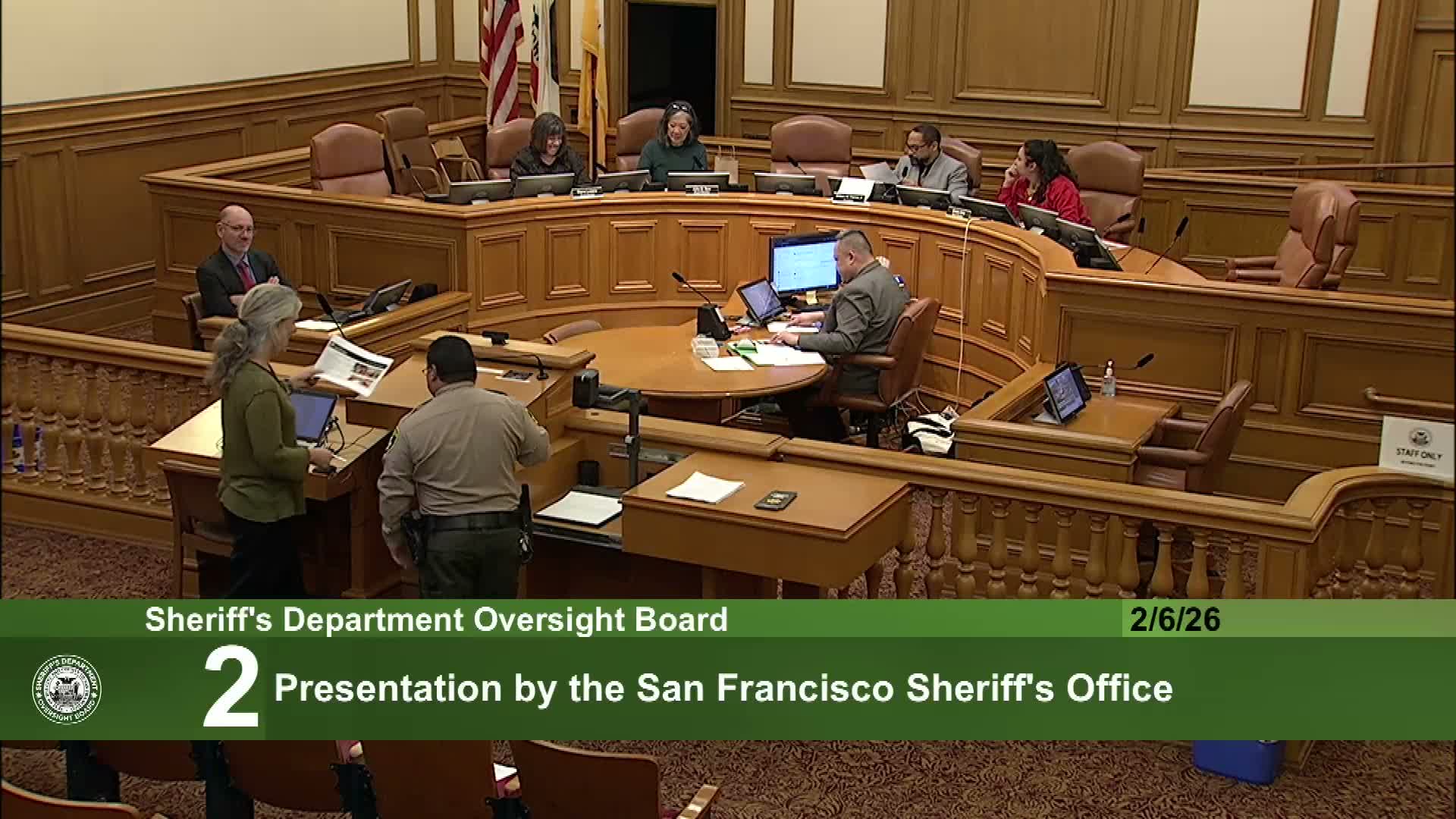
Allie Ryker, director of programs for the San Francisco Sheriff's Office, briefed the Sheriff Department Oversight Board Feb. 6 on a suite of in‑custody and reentry programs that the office runs and coordinates with community partners.
Ryker detailed programs designed to support education and reentry: culinary training provided under contract with Aramark (including ServSafe certification); 5 Keys charter high‑school programming and City College classes; RSVP, a restorative justice program recognized by the Harvard Kennedy School; and vocational tracks including Barber Pathways and braiding cohorts. She said awards and external recognitions have helped sustain volunteer and academic partnerships.
Ryker also described reentry services including a staffed discharge planning office (2 p.m. to 10 p.m. Monday–Friday), "safe passage" cab vouchers for late‑night releases, milestone credits (60 programming hours = one week off a sentence) and ongoing CalAIM Medi‑Cal enrollment work. She said about 75–80% of people entering the jails already have Medi‑Cal, but enrollment assistance is a substantial operational effort and expected to increase as program rules change.
Board members pressed for better program data. Ryker said recidivism tracking exists for several major contracts (RSVP, Cover veterans program, Roads to Recovery) using cohort analyses among participants who spend more than 30 days in program housing; she acknowledged limitations when people are released to other counties. Members requested facility‑level reporting of attendance, milestone accrual, graduation counts and program costs to help prioritize limited resources.
Ryker also described partnerships that support housing and specialized populations: a Housing Access Point partnership with the Department of Homelessness and Supportive Housing that helps people prioritized for permanent supportive housing (PSH) with documentation pre‑release; survivor reentry services for domestic violence cases; and a MacArthur‑funded housing initiative for 18–28‑year‑olds. She said the annex'based Roads to Recovery treatment pod can host up to 60 men and that therapy dogs and outdoor recreation (pickleball) have been effective adjuncts to treatment.
What happens next: Board members and staff asked the sheriff's office to return with facility‑by‑facility data on program access and milestone accrual, and to provide contact lists for community partners so the board can coordinate advocacy to protect programs during budget decisions.