
House committee advances broad K–3 literacy bill to place coaches, set statewide screeners
Get AI-powered insights, summaries, and transcripts
Subscribe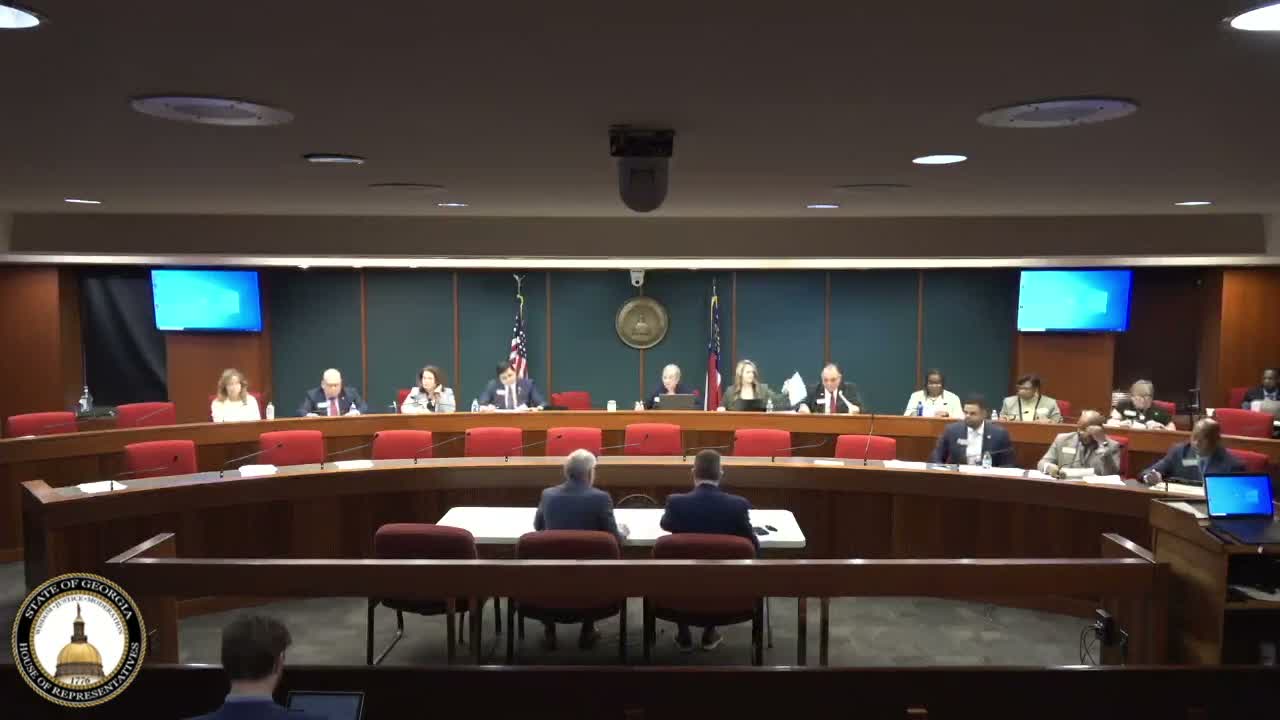
Summary
A Georgia House education committee approved LC492653S (House Bill 1193), a substitute bill to place qualified literacy coaches in K–3 schools, establish regional and leadership coaches, require high‑quality instructional materials aligned to the science of reading, and direct a literacy task force to recommend unified screeners; the measure passed by voice vote.
The House Committee on Education voted to advance LC492653S (House Bill 1193), a comprehensive K–3 literacy measure that would require school systems to place qualified literacy coaches in schools serving kindergarten through third grade and establish regional and leadership reading coaches to support classroom work.
The bill, which the committee discussed at length, directs a Georgia Literacy Task Force and a Georgia Literacy Coordinating Committee to recommend high‑quality instructional materials (HQIM) aligned to the science of reading and to identify universal reading screeners. The Office of Student Achievement and the State Board of Education would receive those recommendations; the board would approve a slate of no fewer than two and no more than five screeners for statewide use, with at least one option provided at no cost.
Supporters told the committee the measure aims to raise grade‑level reading and close gaps tied to poverty, incarceration and long‑term outcomes. “This is the state of Georgia raising our hand … we will make an investment in this,” one committee speaker said, urging the FY27 budget to include implementation funding. Presenters said the bill is a substitute reflecting subcommittee changes, including explicit ties to the Office of Student Achievement and an advisory coordinating committee that will help select HQIM and screeners.
Members asked specific questions about several provisions. Legislative counsel confirmed the bill does not change the state’s compulsory attendance age — it remains six — and that an earlier draft that said age five had been included in error. Committee counsel also noted the bill restates an existing provision that no student may remain in kindergarten for more than two years; that language is a reorganization rather than a substantive change to current law.
The bill requires school systems to adopt unified literacy plans and directs ongoing evaluation of educator preparation programs (EPPs). Presenters said the state will fund the highest‑rated screener and HQIM allocations through the QBE allotment so systems can apply the resources locally; systems must demonstrate they have someone in the literacy coach role with the required qualifications to receive the FTE allocation.
Committee members raised equity and implementation questions: how poverty‑weight funding follows individual students, how the task force will limit and update approved screeners, and what support exists for older students who already struggle with reading. Presenters said the Georgia Council on Literacy will prioritize low‑income students and that the task force will use a rubric to recommend screeners; the state will fund coaches but acknowledged hiring roughly 1,300 literacy coaches will be a substantial workforce effort given existing vacancies.
After the discussion, a committee member moved to approve LC492653S (House Bill 1193). The motion carried by voice vote; the clerk reported the measure passed unanimously.
The committee’s immediate next steps include coordinating with the Office of Student Achievement, the State Board of Education, and the Georgia Literacy Council on implementation guidance and budgeting; presenters said they will return with more detailed cost estimates and a rollout timeline.