Norwood committee flags $7.7M preliminary gap; health-insurance swing could change plan
Loading...
Summary
Town officials told the BBC a preliminary FY27 projection shows roughly a $7.7 million gap and warned that Group Insurance Commission health‑insurance results — due this week — could swing liabilities by about $1 million. Officials agreed to reconvene after GIC numbers are final.
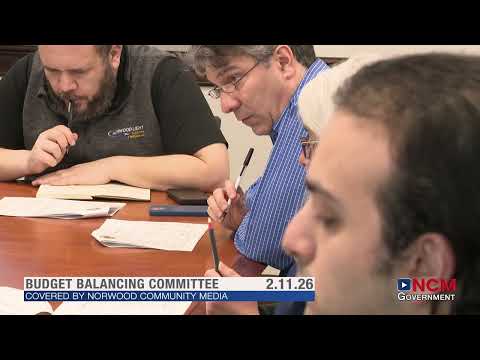
The BBC convened Feb. 11 to review the governor’s budget, recent cherry‑sheet estimates, and a preliminary FY27 financing picture that currently shows about $7.7 million in deficit or use of free cash.
Jeff, the presenter who walked the committee through the town and school comparative revenue pages, said the governor’s proposal and Department of Revenue starting figures differ on charter‑school tuition reimbursement and other cherry‑sheet columns. He summarized net receipts as modestly positive — roughly $327,000 higher than last year while assessments rose by about $71,000 — producing a small net gain but far short of earlier expectations.
The Group Insurance Commission (GIC) projection was central to the discussion. Tony, who briefed members on health‑insurance exposure, said the GIC’s preliminary report showed a 10.9% average increase across plans but that plan‑design changes could bring that to roughly 6% on one extreme and as high as 13% on another. "The 10% increase on health insurance is what is killing our budget," Tony said, explaining that a one‑point swing materially affects the town’s ability to remain within Prop 2½ constraints.
Committee members noted the funding formula’s hold‑harmless provision — referenced in the meeting as affecting roughly 85% of districts this year — limited how much Chapter 70 aid Norwood could expect even if statewide totals rose. That combination of a constrained aid formula and uncertain health‑insurance costs produced the preliminary $7.7 million projection when cherry‑sheet, GIC and other assumptions were combined.
FinCom and other members urged clear, qualitative descriptions for what various cut levels would mean for services should town meeting decline free‑cash support. Presenters had prepared scenario slides showing what pro‑rata or growth‑weighted reductions could look like and warned that many of the town’s operating costs are people‑driven, so large dollar reductions translate into position reductions.
Next steps: The committee requested final GIC numbers before taking an endorsement position on free cash. Members agreed to a one‑item follow‑up remote meeting on Feb. 18 at 1:00 p.m. to review finalized GIC figures and, if necessary, refine the BBC’s free‑cash recommendation to town meeting.