
House extends rural telecom universal-access fund to 2040, citing 911 and connectivity needs
Get AI-powered insights, summaries, and transcripts
Subscribe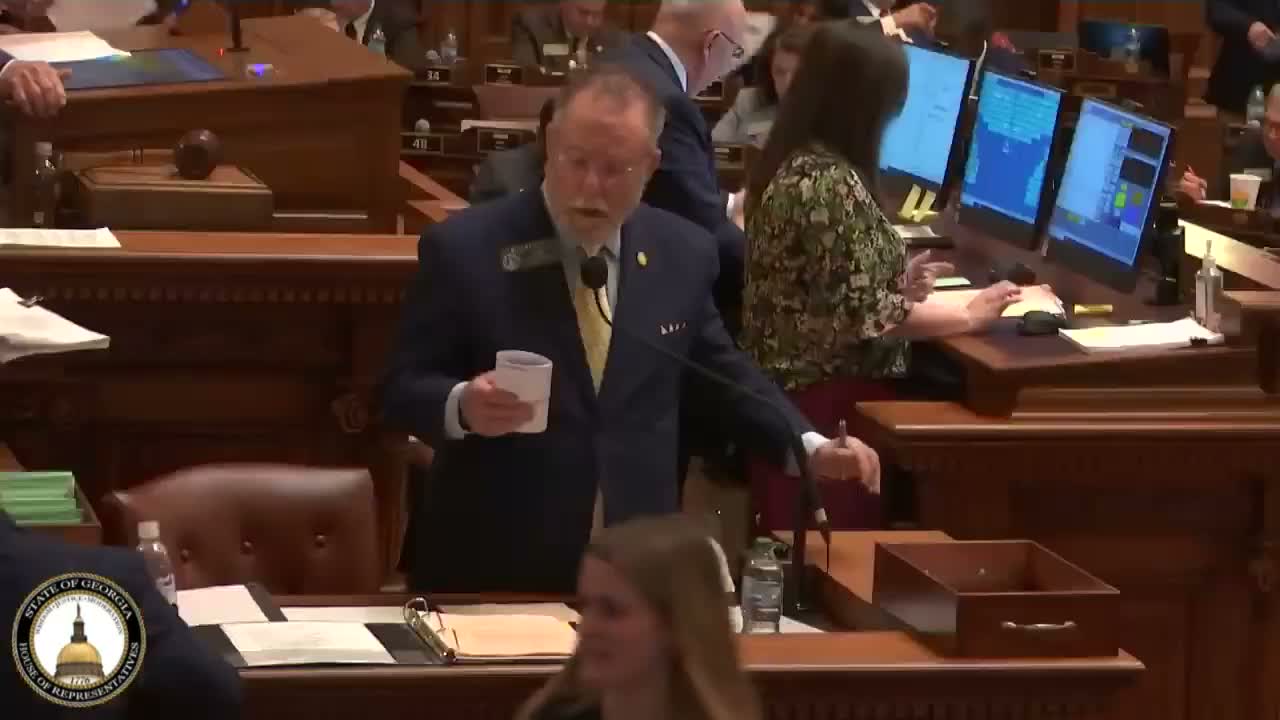
Summary
The Georgia House passed House Bill 998 to extend the universal access program and fund to 2040, a measure sponsors said will preserve basic telephone and 911 service in rural areas; the bill passed 161–2 after lawmakers discussed guardrails and auditing requirements.
The Georgia House on the floor voted to extend a state program aimed at preserving telephone service in rural areas, passing House Bill 998 by a recorded vote of 161–2. Representative Rob Leverett, presenting the bill, said the measure would continue the universal access program — administered by the Public Service Commission — from its current 2030 expiration through 2040.
Leverett said the program ‘‘is essential to the provision of accessible and affordable basic telephone service in a lot of our rural communities’’ and that without it some residents lack the landlines needed to call 911 where cell coverage is absent. He told members the bill includes ‘‘guardrails’’ such as distribution limits, statutory audits and a requirement that the Public Service Commission report every two years on the fund’s status.
Members questioned specifics and local impacts. Representative Mike Cameron asked whether the program helps mountain districts with sparse coverage; Leverett said it does. Representative Al Williams of Liberty County rose in support and described the bill as vital to ‘‘rural Georgians’’ and to small local phone companies that would otherwise struggle.
The House adopted the rules committee substitute and then passed the measure by recorded vote: yays 161, nays 2. Sponsors said the bill reopens a limited opt-in for certain companies and aims to ensure geographically robust basic telecommunications service while subjecting distributions to audits and reporting requirements.
The bill was referred to the Committee on Energy, Utilities and Telecommunications and, after passage on the floor, will proceed according to legislative process for enrollment and transmittal.