Committee hears SB 5124 to set Medicaid network standards for nursing homes, rehab facilities
Loading...
Summary
SB 5124 directs the Health Care Authority to establish Medicaid network adequacy standards for nursing homes and inpatient rehabilitation facilities, with standards to be adopted by 01/01/2028 and MCOs required to comply by 07/01/2028. Supporters said the bill will reduce hospital 'stays' caused by placement delays.
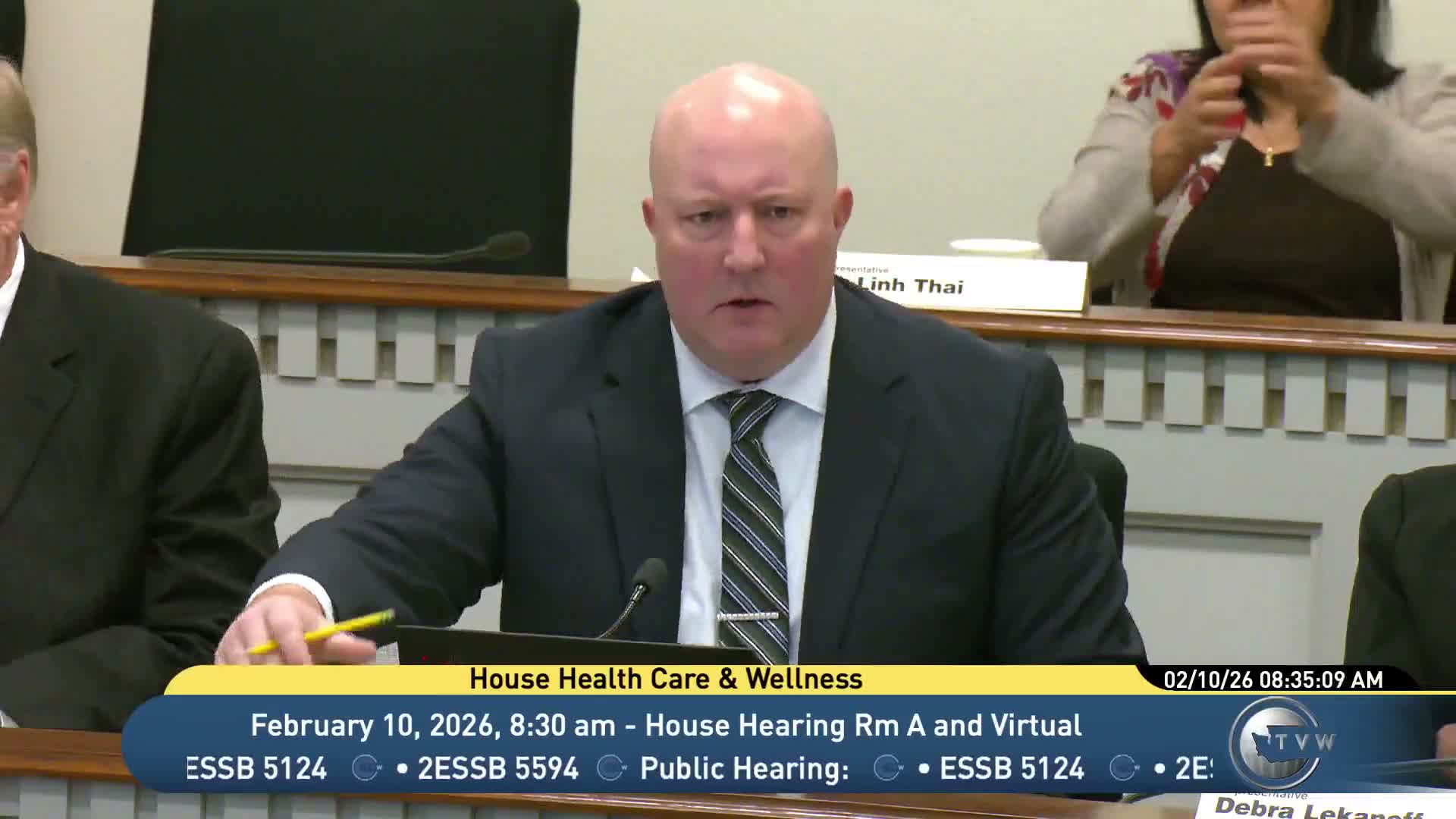
The Health Care and Wellness Committee considered Senate Bill 5124 on Feb. 10, a bill that would require the Health Care Authority to adopt Medicaid network adequacy standards for nursing homes and inpatient rehabilitation facilities.
Committee staff explained the proposed standards must balance keeping care local to an enrollee’s community, regional availability, timeliness of care and compliance with federal Medicaid requirements. The staff summary said the Health Care Authority must adopt standards by Jan. 1, 2028, and managed care organizations must meet them by July 1, 2028.
State Senator Ron Mazzall, the bill sponsor, described SB 5124 as a follow-up to earlier work on 'difficult to discharge' patients and said the bill creates a preapproved pathway for patients who face barriers to continuing care outside hospitals. Supporters from hospitals and health systems said the absence of predictable network adequacy forces hospitals to negotiate single-case agreements that can add days to a patient’s hospital stay and leave patients farther from home.
Katie Kolan, testifying in support, cited a hospital survey in which delayed access led hospitals to hold patients in beds at high daily cost and argued that predictable placement pathways would improve patient outcomes and reduce system costs. Dina Hannon of MultiCare described operational steps staff must take when a patient is ready for discharge — identifying an accepting facility, obtaining insurer approval, and completing a single-case agreement if no contract exists — and said that process can add multiple days to hospital stays, especially in rural areas.
No vote or formal action was taken. Committee members asked clarifying questions and welcomed the witnesses’ practical examples; staff and sponsors will incorporate technical edits or drafting changes in follow-up work if needed.
The committee concluded public testimony on SB 5124 and returned to SB 5594.