Get Full Government Meeting Transcripts, Videos, & Alerts Forever!
Get email alerts on the Health Pharmacy Biosimilars topic
No spam. Unsubscribe anytime.
Committee hears SB 5594 to let pharmacists substitute biosimilars; advocates urge patient-cost protections
Summary
The Health Care and Wellness Committee heard testimony on SB 5594 to add biosimilars to substitution rules and pharmacy-utilization standards. Proponents said biosimilars lower costs; patient advocates warned point-of-sale implementation could raise out-of-pocket costs without formulary changes. No vote was taken.
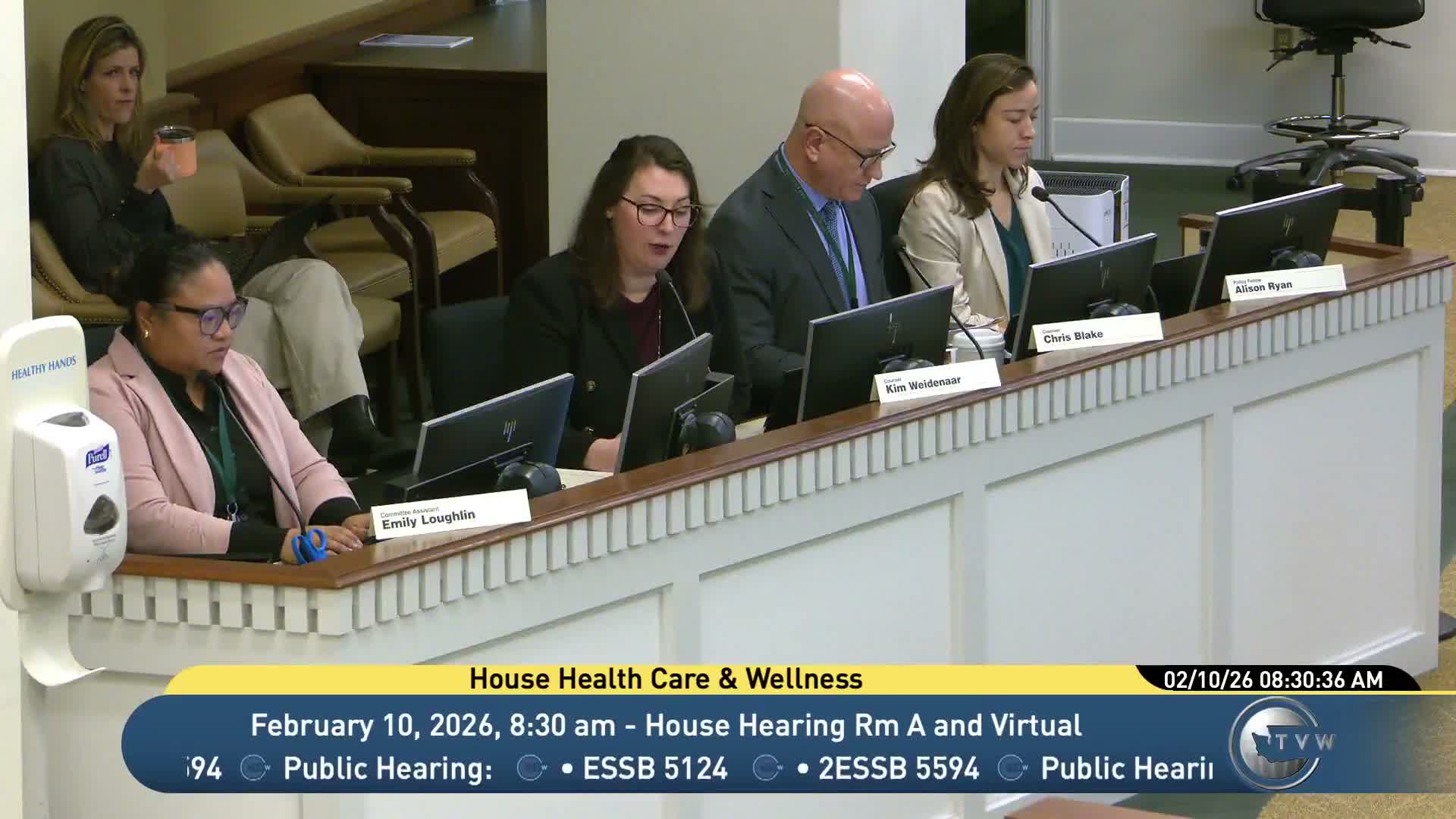
The Health Care and Wellness Committee heard staff and public testimony on Senate Bill 5594 on Feb. 10, a proposal to add biosimilars to the state’s drug-substitution rules and to promote biosimilar utilization in exchange plans.
Committee staff described the bill as allowing pharmacists to substitute therapeutically equivalent biosimilars unless a prescriber marks the prescription 'do not substitute' and as permitting health carriers to require a biosimilar trial prior to covering a branded biological product beginning Jan. 1, 2027. The staff summary also said state-purchased qualified health plans on the exchange must comply with Health Care Authority requirements to expand pharmacy-efficiency measures, now explicitly including biosimilar utilization.
Sponsor remarks and proponent testimony framed the bill as aligning Washington with other states and as a tool to reduce drug spending. Senator Harris urged early consideration, saying biosimilars are lower-cost alternatives used for conditions such as arthritis. Marissa Ingalls of the Association of Washington Healthcare Plans said substitution is working in other states and can lower out-of-pocket costs and system spending. Chris Bandley of America’s Health Insurance Plans said biosimilars represent a next step in ongoing efforts to encourage lower-cost prescription drugs.
At the same time, patient advocates and some committee members raised implementation concerns. Erin Jajic of the Patient Coalition of Washington said the bill’s stated goal — lower patient costs — may not be achieved in practice because pharmacists at the point of sale often cannot run both the prescribed biologic and a biosimilar to determine which has lower cost-sharing. 'At the point of sale, they can’t run the two meds to see what my cost sharing will be,' Jajic said, arguing that substitution could unintentionally increase a patient’s out-of-pocket expense unless carriers and PBMs align formulary placement.
Representatives and witnesses discussed possible remedies. Multiple testifiers, including proponents from industry and manufacturing associations, said placing biosimilars on preferred formulary tiers with carriers and PBMs would help ensure substitutions lower patient costs. Brett Michelin of the Association for Accessible Medicines proposed a drafting change to group biosimilars with generics and interchangeables in the statute and highlighted national utilization and savings figures for biosimilars since their 2015 introduction.
There were no committee votes or formal motions during the hearing. Committee members asked staff and witnesses clarifying questions and requested any proposed drafting language be sent to staffers for follow-up.
The committee adjourned after concluding public testimony on SB 5594; the bill will return for further committee work if sponsors and staff file amendments and next steps.