Senate committee advances bill to boost funding for abandoned uranium-mine cleanup
Loading...
Summary
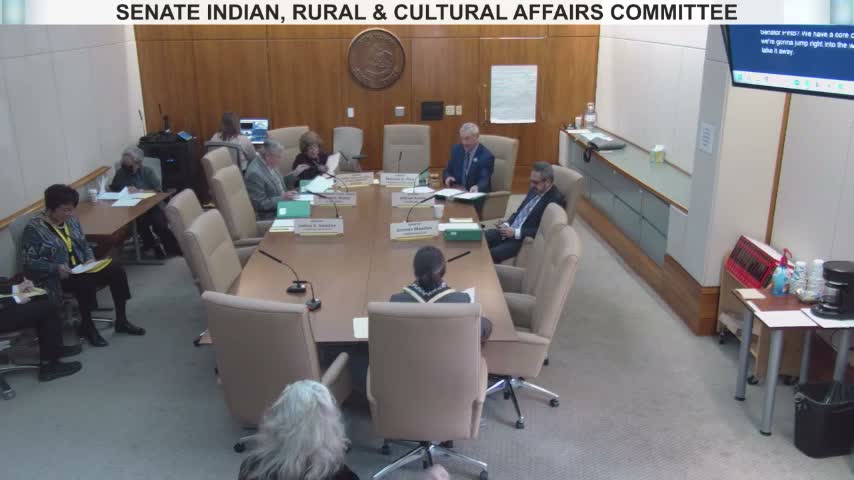
The Senate Indian and Tribal Affairs Committee voted to give Senate Bill 226 a due pass, advancing a proposal to increase state funding for assessment and cleanup of abandoned uranium mines after testimony about health and environmental harms in tribal and rural communities.
Senator Pinto advanced Senate Bill 226, a proposal to increase state funding for assessment and cleanup of abandoned uranium mines, and the committee voted to give the bill a due pass.
Supporters told the committee that unreclaimed uranium sites continue to harm communities. "These sites have affected so many lives across rural and tribal communities throughout New Mexico," said Denise Willie, a member of the Navajo tribe from Yamatoe, New Mexico, who urged lawmakers to support the appropriation. Adela Duran, who said she represents uranium mining companies, noted that the state appropriated $20,000,000 last year and that $12,000,000 of that money was used to clean four sites in McKinley County.
The bill’s sponsor, Senator Pinto, described prior appropriations and said more funding is needed. "I believe it is around 20,000,000," Pinto said when describing previous funding levels, and other speakers characterized the current proposal as increasing available cleanup funding to roughly $50,000,000 in total. Testimony described a range of health harms tied to unreclaimed mines, including "reproductive harm, kidney damage, asthma, groundwater contamination, and land contamination" (Denise Willie).
Committee members pressed for details about liability and ownership. Senator Maestas asked who owns the land and mineral rights and why past operators were not held responsible. Pinto answered that responsibility varies by site, that operators were often difficult to track after they closed, and that some landowners today lack funds to remediate contamination.
After questions about whether earlier appropriations remain in the budget and whether this request would be a one-time or recurring allocation, Senator Sherr moved a due-pass recommendation; the motion was seconded and the committee recorded a due-pass recommendation.
The committee action advances the bill to the next legislative step; final funding levels and whether the proposal will be included in House Bill 2 will be determined later in the budget process.