Get Full Government Meeting Transcripts, Videos, & Alerts Forever!
Get email alerts on the Insurance topic
No spam. Unsubscribe anytime.
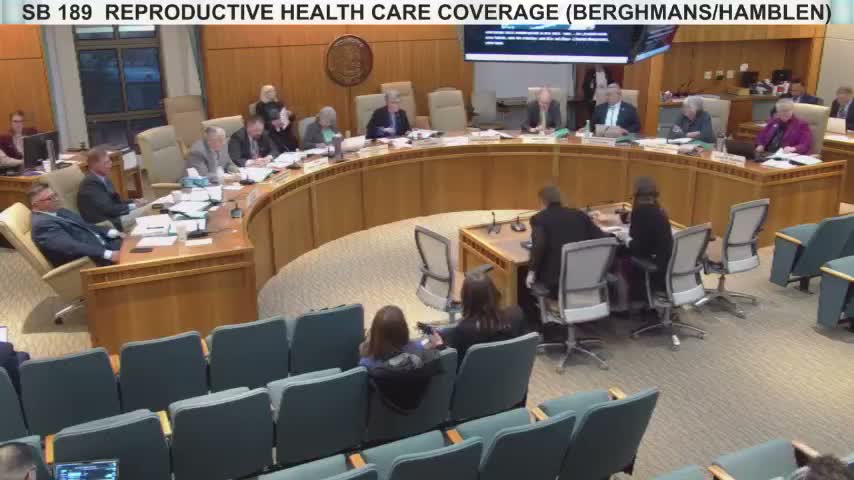
Committee splits on coverage bill addressing reproductive and gender-affirming care; tabling motion fails and bill gets due pass with mixed votes
Summary
SB89 would protect existing insurance coverage for reproductive and gender-affirming care, allow midyear enrollment for pregnancy, and require Medicaid coverage for certain items; supporters cited recent denials and consumer harm while opponents raised religious and fiscal concerns. Committee voted a do‑pass recommendation on a 6–4 roll call after a failed tabling motion.
Senate Bill 89, presented by Senator Bergman on Feb. 13, would align multiple insurance provisions — including guaranteed coverage for a range of reproductive and gender‑affirming health services in statute, midyear enrollment when pregnant, and Medicaid coverage clarifications such as double electric breast pumps — and update definitions to conform with related bills.
Public testimony and advocacy
Supporters from reproductive‑justice and LGBTQ organizations described real-world instances where plan documents buried coverage exclusions and individuals had to scramble to change plans. Lisa Villanaramco (Bold Futures) said the bill would have covered a prior abortion she paid for out of pocket. Marshall Martinez (Equality New Mexico) and representatives of Conservation Voters New Mexico emphasized the cumulative harms of recent denials and urged statutory clarity.
Opposition and committee debate
At least one online opponent was recorded. On the floor, one senator framed the issue in sharply religious terms and asked whether the bill forces religious providers or institutions to pay for care they object to; committee counsel referenced case law on religious exemptions such as Hobby Lobby when answering. The exchange grew heated at times, with multiple senators voicing strong views for and against.
Committee action
A motion to table the measure was moved and put to vote; the tabling motion failed on a 6–4 recorded vote. The committee then recorded a due-pass recommendation on the committee substitute (motion succeeded with a 6–4 roll call). Several members asked for clearer statutory language and noted the issue intersects with Medicaid policy already subject to court orders.
Next steps
Because the committee recorded a due-pass recommendation, the bill will proceed per legislative process. Sponsors and agency staff said implementation details, religious‑exemption questions and any interplay with Medicaid would be clarified in subsequent reviews.