Get Full Government Meeting Transcripts, Videos, & Alerts Forever!
Get email alerts on the Massage Regulation topic
No spam. Unsubscribe anytime.
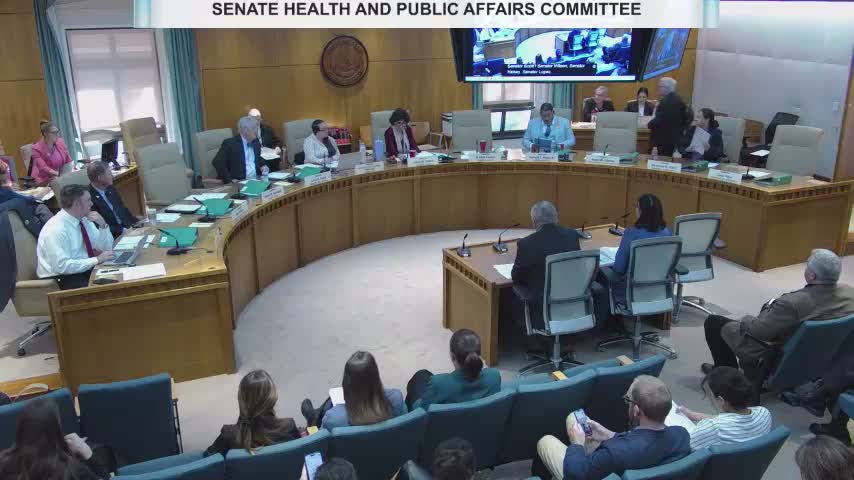
Senate committee backs licensure, inspection of massage establishments after trafficking concerns
Summary
The Health & Public Affairs Committee gave a do‑pass recommendation to Senate Bill 246, which would require licensure of massage therapy establishments and authorize inspections, after sponsors and RLD officials said the measure closes gaps used by some illicit operations and stakeholder witnesses described professional standards.
Senate Bill 246, introduced by Senator Woods, won a committee recommendation after sponsors and witnesses argued the measure would close a regulatory gap that currently licenses individual massage therapists but not the establishments where they work.
Melissa Salazar, director of boards and commissions at the Regulation and Licensing Department, told the committee the bill "would establish a licensure requirement for massage therapy establishments and implement an inspection requirement for those facilities." She said that licensing establishments would give the department authority to inspect for sanitation, confirm therapists are licensed and verify operations are legitimate.
Susan Myers, chair of the New Mexico Massage Therapy Board and coordinator of the UNM Taos massage therapy certificate program, said candidates must complete 650 contact hours and pass a national exam and that inspections are "nationally recognized as a way to vet safety practices." Jason Thompson, representing the New Mexico chapter of the American Massage Therapy Association, said the association is neutral but that stakeholders want to participate in the rulemaking process outlined in the bill.
Lawmakers focused on how inspections would apply to home‑based businesses, mobile therapists and privacy within a private home. Salazar and Kevin Graham, general counsel for RLD, said the bill authorizes inspection of establishments, including home‑based operations, and that the massage board — through open rulemaking — would set criteria distinguishing home operations from commercial facilities. Graham said the previous year's version had exempted home businesses with two or fewer practitioners; that exemption was removed because it could create a loophole that bad actors exploit.
Senators pressed for privacy protections and for clear limits on the scope of home inspections; RLD witnesses said inspection rules would identify what constitutes an establishment (running water, ventilation, restrooms and other practical standards already used by barber/cosmetology rules) and that owners would be given an opportunity to accompany inspectors and receive an inspection report within 14 days.
After questions and public testimony, the committee moved and recorded a do‑pass recommendation for SB246 to the next committee.
Next steps: SB246 received a do‑pass recommendation and will proceed to the committee listed on the motion for further consideration.