Senate panel advances bond amendment for Gila Regional's cancer equipment amid funding questions
Loading...
Summary
The Senate appropriations committee adopted an emergency-clause amendment to Senate Bill 190 to enable bonding for a new linear accelerator at Gila Regional Medical Center, but members pressed sponsors on timing, the $5.7 million price tag and whether long-term bonds are prudent for equipment with a 10-year life.
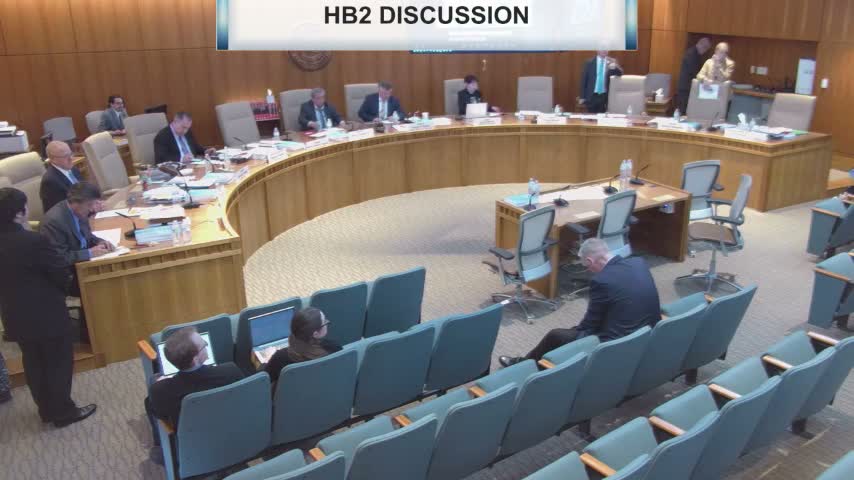
Senate appropriations members adopted an amendment adding an emergency clause to Senate Bill 190 as they considered a bonding request to replace an aging linear accelerator at Gila Regional Medical Center.
The bill sponsor told the committee the legislation "allows Gila Regional Medical Center to replace their aging linear accelerator," a radiation device used for cancer treatment that the sponsor said will reach end of life in May 2028. Registered lobbyist Matthew Munoz, representing the hospital, urged support, saying, "Replacing this cancer equipment is extremely important to the community in Southwest New Mexico" so patients need not travel long distances for care.
Committee discussion focused on cost and timing. Members and staff cited a bond request of roughly $5.73 million and an equipment price of about $5,735,315. Hospital representative Robert Whitaker told the panel the machine "becomes obsolete in May 2028," and state finance staff said bonds could be issued within about 90 days if accelerated.
Lawmakers questioned financing the roughly $5.7 million purchase with 30-year bonds when the linear accelerator has an expected service life of about 10 years. A finance staffer warned the committee that if revenue declines, the state would need the full 30-year structure unless earlier prepayments were available; staff estimated interest costs on the issue at about $2.6 million under anticipated rates.
Members discussed alternatives to avoid long-term state debt for short-lived equipment, including asking counties to purchase equipment and lease it to the hospital so federal rural grant funds could be used. Staff cautioned the rural health fund may cover only leases, not purchases, but committee members directed staff to explore county-lease options and existing federal or rural health funds before returning to the bill.
The committee adopted the emergency amendment (moved by Senator Woods and seconded by Senator Nier) without recorded objection and left the bill pending while members said they would try to identify roughly $4.2 million in additional capital or repurpose available balances (staff reported approximately $1.5 million in excess proceeds could be available immediately). The chair asked the sponsor and staff to report back the next day with financing options and whether local partners could participate.
The committee did not take a final vote on the bill; members left it on the table to resolve financing questions.
The next procedural step is for staff to report alternate funding scenarios and for the sponsor to provide updated capital contributions before the panel proceeds.