
Committee advances substitute for SB165 to expand serious‑youthful‑offender definitions, lengthen commitments and fund community programs
Get AI-powered insights, summaries, and transcripts
Subscribe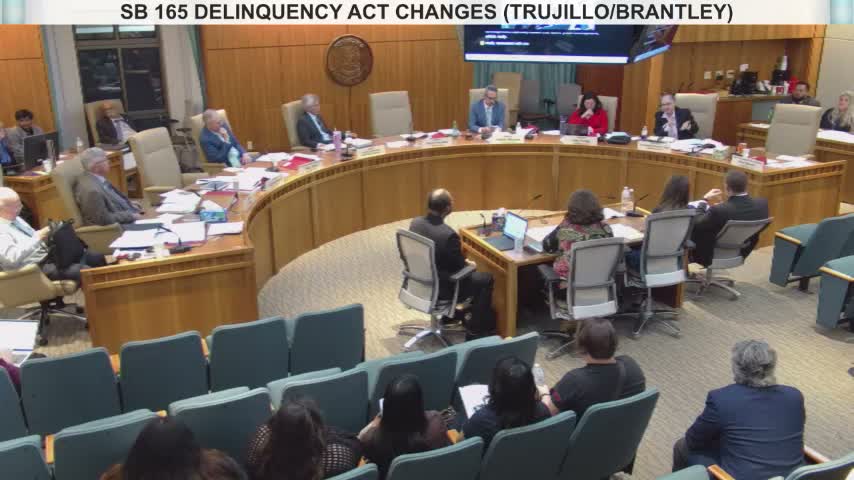
Summary
Senate Judiciary moved a committee substitute for SB165 that expands the serious‑youthful‑offender category to include second‑degree murder and certain shootings causing great bodily harm, adjusts short‑ and long‑term commitment and supervised‑release periods, and increases grant opportunities and local panels for diversion programs; advocates warned the bill may expand incarceration without adequate community input.
Senators Brantley and Trujillo presented a committee substitute for SB165 aimed at updating New Mexico’s delinquency code, improving interventions for youth who commit serious offenses, and expanding community corrections funding.
Key changes in the substitute included: adding second‑degree murder and shootings from a vehicle or at an occupied dwelling that cause great bodily harm to the serious‑youthful‑offender category (limited to 15–17 year olds); adjusting short‑term and long‑term commitment maxima (short‑term: no more than 18 months; long‑term: no more than 30 months) and increasing supervised‑release minimums to 180 days; requiring validation of the risk‑assessment instrument every three years; and broadening a juvenile community‑corrections grant program so funds can support justice‑involved youth and evidence‑based programming.
Sponsors framed the measure as a balanced package that strengthens community alternatives, regionalizes services, and reserves transfer to adult prison until age 21 unless the youth presents a continuing, substantial danger and no safe placement exists. “This bill aims to break that cycle of violence by allowing intervention after catastrophic incidents before they escalate further,” a sponsor said.
Opposition came from a statewide coalition of youth-justice and community organizations, system‑impacted young people, and some legal experts who warned the substitute could expand the number of youth exposed to adult‑style sentencing without stronger safeguards such as dual/blended sentencing or a reassessment before transfer to adult custody. Legal testimony urged more implementation detail and participation from practitioners who operate juvenile programs.
The committee accepted a friendly drafting correction and moved the committee substitute forward (do pass on substitute); sponsors said they will continue interims to refine rules governing CYFD/Corrections transfers and to pursue complementary reforms. Law‑enforcement representatives testified in support and several community groups asked for more time and technical changes to ensure racial/tribal impacts and program details are addressed before floor action.
What’s next: Committee substitute to be finalized with adopted drafting corrections; sponsors expect continued stakeholder meetings and potential subsequent amendments before a floor vote.