Lifetime Citizen Portal Access — AI Briefings, Alerts & Unlimited Follows
Committee advances microgrid oversight bill after heated public hearing on data‑center projects
Loading...
Summary
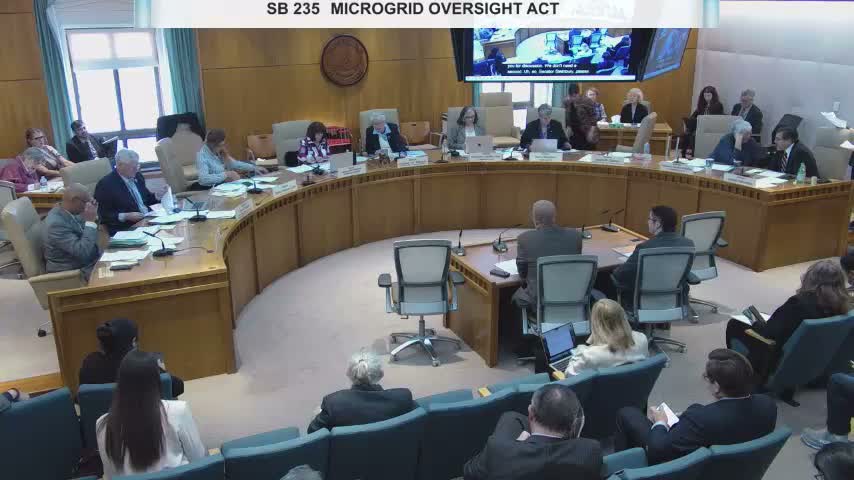
Lawmakers voted 6‑3 to advance a committee substitute of SB 235, the Microgrid Oversight Act, after hours of testimony from community groups worried about Project Jupiter's proposed methane microgrid and industry opponents who warned regulation would chill investment.
A Senate committee voted to advance a committee substitute for SB 235, the Microgrid Oversight Act, after an extensive public hearing that split environmental advocates and industry groups over how to regulate large private microgrids tied to proposed data‑center development.
Sponsor Senator Steinborn described the substitute as a fix to a statutory gap that currently allows some private microgrids to operate outside the state’s Energy Transition Act (ETA) requirements. The substitute restores ETA benchmarks for microgrids, requires compliance reporting to the Public Regulation Commission and allows microgrids to meet up to 10 percent of their renewable portfolio requirement by funding local community solar for low‑income residents.
Environmental and public‑health groups testified that large microgrids — citing Oracle’s proposed Project Jupiter in Doña Ana County — could dramatically increase local air pollution and greenhouse‑gas emissions. Mariel Nanesi of New Energy Economy told the committee Project Jupiter’s proposed methane‑fueled turbines would “require more electricity than all of PNM’s current generation capacity combined” and warned that the associated pollution could worsen asthma and other respiratory conditions in a region already struggling with smog.
Industry speakers — including representatives of the New Mexico Chamber of Commerce, Permian Basin Petroleum Association and utilities — opposed the substitute. They argued that microgrids can provide reliability and resilience where grid access is constrained and that new PRC oversight, mandatory reporting and a long‑term decarbonization mandate could slow deployment, raise costs and deter private investment.
The sponsor replied that the substitute strikes a balance by ensuring community safeguards and prohibiting utilities from shifting microgrid costs onto other ratepayers. He said the change would prevent microgrid developers from financing projects that increase rates for customers who did not benefit from the project.
On the motion, the committee voted 6‑3 in favor of a do‑pass recommendation on the committee substitute and against the original bill (motion recorded as a do‑not‑pass on the original and do‑pass on the substitute). The committee record notes substantial turnout from both supporters and opponents during the allotted testimony periods.
What happens next: The committee will report the committee substitute out with a do‑pass recommendation; the bill will proceed to the next legislative stage per the Senate’s rules. Lawmakers and stakeholders said further rulemaking and PRC processes would be needed to implement the substitute’s reporting and compliance requirements.