
Senate panel advances amended SB41 after hours of testimony on removing time bars for sexual‑violence crimes
Get AI-powered insights, summaries, and transcripts
Subscribe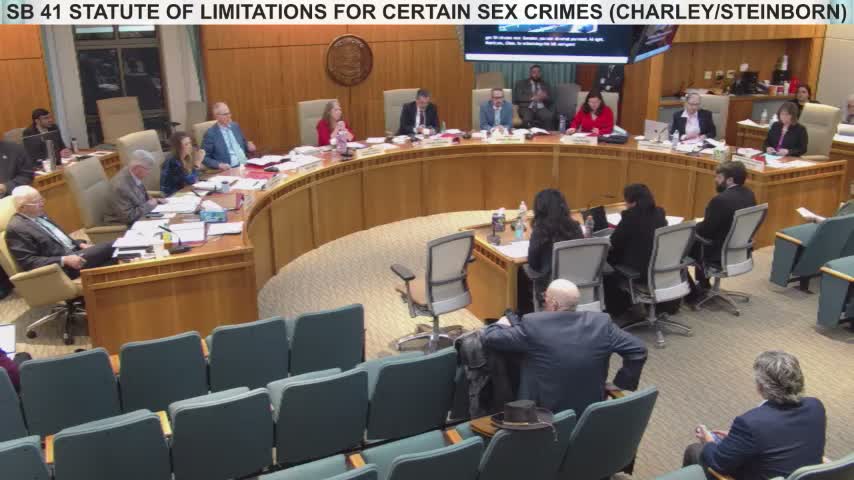
Summary
Sen. Charlie’s SB41, which proposed abolishing statutes of limitations for many sexual‑violence offenses, drew survivor testimony and constitutional concerns from public defenders; the sponsor accepted a narrowing amendment and the committee advanced a committee substitute.
Senator Charlie introduced Senate Bill 41, which would eliminate the statute of limitations for a list of sexual‑violence offenses, arguing survivors often cannot disclose abuse for years. “Justice should never expire,” the sponsor told the committee.
Alisa Demas, director of special prosecutions at the Attorney General’s Office, said delayed disclosure and trauma often prevent timely reporting and argued abolition would allow accountability when credible evidence exists. Rob Hart (governor’s organized crime commission) added technological advances (DNA, digital evidence) make some delayed prosecutions feasible.
Supporters included tribal representative Conrad Chino and survivor Cheryl Tisianto, who testified about personal barriers to reporting and said the current time limits denied them remedies. Marcus Montoya, a district attorney, urged passage as well.
Opponents included the Public Defender’s Office. Charlize Cook argued that trials held decades after events risk wrongful convictions or traumatic, unresolving proceedings: “Trials held decades after crimes occur often have no corroborating evidence,” she said, urging a narrower bill targeted to the most serious offenses and preservation of tolling provisions for DNA identification.
During committee debate, sponsor and members negotiated an amendment that narrowed the bill’s scope (keeping second‑degree criminal penetration of a minor and protections tied to DNA/tolling while striking broader third‑ and fourth‑degree changes). The committee adopted the amendment and, by roll-call, moved SB41 forward as a judiciary committee substitute (do pass on substitute). The committee will prepare the substitute language before final floor action.
What’s next: The bill was advanced as a committee substitute; sponsors and opponents said they expect further drafting and possible targeted amendments before floor debate.