
House committee debates HB322 transportation trust fund; vote ties and bill stays in committee
Get AI-powered insights, summaries, and transcripts
Subscribe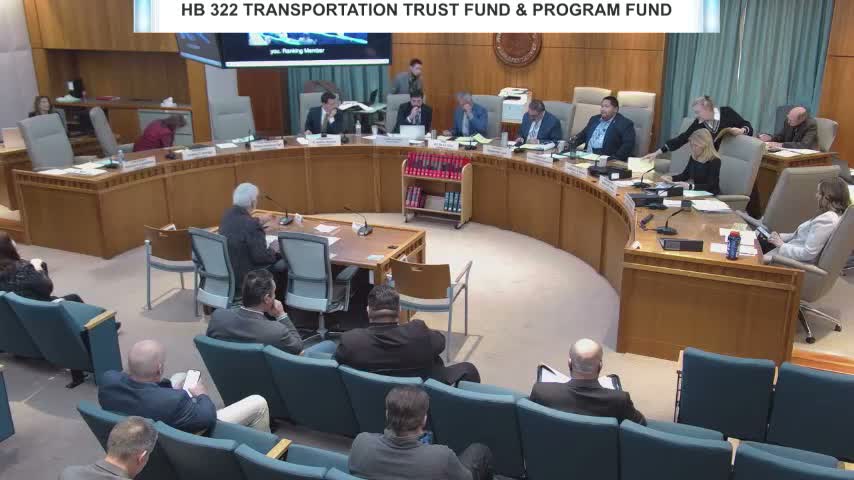
Summary
HB322 would create a Transportation Trust Fund and redirect portions of motor vehicle excise tax and a slice of electricity GRT to grow the fund; proponents said it would help match federal funds, industry witnesses backed it, but a committee roll call ended in a tie and the motion to pass failed, leaving the bill in committee.
Ranking member Brown presented House Bill 322, which proposes creating a Transportation Trust Fund and a Transportation Program Fund to provide a dedicated revenue stream for road projects and to supply matching funds for federal grants. Brown described several revenue mechanisms in the bill, including phased treatment of the motor vehicle excise tax (MBET) and a portion of gross receipts tax (GRT) on electricity to help capitalize the trust fund.
Industry representatives, including Mike Sandoval of Associated Contractors in New Mexico and Franklin Garcia of the Asphalt Pavement Association, testified in favor, saying the measure could support maintenance and help close an infrastructure funding gap. Brown and other members discussed the bill’s requested initial capitalization (the sponsor referenced an asked-for $400,000,000 sum), how DOT would prioritize projects, accounting and accountability mechanisms, and potential impacts on capital outlay and local projects.
Members pressed whether the electricity‑based GRT treatment would affect large users (data centers) and whether the Public Regulation Commission or utilities might pass costs to consumers; Brown said the GRT share would be calculated from tax collections and that existing regulatory structures limit unilateral rate increases by utilities. After extended questioning, Representative Armstrong moved to pass HB322; a roll call produced a tie and the chair announced the motion failed. The committee left the bill in committee and noted it could be reconsidered when members or witnesses are prepared.
No amendments were adopted on the floor of the committee during the hearing. The bill remains in committee after the tied vote.