
Committee hears HB270 on apprenticeship contributions for public works; industry voices opposition
Get AI-powered insights, summaries, and transcripts
Subscribe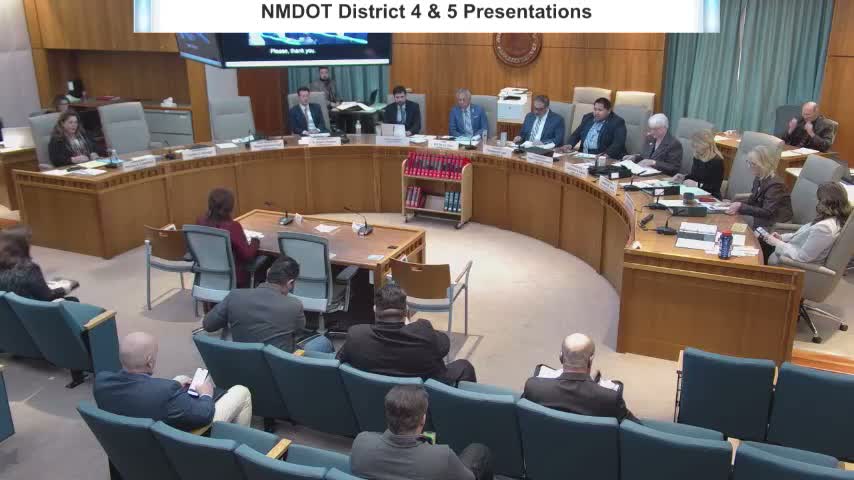
Summary
HB270 would require employers on certain public-works contracts to contribute to an apprenticeship training fund, with an exception where no approved apprenticeship exists. Industry witnesses said the measure would raise road project costs and duplicate existing contractor programs; a motion to table tied and failed, leaving the bill in committee.
Representative Borrego presented House Bill 270, which would amend the Public Works Apprentice Training Act to remove an exclusion for street, highway, bridge, road, utility or maintenance contracts and require employers on those public-works contracts to make contributions to an apprenticeship training fund. The bill adds a new subsection creating an exception when a trade classification has no approved apprenticeship program.
Mike Sandoval, a registered lobbyist for Associated Contractors in New Mexico, testified in opposition, arguing the bill would increase costs for contractors and citing the fiscal impact report’s figures; he told the committee contractors already run federal‑approved training programs and that adding required contributions ‘‘will not be used’’ by existing programs and could amount to roughly $3.5 million per year in additional industry contributions, according to his testimony. Franklin Garcia of the Asphalt Pavement Association said the industry supports apprenticeship programs generally but believed the proposal would negatively affect road project costs.
Members raised procedural concerns about notice and timing — several legislators said the committee analysis arrived late — and asked whether existing contractor programs would count or would require duplicate payments; the sponsor said some details required input from an out‑of‑town witness and could not be fully answered during the hearing. Representative Dow moved to table the bill; the roll call resulted in a tie and the chair announced the motion failed. Members subsequently noted the bill remains in committee and can be rescheduled.
No final passage or amendment was adopted; the bill was left in committee after the tied motion to table failed. The sponsor indicated intent to coordinate with witnesses and to possibly reschedule the item.