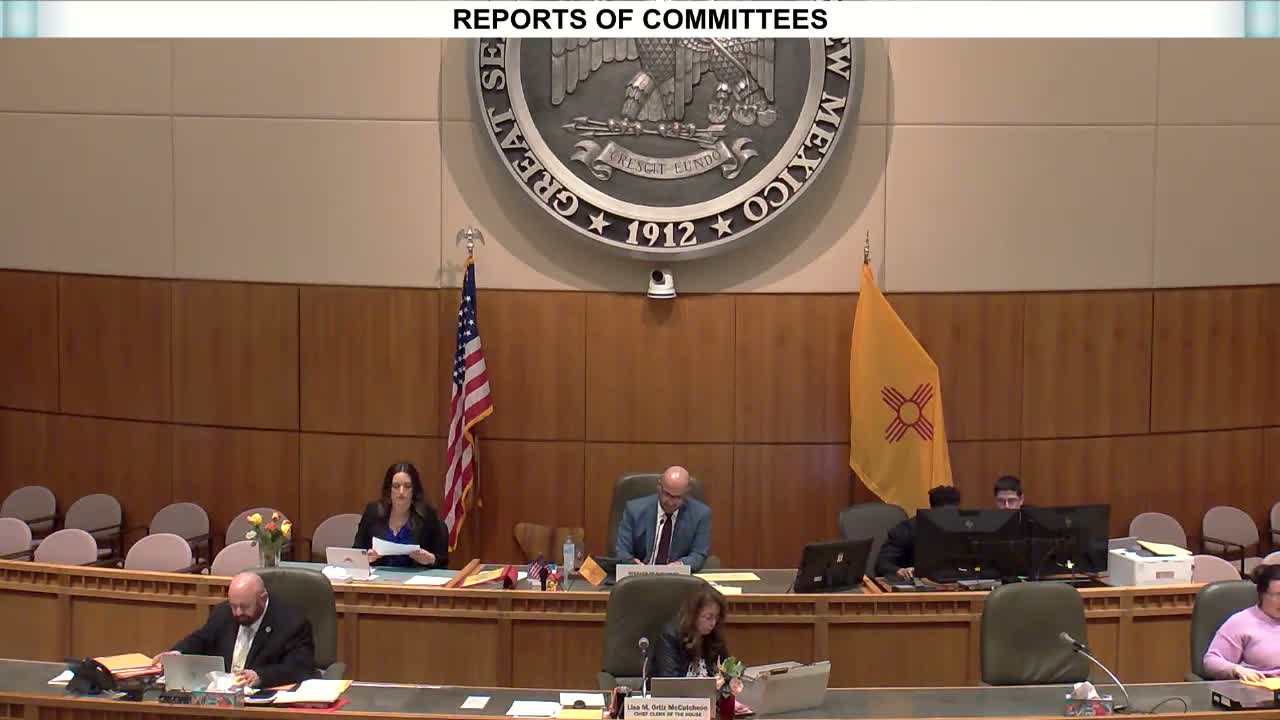
House passes bill expanding presumed occupational cancers for career firefighters
Loading...
Summary
The House approved HB128 to update presumptive occupational disease timelines and expand covered cancers for full‑time non‑volunteer firefighters, aligning state presumptions with federal research cited in the Fallen Heroes Act; vote was 61–1.
The New Mexico House voted to pass House Bill 128, which updates the list of occupational cancers and the presumptive timeline for career firefighters to qualify for workers’ compensation benefits tied to line‑of‑duty exposures. The measure, explained by Representative (3), mirrors changes in the federal Fallen Heroes Act and applies to full‑time (non‑volunteer) firefighters and eligible retirees who meet the statute’s service thresholds.
"House bill 128 updates the timelines for occupational related illnesses for firefighters, and updates the list of conditions to include conditions that impact women and other types of cancers that were not well researched at the original time of the passage of this legislation," Representative (3) said during her explanation on the floor.
During debate members repeatedly asked why volunteer firefighters were excluded; Representative (3) and her expert witness (Gus Pedrati of the Albuquerque firefighters) said the bill follows the existing workers’ compensation structure that is tied to employment and employer contributions and therefore does not cover volunteers under the current statutory framework. Representative (28) cited state counts: "a little over 2,000 firefighters in the state" for full‑time personnel and "4,000 across rural New Mexico" for volunteers.
Supporters said the change reduces administrative burden on affected firefighters by presuming causation after an eligibility period so claimants need not gather extensive exposure paperwork. Critics urged studying a separate mechanism for volunteers, noting exposures from recent wildland fires and the cost implications of expanding coverage beyond employers’ workers’ compensation funds.
The House recorded final passage by roll call: 61 yeas, 1 nay. The bill will now proceed to the Senate; sponsors noted follow‑up work would include coordination with the Workers’ Compensation Administration to implement the presumptive process.