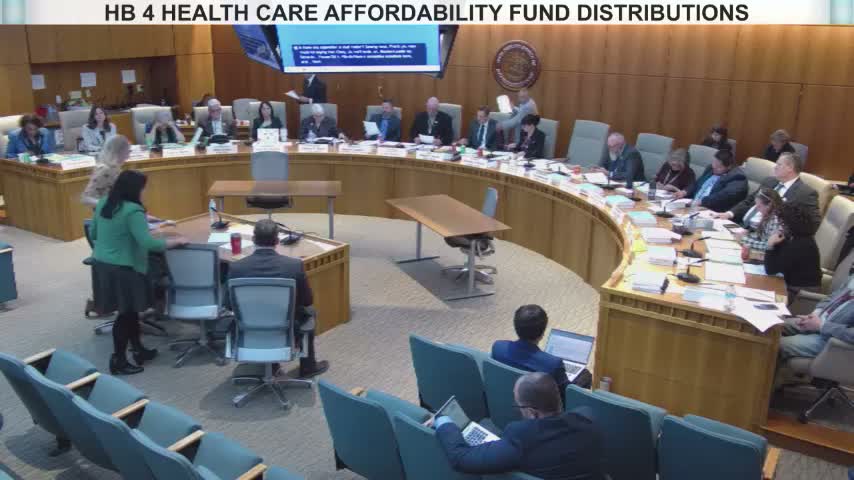
House committee advances HAFC substitute to shift premiums toward health affordability programs
Loading...
Summary
The House Appropriations and Finance Committee approved a HAFC substitute for HB4 to phase in redirecting the state’s health‑insurance premium surtax from the general fund into the Health Care Affordability Fund, aiming to preserve marketplace subsidies and small‑business assistance; the substitute passed the committee on a recorded 10–7 vote.
The House Appropriations and Finance Committee advanced a HAFC substitute for House Bill 4 on a 10–7 roll‑call vote after a lengthy hearing on the bill’s fiscal and programmatic impacts.
Madam Leader, sponsor of the substitute, told the committee the change would redirect a greater share of the existing premium surtax into the Health Care Affordability Fund over a phased period so the state can maintain marketplace subsidies and small‑business assistance. “This is not raising the surtax. It’s not imposing any new tax,” Chair Small said during floor discussion to underscore that the measure reallocates existing revenue rather than creating a new levy.
The substitute phases the distribution from the current 55% toward 100% over three years; committee witnesses and the state marketplace, Be Well, said the funding supports premium assistance for more than 84,000 enrollees and helps keep many plans under $10 per month for eligible individuals. Sarah Cloutier of Be Well testified that strengthening the fund “will keep New Mexicans covered” and warned that delaying the revenue increase could jeopardize enrollment gains.
Members pressed agency officials on mechanics and costs. Finance staff testified the substitute would leave fiscal year 2027 unchanged, reduce the general‑fund share by roughly $91.6 million in FY28 and about $162 million in FY29 once fully phased in. Agency witnesses said the surcharge rate itself does not change; the proposal reassigns where existing surcharge receipts are directed.
Opponents and skeptical members raised concerns about the impact on the general fund and whether the subsidization benefits insurance carriers. Zach from the Center for Biological Diversity argued on a different bill that industry should pay for cleanup rather than shifting public dollars; Representative Brown questioned whether the approach sufficiently reduces the underlying cost of care. Supporters countered that reducing uncompensated care and preserving coverage would produce savings across the system.
The committee adopted the HAFC substitute and voted to advance the bill to the next floor stage with a recorded 10–7 vote. The substitute contains a multi‑year phase‑in; agencies said more detailed fiscal estimates would be available as the bill moves forward.