Get Full Government Meeting Transcripts, Videos, & Alerts Forever!
Get email alerts on the Education Student Safety topic
No spam. Unsubscribe anytime.
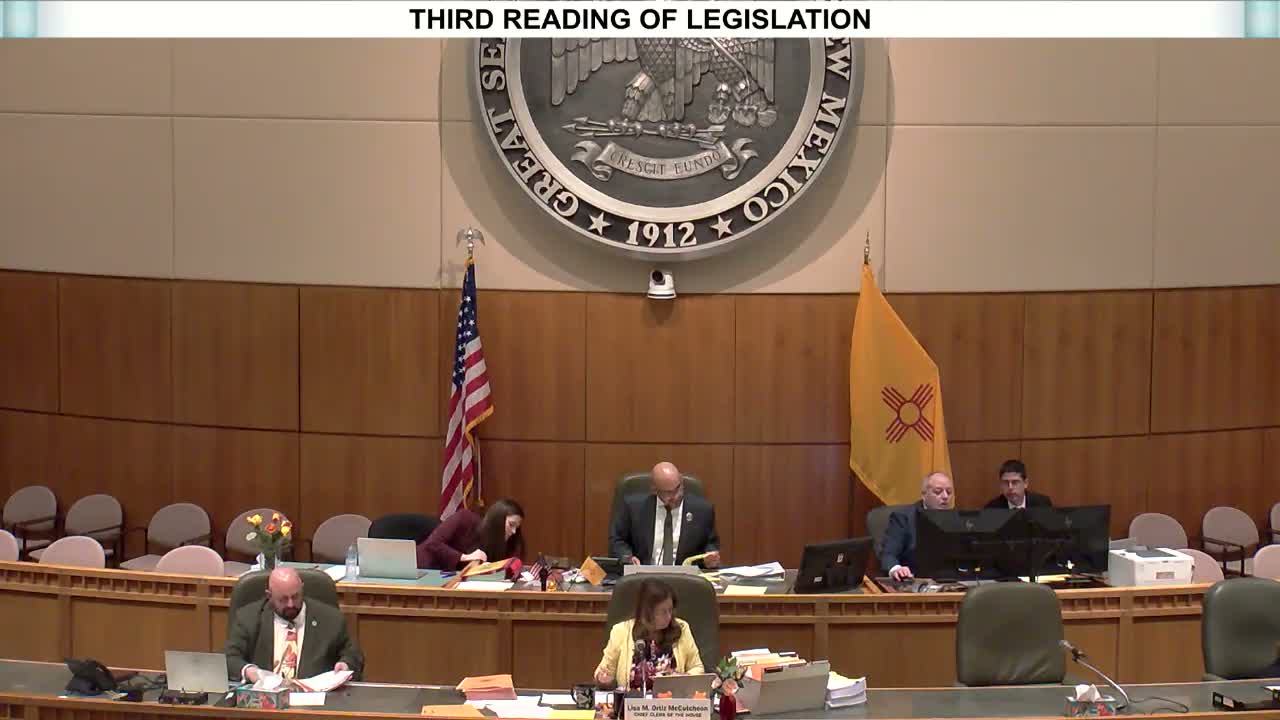
House passes bill to limit school restraint and seclusion, adds training and reporting requirements
Summary
The New Mexico House approved House Bill 120 as amended, 40–23, creating clearer definitions and limits on restraint and seclusion in public schools, requiring training and a legislative report on use and outcomes; lawmakers urged more clarity on training approval and funding.
The New Mexico House on final reading passed House Bill 120, 40–23, a measure the sponsor called "a tool for teachers that keeps students safe and treated with dignity." The bill narrows and clarifies definitions for restraint and seclusion, prohibits certain practices (including chemical and prone restraints and mechanical restraints), requires school training and documentation, and strengthens parent notification and follow-up reviews.
Representative Corolla, the bill's sponsor, told the chamber the measure "makes clear which practices are the allowed resort and when there is an immediate risk considered harm, it will allow appropriate and common sense intervention." She and a co-sponsor described the legislation as prioritizing de-escalation and standardizing reporting so districts can address recurring incidents.
Lawmakers debated several specifics for nearly two hours. Representative Baca expressed concern about vague definitions and implementation logistics and said, "I will not be supporting your bill," citing uncertainty about which staff must be trained and potential legal exposure for districts and employees. Other members pressed whether school resource officers, certain law-enforcement arrangements, or specific training programs such as PBIS would be required; sponsors repeatedly said the bill does not mandate a single vendor or program and that local school boards and the Public Education Department's Safe and Healthy Schools unit would oversee training approval.
An amendment adopted on the floor (House Amendment 1, #233885.2) replaced the term "punishment" with "disciplinary action subject to the school code of conduct" and added a reporting requirement to provide the legislature with data on how restraints and seclusion are used and whether the policy changes are effective. Supporters said better definitions will improve data collection; opponents said New Mexico lacks reliable incident data now and questioned whether the fiscal note's resources would be sufficient.
The bill's fiscal analysis referenced potential additional expenditures for training and documentation; sponsors noted updated agency comments removed an earlier paragraph that overstated costs, but members continued to raise concerns that implementation could create new burdens for small and rural districts. Representative 14 (speaker identified in the debate) cited the fiscal note language and told colleagues he did not believe the $1,000,000 figure in some analyses would be sufficient to cover statewide needs.
House Bill 120 now heads to the Senate (or to the next steps in the legislative process) after passing this chamber. The House recorded the final vote as 40 in favor and 23 opposed.
Votes at a glance (other bills on final passage): - House Bill 127 (health professional pathways): Passed 62–0. - House Appropriations & Finance Committee substitute for House Bill 47 (educator health insurance changes): Passed 61–0. - House Bill 103 (residential property valuation changes): Passed 54–10. - House Bill 154 (advanced energy tax code updates): Passed 59–5. - House Bill 60 (Victim of Crime Act amendment): Passed 59–5.
What happens next: With House passage, HB120 proceeds to the next legislative step (Senate referral or further action). The bill now includes a requirement that the legislature receive a report on how the new definitions, training, and documentation are functioning in practice, which is intended to give lawmakers data for future decisions.
Sources: Floor debate and roll-call announcements on the House floor; sponsor and amendment explanations delivered on the record.
Ending: The House adjourned and stood in recess until 11 a.m. the following day.