
Panel advances optometry bill after contentious debate on access and safety
Get AI-powered insights, summaries, and transcripts
Subscribe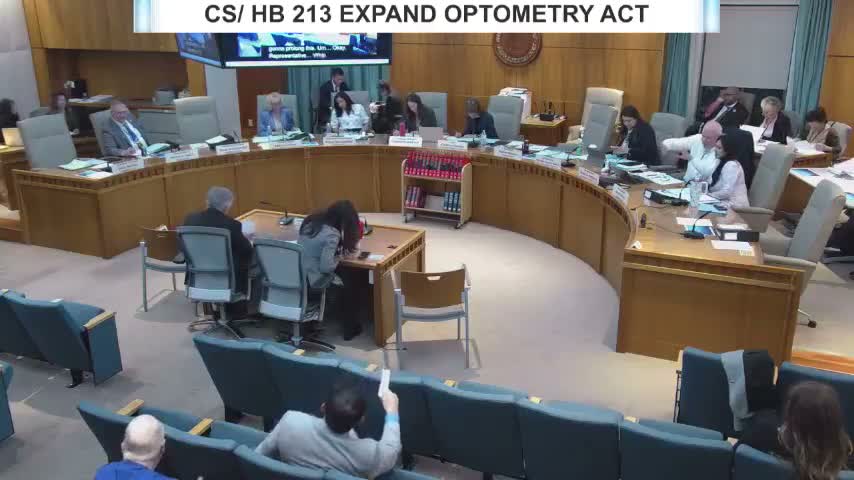
Summary
The committee advanced a substitute to HB213, adding laser procedures to an optometrist’s scope with new certification and reporting requirements and an amendment requiring a laser‑credentialed optometrist on the board by 12/31/2028. Supporters argue it improves rural access; medical groups warn of safety and training shortfalls.
Representative Hoffman Beal presented the House Health & Human Services Committee substitute to House Bill 213, which would expand the scope of practice for optometrists to include several laser procedures (notably YAG capsulotomy, selective laser trabeculoplasty and peripheral iridotomy). The substitute adds enhanced training, certification and reporting requirements and the committee adopted an amendment requiring at least one optometry-board member credentialed in these laser procedures by Dec. 31, 2028.
Supporters — primarily optometrists and clinics in rural communities — said the procedures are short office-based treatments (typically 3–5 minutes) that can prevent vision loss from glaucoma or treat post-cataract complications and that expanded privileges would reduce long travel times and months-long waits. Dr. Spencer Franz, an optometrist practicing in Hobbs and Roswell, said residents often wait months and are sometimes sent out of state for procedures that could be done locally if optometrists were authorized and certified.
Opponents included the New Mexico Medical Board, ophthalmology organizations and many surgeons who said blade or laser procedures on the eye require residency-based surgical training and that expansion without physician oversight risks patient harm. The medical board and professional societies cited out-of-state cases (Kentucky) and malpractice files they say document serious injuries after scope expansions.
Committee members asked about training, incident reporting and malpractice coverage. Sponsor and optometry witnesses described two certification paths: a 32-hour (4-day) supervised course for earlier adopters before 2026 and a longer training track afterward, together with supervised live-patient training and reporting to the Board. The optometry board’s compliance chair said he has not seen complaints from prior surgical scope expansions but acknowledged the board would receive and review adverse-event reports and recommend action when appropriate.
After debate, the committee adopted the sponsor’s amendment (board member credentialing requirement) and voted to advance the health & human services committee substitute for HB213 as amended, 7–2.
What’s next: HB213 will proceed to the House floor where advocates on both sides said additional amendments and scrutiny are likely.