Committee advances compromise malpractice reform after hours of testimony
Loading...
Summary
The House Judiciary Committee voted to advance a committee substitute to House Bill 99, a bipartisan package that changes punitive-damage pleading and caps, tightens patient-compensation fund oversight and differentiates limits for small providers and large hospital systems after hours of pro and con testimony.
Representative Chandler presented the House Judiciary Committee substitute for House Bill 99 and urged members to back what she described as a balanced approach to reforming medical malpractice law in New Mexico. The substitute keeps the 2021 monetary damage caps in place, changes the definition of reimbursable medical value to what is paid rather than what is billed, and adds a differentiated punitive-damage regime intended to reduce unpredictable liability while preserving accountability for egregious conduct.
Supporters from hospitals, chambers and many physicians told the committee the state’s malpractice insurance market is broken and that predictable liability rules are necessary to recruit and retain providers. Troy Clark, CEO of the New Mexico Hospital Association, said the substitute “inserts predictability into the insurance market for all hospitals and doctors” and urged the committee to pass the substitute. Jason Rounds, president and CEO of San Juan Regional Medical Center, said the measure could make participation in the patient compensation fund more affordable for small community hospitals.
Opponents, including trial attorneys and family members of people harmed by medical errors, urged the committee to preserve robust judicial remedies. Alicia Montoya testified that “shielding corporations from consequences does not make us safer,” and Karen Bateman recounted the death of her daughter and urged the committee not to adopt broad protections that would insulate large health systems and insurers. Several advocates for Native communities and rural patients warned that limits on punitive damages could lessen corporate accountability for harm that often affects Indigenous and rural New Mexicans.
Key provisions explained by Chandler include raising the standard of proof for punitive damages to clear and convincing evidence, a requirement that punitive claims be approved by a court before amendment into the complaint, differentiated caps (lower caps for independent providers and domestically organized hospitals, a higher 2.5 multiplier for the largest systems), and stronger actuarial protections for hospital surcharges to shore up the Patient Compensation Fund (PCF). Chandler also said the substitute clarifies the “occurrence” definition and ties future medical payments to actual expenses as they are incurred rather than a lump-sum estimate.
Lawyers and bargaining participants told the committee that other compromise proposals discussed during negotiations — including a two-step pleading process with more stringent screening for punitive claims and reforms to PCF administration — were not fully incorporated into the substitute. Ray Vargas, a trial attorney, said negotiators had reached “common ground” on features that are not in the current text.
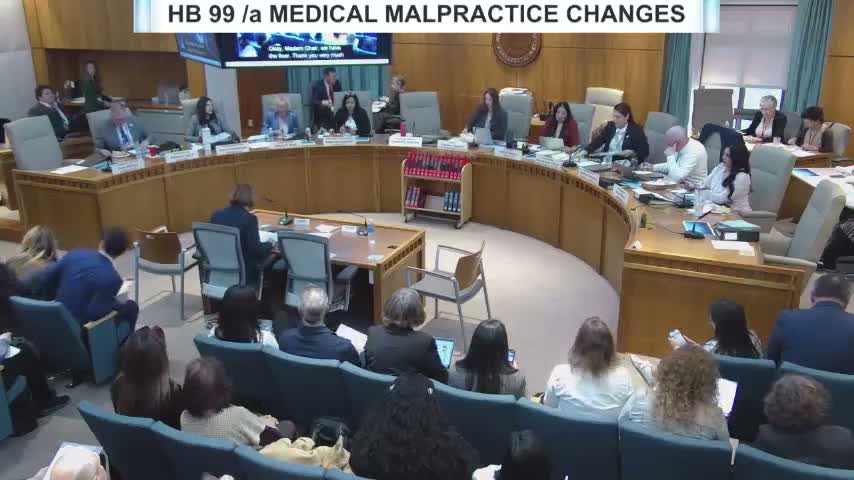
After committee questioning and debate, Representative Hall moved to advance the House Judiciary Committee substitute for HB 99; Representative Chavez seconded the motion. On roll call the committee voted 10–0 to pass the substitute to the next stage.
What’s next: the committee substitute for HB 99 will go to the House floor for further consideration; supporters and opponents said they expect additional debate and possible amendments before final action.