Panelists urge stable funding, technical assistance and shared governance to sustain California community schools
Loading...
Summary
County offices, district leaders and nonprofit partners told Assembly committees that sustained funding for coordinators, a vertically aligned technical‑assistance system (STAC/RTAC/COE), flexible alignment of funding streams and clearer reporting/eligibility rules are critical to embedding community schools statewide.
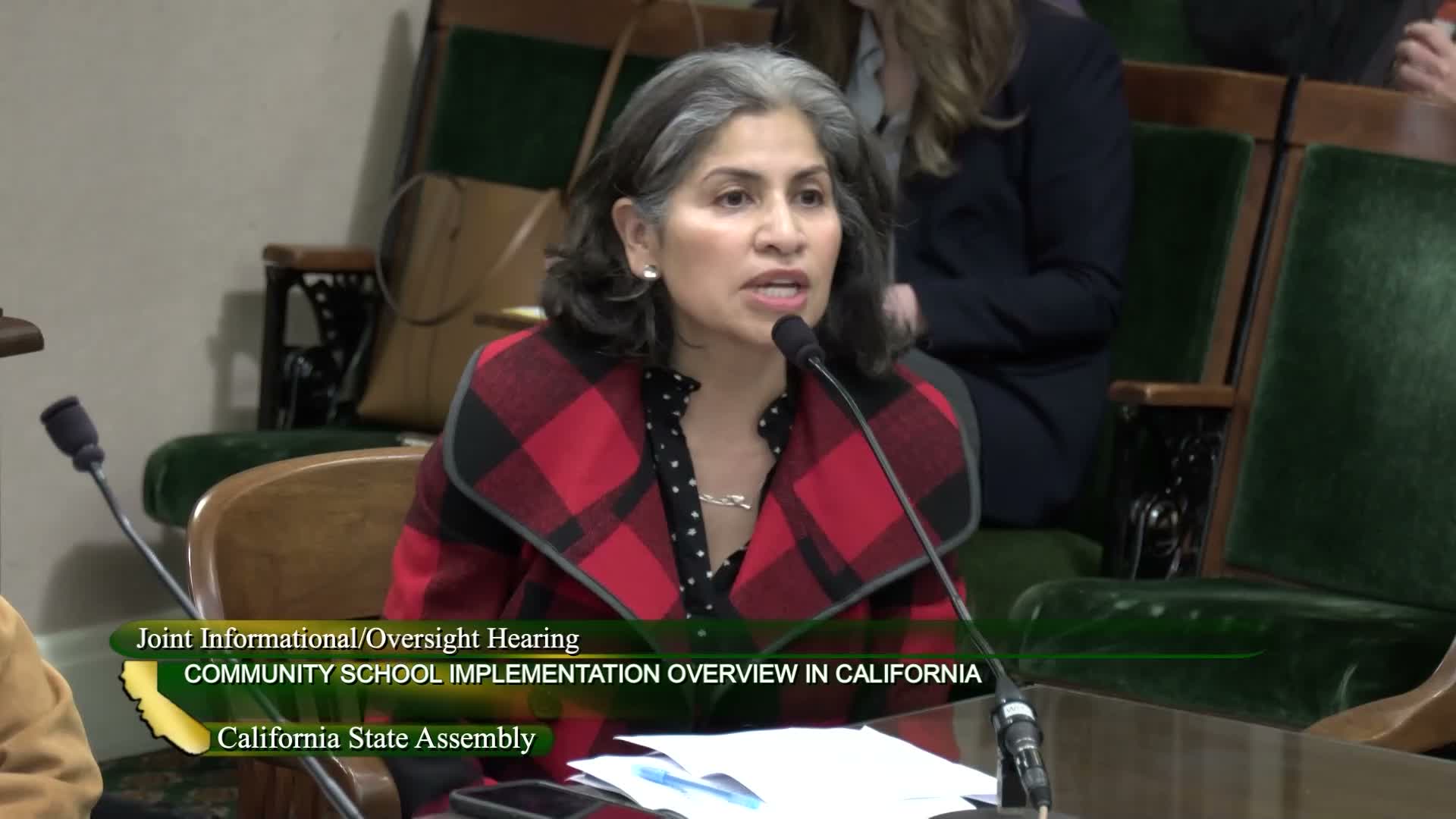
As California considers how to sustain and scale its community schools initiative, witnesses at a joint Assembly hearing pressed the Legislature to pair continued grant dollars with long‑term technical assistance, clearer guidance and protections that embed shared governance at the school level.
"We think it's really important to provide ongoing funding for this vertically aligned TA's transformational assistance system," Navdeep Pirowal of the Sacramento County Office of Education said, describing the State Transformational Assistance Center (STAC), eight regional technical assistance centers and county offices of education that support grantees.
Panelists identified several persistent implementation challenges: coordinator and staff sustainability once grant-funded positions sunset; the need for coaching and leadership development to practice collaborative decision‑making; administrative and reporting burdens that deter some LEAs from applying; and eligibility rules that limit access for some small and rural districts.
"One of the concerns we've heard is ... concern around sustainability," Pirowal said, noting that coordinators who build trust in a school may leave when grants end. Angelica Honco of Public Advocates and the California Partnership for the Future of Learning urged "stable ongoing funding with guardrails and support for strong implementation," and called for alignment to the state's community schools framework and RFA to ensure fidelity.
District and school leaders described operational examples for embedding the model: Oakland Unified used memoranda of understanding and partnerships with community-based organizations to staff on-site wellness centers and dual-enrollment pathways; Lincoln High in San Diego credited a community schools coordinator and an inclusive needs-and-assets process with high family engagement and student-led changes. Speakers recommended that the Legislature protect COE coordinator roles, coordinate reporting timelines, and consider expanded eligibility or technical support for small and rural LEAs.
Public commenters — county superintendents, rural education networks, disability advocates and parent organizers — echoed the need for predictable funding and a well-funded TA system and warned against excessive reporting demands that could distract from local implementation.
The committees said the testimony will inform an April budget hearing on the administration’s community school proposal and requested additional details on outliers, fiscal strategies and how TA outcomes will be measured.