Experts disagree on administrability and international backlash of ending water's edge election
Loading...
Summary
Academic witnesses argued recent federal and international reforms reduce compliance friction and can make worldwide combined reporting practicable; business and tax practitioners warned of double taxation, data gaps, compliance costs and litigation, especially for foreign‑parented firms.
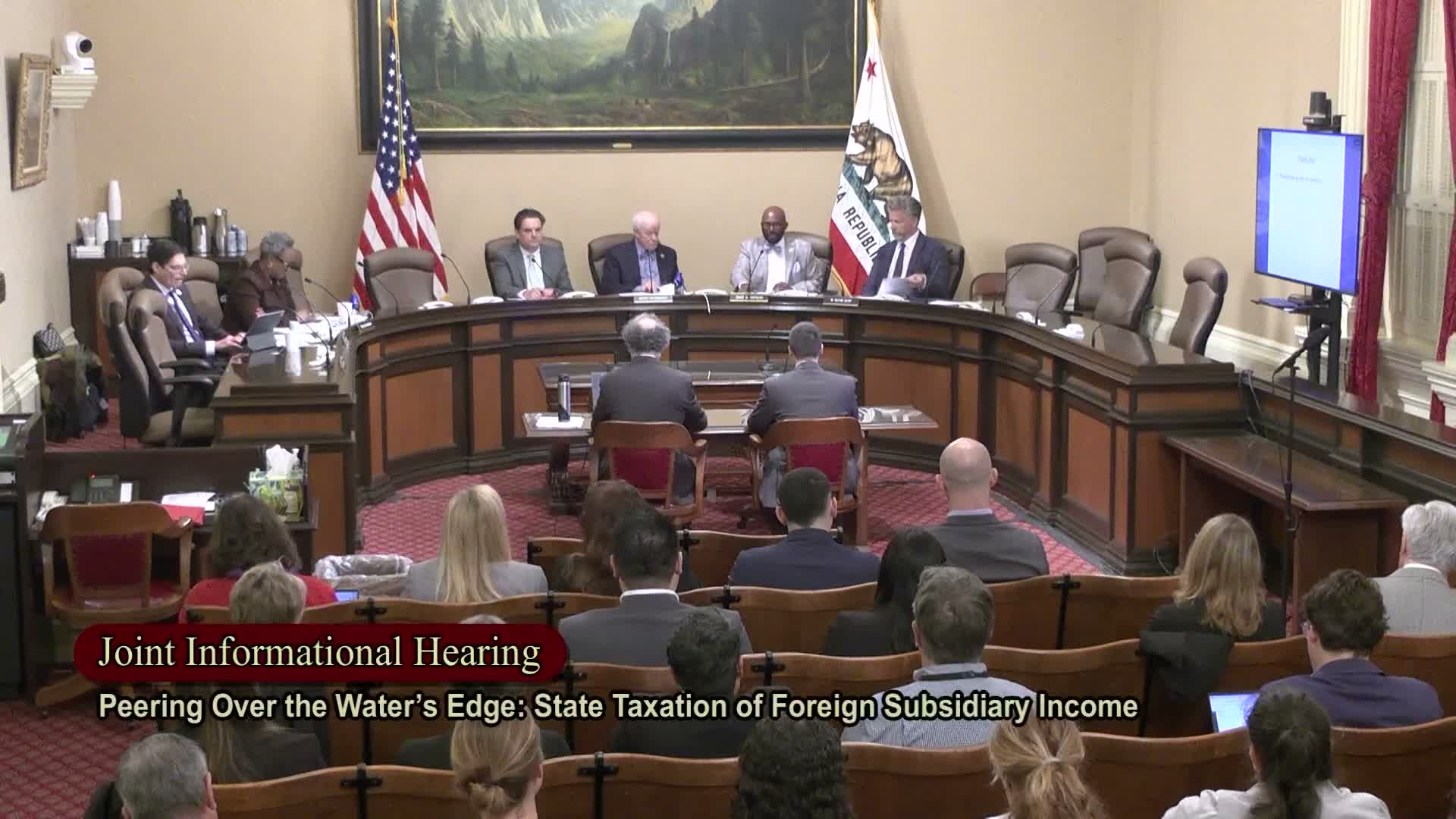
A recurring theme at the hearing was disagreement among experts over whether California could practically and legally enforce mandatory worldwide combined reporting.
Professor Darren Shainski urged that income shifting is measurable, that many international reforms (GILTI/NICD, Pillar 2, CAMT) supply data or reporting that states could leverage, and that worldwide combined reporting is administrable for large firms. He argued that reasonable approximations and federal reporting requirements make the transition feasible for the state and large taxpayers.
Opposing witnesses from the California Tax Foundation, the Council on State Taxation and the Silicon Valley Leadership Group cautioned that California’s single‑sales‑factor apportionment and the separate‑entity systems used by many foreign jurisdictions could create double taxation and dilute apportionment percentages; they stressed that foreign‑parented firms and entities operating under different accounting and privacy regimes may not be able to provide the documentation FTB needs. Multiple witnesses cited the U.S. GAO finding that reasonable approximations in the 1980s led to frequent disputes and tax controversy.
Both sides recommended safeguards: phased transitions, targeted rules for the largest taxpayers, anti‑abuse provisions, and possible partial conformance with federal formulas as a bridge. The FTB said its audit division already handles worldwide audits and could scale for additional returns, but also acknowledged limitations in observing foreign affiliates when taxpayers currently elect water's edge.
Committee members asked follow‑up questions about who pays the corporate tax, relocation risk, and how to design credits or adjustments to minimize double taxation. No consensus emerged; members requested further technical follow‑up and clearer staff materials.