
Arizona House floor briefing advances wide consent calendar covering health, education, tax conformity and commerce
Get AI-powered insights, summaries, and transcripts
Sign Up Free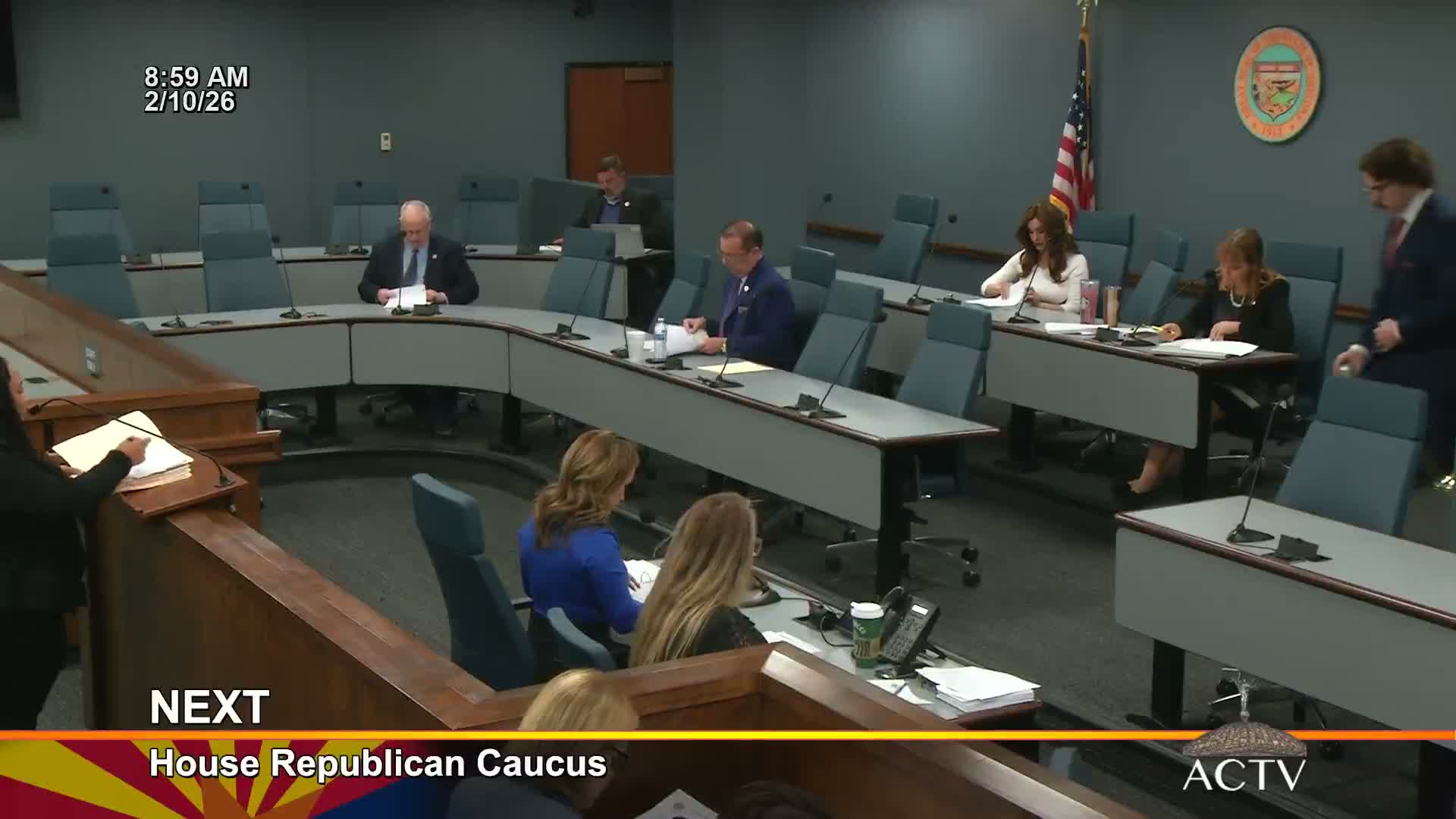
Summary
A fast-paced House briefing moved dozens of bills on the consent calendar across health, human services, commerce, education, environment and transportation; notable items included SNAP error‑rate targets, annual tax conformity, and multiple interstate licensure compacts.
The Arizona House convened a rapid floor briefing that advanced a broad consent calendar and discussed a range of measures affecting health care, education, commerce, elections and transportation.
Staffers summarized dozens of bills in multi‑minute blocks, and sponsors briefly explained priorities and occasional points of contention. Notable measures included updates to radiologic technology standards (HB 2050); a tribal‑services waiver provision to aid Indian Health Service facilities (HB 2177); formation of an emergency medicine study committee to examine statewide EMS capacity (HB 2183); adoption of interstate licensure compacts for physician assistants and podiatric physicians (HB 2190 and HB 2438); and the annual tax conformity bill (HB 2785) to make the state's code conform to recent federal code changes, including retroactive provisions to taxable year 2025.
On social‑services policy, HB 2206 would require DES to reduce SNAP payment error rates to 3% by Dec. 30, 2030, include annual progress reports, and authorize corrective actions and forensic audits if targets are missed. A sponsor characterized the measure as a taxpayer‑savings initiative and cited an estimate that reducing the error rate could save roughly $80 million a year if the rate fell from about 6% to 3%.
Education bills on the calendar covered a spectrum of changes: from establishing term limits and training for school board members to restricting long‑term leases of school property and requiring voter approval for certain leases. The committee also considered multiple administrative and technical bills on transportation, energy and public safety that were placed on consent or pulled for further amendment as needed.
Several sponsors and members noted that most items were placed on consent calendars and would be considered with little debate, while others indicated they planned floor amendments or further discussion. Many bills were described as ‘‘housekeeping’’ or conformity measures; a handful prompted more substantive back‑and‑forth, including the SNAP error‑rate proposal and the fetal death certificate bill discussed in detail during the same briefing.
Next steps: many measures were advanced on the consent calendar and will move forward in the legislative process; bills removed from consent were flagged for amendment or additional floor discussion.