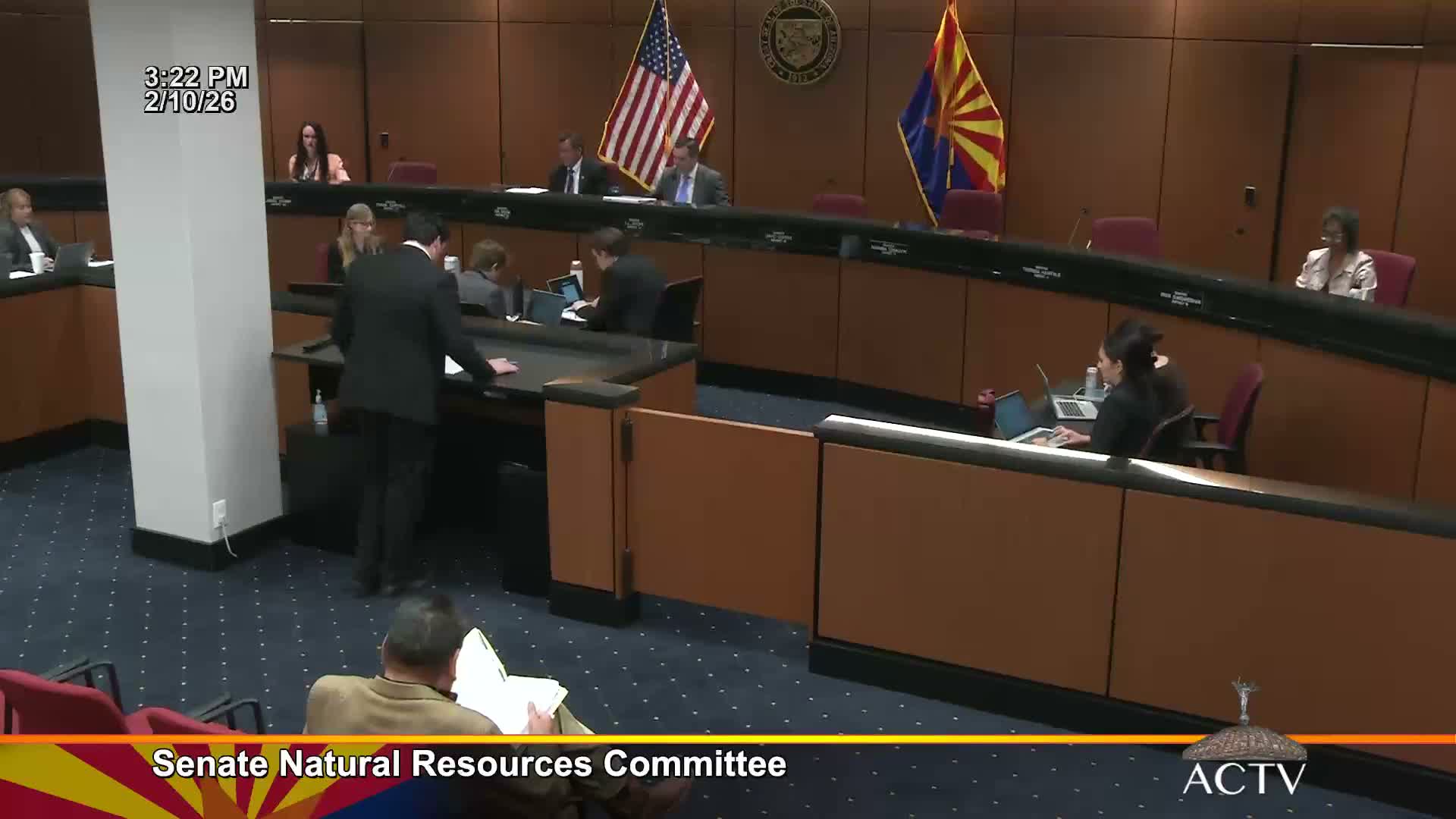
Arizona Senate Natural Resources Committee advances water, energy and rural‑access bills; several pass with conditions
Loading...
Summary
The Senate Natural Resources Committee gave due‑pass recommendations to a slate of bills covering water infrastructure, rural cannabis access, small modular reactor rules, rooftop solar protections, incident‑management funding for fire agencies, and an OHV weight/registration change after hours of testimony and contested roll calls.
The Arizona Senate Natural Resources Committee met to consider more than a dozen measures ranging from rural water lines and groundwater funding to rules for small modular nuclear reactors and consumer protections for rooftop solar. Committee members voted to give due‑pass recommendations to multiple bills after testimony from local officials, tribal and county representatives, industry groups and environmental advocates.
The panel advanced a workforce study for coal‑impacted Northern Arizona communities (Senate Bill 14‑88), which staff said would use a $600,000 FY2027 appropriation for the Office of Economic Opportunity to study social and economic effects in Coconino County and related areas and report by Dec. 31, 2026. A vice chair motion to recommend the bill carried in committee; the clerk announced the tally as 7 ayes, 0 nays.
Senate Bill 15‑23, an appropriation routed through the Arizona Department of Administration to the Navajo Nation to help complete the Ganado (Nogato) water pipeline project, drew local testimony from chapter official Walt Jones, who said constituents lack safe drinking water. Sponsor testimony put the project cost at about $1.7 million with a $340,000 shortfall to serve about 235 homes. The committee gave SB 15‑23 a due‑pass recommendation (roll call announced at the hearing).
Water finance and rural infrastructure were further addressed in SB 15‑60, a bill to remove the statutory $3 million cap on single loans from the Water Supply Development Revolving Fund managed by the Water Infrastructure Finance Authority (WIFA). Judah Waxbaum of WIFA said the cap had forced the agency to turn away larger projects and that underwriting, environmental review and local debt authorization would remain required. The committee approved the bill.
The committee also took up SB 14‑47, extending the moratorium and $2.50 per acre‑foot cap on groundwater withdrawal fees for Pinal County infrastructure programs. Sponsors said the narrow extension is intended to preserve existing projects and the ability of irrigation districts to obligate funds while broader Colorado River negotiations proceed; opponents argued the extension delays longer‑term decisions about groundwater overdraft.
Energy and environment items drew substantial debate. SB 14‑18 would allow utilities to site certain small modular reactors (SMRs) in counties with fewer than 500,000 people in specified replacement or co‑location circumstances without a new Certificate of Environmental Compatibility; supporters told the committee SMRs could provide reliable, low‑carbon baseload power, while environmental groups and county supervisors warned the bill preempts local zoning and eliminates some public review. The committee recommended the bill proceed after a contested roll call.
Rooftop solar protections in SB 14‑19 prompted a long exchange between consumer advocates, county supervisors and industry. Provisions requiring third‑party inspections for contractors with disciplinary actions and a restriction in the bill on advertising estimated energy savings drew opposition from solar industry representatives and utilities, who said the requirements could chill the rooftop market. County supervisors and a former registrar of contractors cited constituent roof‑damage complaints and urged stronger consumer disclosures. The committee voted to advance the measure with a note to refine the language before floor action.
Public safety and recreation bills also moved forward. SB 15‑80 would appropriate roughly $2.545 million for statewide deployment of a secure incident management platform for fire and law enforcement agencies; fire chiefs described features such as real‑time personnel accountability and drone video integration. The committee advanced the bill despite objections from members who said targeted appropriations should follow a transparent statewide needs assessment.
On recreation policy, SB 15‑19 increases the maximum unladen weight for certain off‑highway vehicles from 2,500 to 3,500 pounds and contains an amendment to create a new usage class with a reduced vehicle license tax dedicated to OHV management and enforcement. Industry witnesses and dealers testified the change would standardize registration and reduce consumer confusion; ranchers and land managers stressed the need for dedicated funding for mitigation, enforcement and education. The amendment was adopted and the bill received a due‑pass recommendation.
Committee chair’s adjournment followed the final item. The committee’s actions were procedural recommendations to the full Senate; none of the bills became law at the hearing. The committee record contains roll‑call tallies and testimony that sponsors and stakeholders said they will refine before floor debate.
Quotes from the hearing include: “This project benefits 235 homes,” said a sponsor describing the Ganado waterline shortfall. Eric Kepler, deputy fire chief with the Glendale Fire Department, said of the incident‑management platform that it would “allow us to track where we're assigning people by location” and improve firefighter accountability and safety. Judah Waxbaum of WIFA noted the agency is “a bank first and foremost,” describing underwriting, environmental assessment and debt‑authorization steps WIFA uses before issuing loans.
Next steps: bills with due‑pass recommendations proceed to the Senate floor for further debate and possible amendment. Committees and sponsors signaled follow‑up stakeholder work on SMR siting language, rooftop solar advertising and license transferability for rural cannabis access before votes on the chamber floor.
Ending note: the committee’s recommendations do not alter statutory requirements; they forward measures and records of testimony for consideration by the full Senate.