
Senate committee advances bill to charge alternative‑fuel vehicles for road use amid broader debate on transportation funding
Get AI-powered insights, summaries, and transcripts
Sign Up Free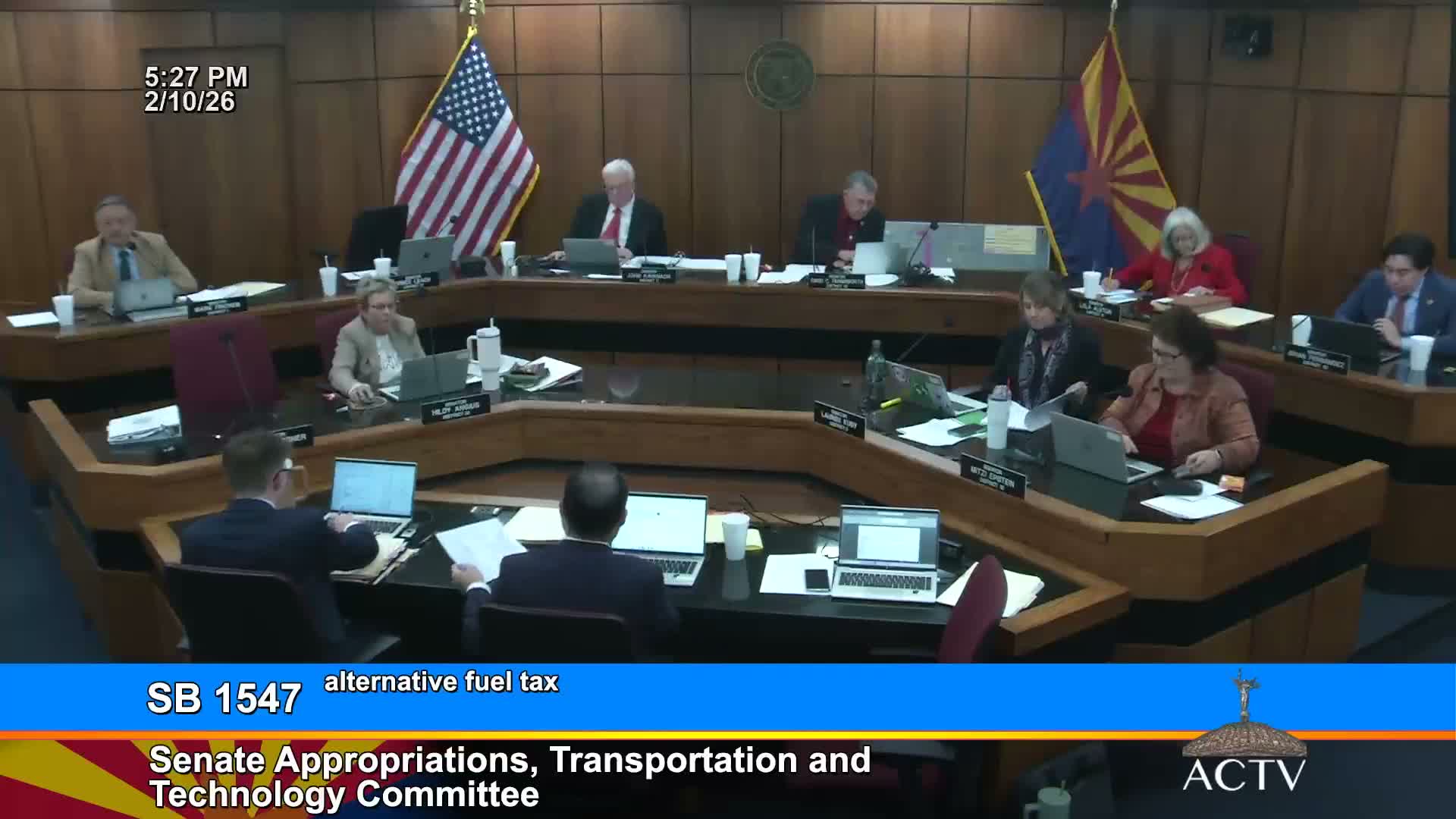
Summary
SB 15‑47, a measure to impose an alternative‑fuel 'use fee' intended to create parity for electric and other non‑gas vehicles, received a due‑pass recommendation after stakeholders argued about equity, regressivity and whether the bill is only a modest first step toward solving Arizona’s transportation funding gap.
The Senate Appropriations Committee gave SB 15‑47 a due‑pass recommendation after lengthy testimony over the bill’s structure and fairness.
Sponsor testimony described the measure as a parity approach: a flat annual fee for light‑duty electric vehicles (set as a proxy equal to average annual gas‑tax payments) and converted kilowatt‑hour or energy‑equivalency methods for heavier vehicles and other alternative fuels. The stated aim is to protect the Highway User Revenue Fund (HEERF) and ensure all road users contribute to upkeep.
The Arizona Trucking Association and many counties endorsed the policy as a pragmatic step toward equitable road funding. The trucking association urged a neutral, fuel‑neutral framework so all users contribute fairly, noting heavy‑duty trucks remain major drivers of pavement wear.
Electric‑vehicle manufacturers and advocates (Tesla, Lucid) were supportive of the parity goal but criticized the bill’s mechanics. They raised two principal objections: (1) electricity used for vehicle charging is already subject to sales taxes in some contexts, which the bill does not credit, creating a risk of double taxation; and (2) a flat annual fee for light‑duty EVs is regressive because low‑mileage or lower‑income drivers would pay the same as high‑mileage drivers.
Committee members debated tradeoffs between administrative simplicity and precision (kilowatt‑hour measurement versus flat fees). Some senators called for broader, bolder solutions (indexed gas tax, larger package of reforms) while others argued a modest step that could pass a two‑thirds vote was preferable.
Despite disagreement, the committee approved SB 15‑47 on a divided vote and the bill will move forward for further consideration and stakeholder negotiation.